
Kaiju are huge.
If this claim is one made in reference to their physical stature, then, yes, of course they are – the largest creatures have been confirmed to stand taller than 300 metres into the sky, confidently dwarfing any nearby structures, that are often scattered amongst the rubble around them anyway; if we are instead adopting this adjective to describe the relevance of immense monsters throughout our modern culture, then, as kaiju-mania grips the world over once more, we can comfortably agree that this descriptor also offers an apt metaphor for the sheer size and reach of their looming societal shadow.
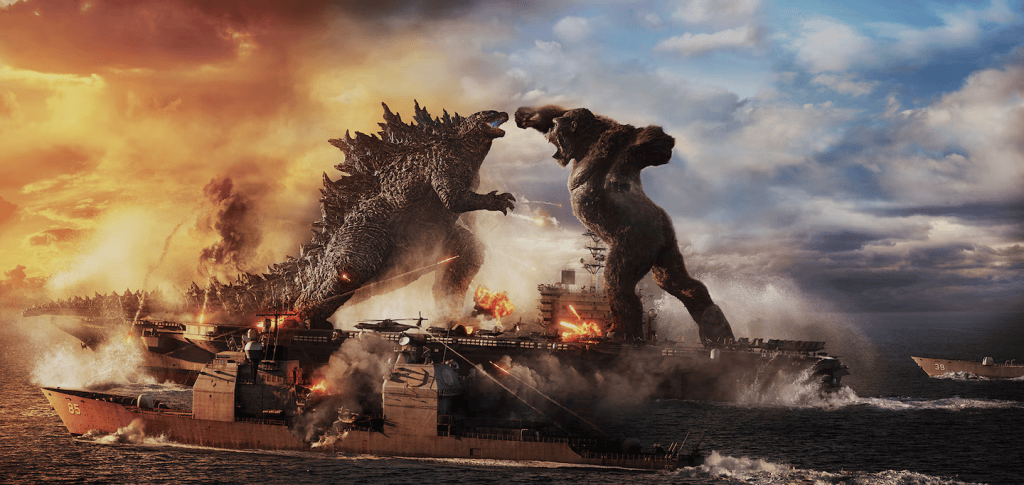
And why shouldn’t they be so huge? Ishiro Honda’s 1954 monster-madness hit, Godzilla, is truly timeless; a genre-crafting, evocative expression of a nation’s nuclear, war-torn trauma, at once spectacular and haunting, appreciated as much for its cultural relevance and thematic depth as it is for its iconic score, moody, dour cinematography and ground-breaking (and building-smashing) special effects – an honour that remains relevant even today, as, at the 96th Academy Awards, held in March 2024, Godzilla Minus One took home the trophy for “Best Visual Effects” – a feat made all the more impressive by its small team of 35 VFX artists, its boast as the first non-English language film to win this Oscar, and the first Japanese film to ever even receive a nomination in this category no small success. Maybe, we could say it was a kaiju-sized one.
For the kaiju genre, lists of their achievements and tales of their critical acclaim are widespread, scattered throughout its history of almost a century of celluloid cinematic screenings. Roland Emmerich’s Godzilla has itself won two gilded trophies, taking home the Golden Raspberry Award for “Worst Supporting Actress” and “Worst Remake or Sequel” – there, placed comfortably in a history-making three-way tie alongside Gus Van Sant’s Psycho and The Avengers. No, not the one with Dame Diana Rigg. Or Robert Downey Jr. Okay, perhaps that second honour is a reasonable critique to level at Tristar’s unfortunate cinematic offering.
Hmm. I suppose that doesn’t seem all that positive, does it? Other aureate accolades do continue to be bestowed upon the genre of giant monsters: in The Golden Turkey Awards: The Worst Achievements in Hollywood History, a court of public opinion deemed Godzilla’s Revenge, better known as All Monsters Attack, as one of the “worst films of all time”, placing it just below Dino De Laurentiis’ suit-mation adaptation of King Kong, reiterating in the compendium of their “worst films” that All Monsters Attack belongs firmly alongside the embarrassing efforts of Godzilla vs. the Smog Monster. Indeed, such an aggressively suggestive opinion appears to be corroborated in Tim Healey’s The World’s Worst Movies, substantiating the claim that Godzilla vs. Hedorah is “notoriously bad”, and that Konga is amongst the genre’s worst examples, but, at least, is “most enjoyably bad” – a written claim that might hold more credibility if it lost the second word in its description. Hmm, I guess that isn’t positive either.
Evidently, it goes without saying that, when considered throughout the history of the genre, and viewed through a critical eye, in almost all instances bar Honda’s Godzilla, the kaiju film has repeatedly found itself the recipient of constant dismissal, maligned and written off as low-brow entertainment to chuckle at, a prime example of the lowest common denominator of creature feature. Tracing the lineage to the origin of this unfortunate disdain is no difficult challenge – decades of reinforced cultural stigmas, continued misconceptions around the (admittedly, now) outdated presentation of much of the genre’s tangible (and, originally, ground-breaking) practical effects, lacklustre international distribution methods, shipping carelessly chopped-up, incoherent reels of celluloid film overseas, screened cheaply across English and American picturehouses with a confusing incompletion, dubbed in a comically apathetic manner, inspiring prevalent mockery, spurred on by the efforts of sardonic comics trapped on the Satellite of Love beside robotic companions and mad scientist jailers. Quite so – really, it is no “mystery” why the giant monster film is so easily dismissed.
Certainly, audiences saw plenty of the films – in grindhouse picture palaces, seated amongst the discarded popcorn and soda cups, a double-bill paired (incomprehensibly) with Sonny Chiba’s The Street Fighter; in late-night broadcast runs and reruns caught through the hazy static of 6-inch wide televisions, interspersed astride adverts for Tang and Sony’s slimline pagers; in imported VHS tapes, presumably burned by somebody’s uncle, “Gary’s Wedding 1984” inexplicably scrawled in nearly-illegible script across the sticker torn on its black plastic rim; in 8mm reels adorned with the Ken Films logo, showcasing only the best sequences of destruction, clicking and whirring away on the family projector in the living room; in scratched up DVDs with burnt-in german subtitles and Perry Mason occasionally flashing against an unconvincing background of devastated Japan – but their viewing experience was undoubtedly tarnished. Altered. Deceptive. Again and again, the copy of the film shown in each Western medium was one unreflective of the hard work put in by Japanese writers, artists, directors, tokusatsu engineers and suit-mation actors – a presentation which doubtlessly would only serve to exacerbate the perceived poor quality of any kaiju film.
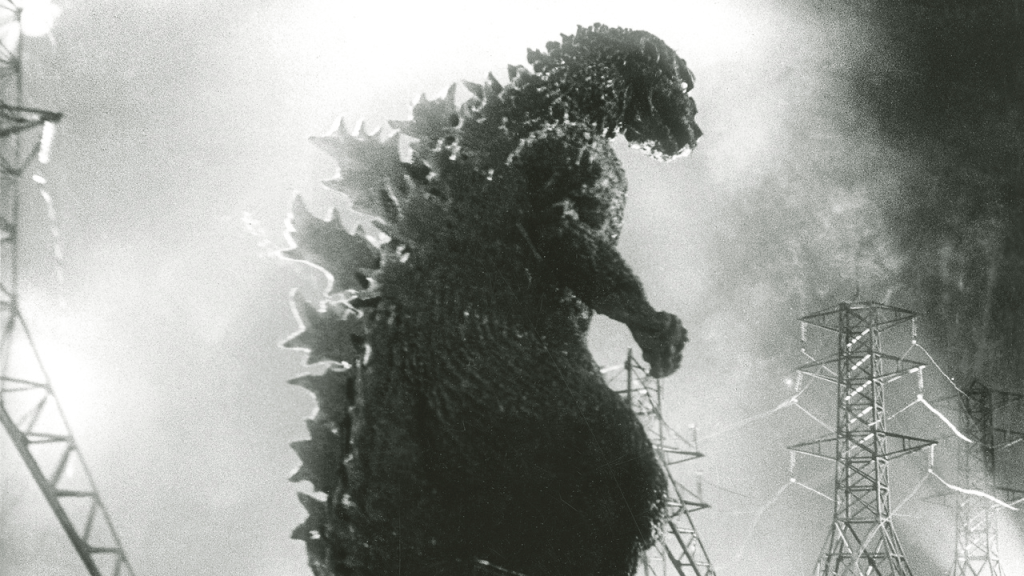
Godzilla was released in 1954, but a shocking majority of audiences in the West would not be able to view it in all its unaltered majesty until as late as 1998, when its home-media DVD was finally subtitled and released to coincide with Emmerich’s upcoming “remake” – instead, for 44 years, Godzilla was known by its recut name, Godzilla King of the Monsters!, its Japanese actors and evocative power replaced by Raymond Burr and clumsy attempts to gouge as much political pertinence and emotional weight as its stateside distributors could muster, keeping only the devastating sequences of destruction, which, by the sheer strength of their powerful imagery, even still manage to communicate the emotional devastation torn throughout the island nation. And yet, the effects of such a reinforced attitude, of engaging with the genre only through its most sullied and transformed form, the true lasting consequence, is a prolific tendency to avoid approaching the films in a serious manner at all.
Surely, the physical makeup of these genre exercises, the aesthetic quality, the look, is what matters most, anyway though… Again, Tim Healey, author of the aforementioned The World’s Worst Movies, determines throughout its Japanese Monster Mash segment that films of the genre can “only really be judged by the quality of their special effects” citing routine use of “cardboard characterisation, awkward dialogue and ludicrous plots” as reasons to entirely disregard any consideration of their other worthy attributes. Even those who work within the genre seem to find themselves drawn to immediate, sincerity-eschewing criticism – somewhat infamously (at least, in my house), Tom Holkenborg, composer of the score for two of the modern Monsterverse films, when asked about his favorite movie in the franchise, responded by stating:
“My favorite movie is Godzilla vs. Mothra (1992). And so, when people ask me, is it a good film? I say, ‘Well, besides the bad script, besides the horrible acting, besides the bad special effects, and besides the really bad scripted fight sequences, it’s a fantastic movie.”
Ridicule and derision seem prolific and popular. And yet… the genre persists. Its immense instances are scattered throughout popular culture. Godzilla himself holds the title of the longest running film franchise of all time, and, whilst King Kong inches closer to reaching its 100th anniversary, the character remains a veritable icon – a symbol of fame whose gargantuan frame has been appropriated by a multitude of cultures and creatives across the planet. He was even in Ready Player One, and that had the Iron Giant, Master Chief and Tracer from Overwatch… right. Not quite at the top of his resume. But, the King of the Monsters now has an actual Academy Award! To celebrate the passing of his 50th anniversary, the giant, rubber-suited menace was awarded a star on the Hollywood Walk of Fame and a high-profile film premiere at Grauman’s Chinese Theatre, boasting not only fourteen(!) different monsters to mash together, an eclectic kaleidoscope of colour grades, fast-paced editing and influences ranging from The Matrix to X-Men and, one must assume, copious litres of monster energy and queer-coded shipping edits, but also the mustachioed tones of professional wrestler, successful mixed martial arts champion and actor, Don Frye, who famously intones that, “there are two things you don’t know about the Earth. One is me. The other is Godzilla.” He sells the line well. In 2015, Mayor of Tokyo’s Shinjuku ward, Kenichi Yoshizumi, recognised Godzilla as an official resident of Tokyo, and named him an “ambassador for tourism” – ironically, it would take less than a year for Godzilla to bring this very Mayor’s plot of commercial, high-rise scattered land to concrete-melted, highly-irradiated devastation in Hideaki Anno’s Shin Godzilla. Talk about a governmental U-turn!
All this reverent discussion isn’t to suggest that the genre is above hilarity – certainly there are plenty of examples of ridiculous, laughable moments, cinematic entries whose practical effects inspire panic through the threat of painful waist-side stitches, rather than the more respectable terror of colossally-sized ground-shaking peril. Konga is an awful film (in fact, you could argue it is one of the worst to grace the kaiju genre), Roland Emmerich’s attempt at bringing the Japanese icon to Western shores was a bloated, badly-rendered exercise in excessive fish and disappointment. Gareth Edwards fared much better.
But, dangerously, this unchecked attitude can lead explorers into the genre to adopt a binary approach in their viewing experience: the kaiju film is either comical fodder, unworthy of further thought – something to laugh at whilst screened at a bar, pint in hand – or, on the rarest of occasions, they are lauded as products of great historical and artistic importance. Where does the distinction lie? To a certain degree, it could be argued that the public-convincing successes of films like the original Godzilla, and Godzilla Minus One come from the emotions that they are able to stir in the audiences, each crafted with a genuine spirit and a wholehearted effort to impart a message to the world who is consuming them. Expressing a lesson it wishes its audience to learn. But, truthfully, every kaiju film has something of merit to offer to the ongoing conversations that the genre continues to discuss.
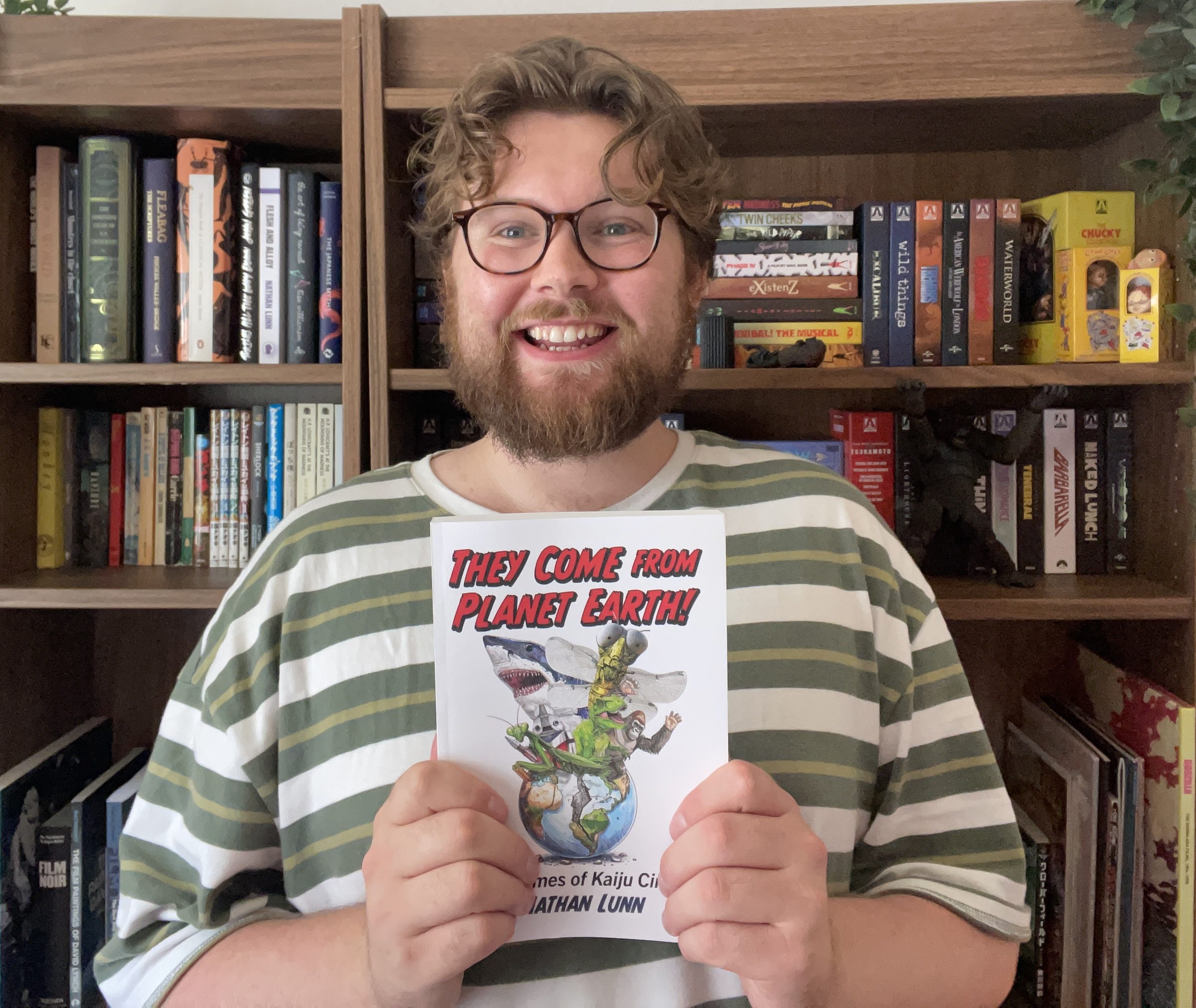
They Come From Planet Earth! The Themes of Kaiju Cinema, my newest book, is focused on these very conversations, and their critical importance. Creatures irreversibly mutated by atomic radiation. Trauma enacted under deeply monstrous motivations. Ambivalent expressions of technological progress. Warriors of the natural world fighting to protect their planet from a species steadily destroying it. Critical spectacle utilised to chastise and encourage political ideology. Radiation may have been responsible for the birth of the first gargantuan reptile antagonist, but it also left itself and the immense monsters that would follow with an undeniably impressive mutability – a cinematic ability to adopt shifting metaphorical positions that change and flow to best reflect the time they are created within, the shared fears of its audience and filmmakers and the allegorical potential to comment, critique and communicate about our world as we know it, and, as we may soon come to find it…
To me, writing and academic exploration of this kind are vital for a genre constrained by such an impactful cultural stigma – conversations that are shared and began in this book are fundamentally important for highlighting and encouraging the historical and artistic value of films within the kaiju genre, ultimately serving to revise cultural perspectives and alter the very ways of appreciating and approaching the films themselves so that their allegorical (and often somewhat subtly hidden) moral messages and thematic intentions, repetitively and empathetically imparted throughout 100 years of giant monster movies, will no longer continue to find themselves preaching to an ignoring, wholly misinformed audience. There is a new way of watching the kaiju film, and it is taught in this book.
The book itself was formed from rigorous, entertaining study – the watching and rewatching of countless kaiju films, from revered classics like RKO’s King Kong to the worst genre examples, such as Asylum’s Mega Shark vs. Crocosaurus (a franchise of four films that I stupidly decided to watch in a single, torturous day); a research-inspired trip to Japan that drained my wallet, introduced me to the funky beats of Tatsuro Yamashita and provided great information and inspiration in all elements “giant monsters”; but much of my time was spent collating the fantastic work of eminent kaiju scholars, Jason Barr, David Kalat, Brooke McCorkle and Sean Rhoads into digestible and informative blocks of thematic intent. This kaiju book, filled with the passion of nearly a decade of personal interest, four years of writing, almost two-hundred cinematic examples of colossal creatures, and more than enough immense beasts to satisfy even the largest of devotee, is strongly recommended reading for fans of the genre, offering a fresh approach to a grand variety of familiar cinematic creatures, a new look at many underappreciated entries, and a fair look at films across all spectrum of quality and popularity, whilst offering a perfect introduction to those who are looking to learn more about the vast scale of its historical, cultural and cinematic importance.
Split into digestible blocks of thematic focus, They Come From Planet Earth! explores a great collection of themes spread across almost a century of kaiju media: the nuclear trauma rippling throughout the series, whose half-life seems to remain unending, the obscured concerns of the world, panicking around wartime trauma and the capabilities of new technologies; the environmental crisis and its ever-returning relevance to our planet and the fantastical ecological creatures who roam it, a consideration of Gaian theory and her oversized footsoldiers, acting on earthly, healing command, to political discussions around the embattled worlds surrounding the kaiju themselves, examining how creatives are shown to utilize the great beasts so that they may comment upon the grand, historical collection of issues plaguing our contemporary planet – all interrogated through kaiju entries from the essentials, such as the Godzilla, Gamera and Monsterverse franchises, to the kaiju-periphery like Dune, Gorgo and all things Kongspolitation!
Exploring through a grand oeuvre of narratives and intentions, all mediated through the fantastical, allegorical creatures of the kaiju genre, They Come from Planet Earth! strives to provide its readers the tools to adopt a new way of watching, interrogating, and thinking about colossal creatures, in order to form an analytical landscape that defines the kaiju genre at large. And, of course, at large.
Nathan Lunn is a North-Eastern writa’, researcha’ and enthusiastic disciple of genra’ film. As director of Geordie Film’s Class, his exploration of cinema has taken him down all avenues of thought and theory, researching into the further reaches of genre film to uncover the gems hiding within, presenting the discovered information in screenings, talks, writing and passion. His book on Kaiju themes, They Come from Planet Earth! is available from McFarland & Company Publishers and can be found on Amazon.


