
by Isabelle Cocozza
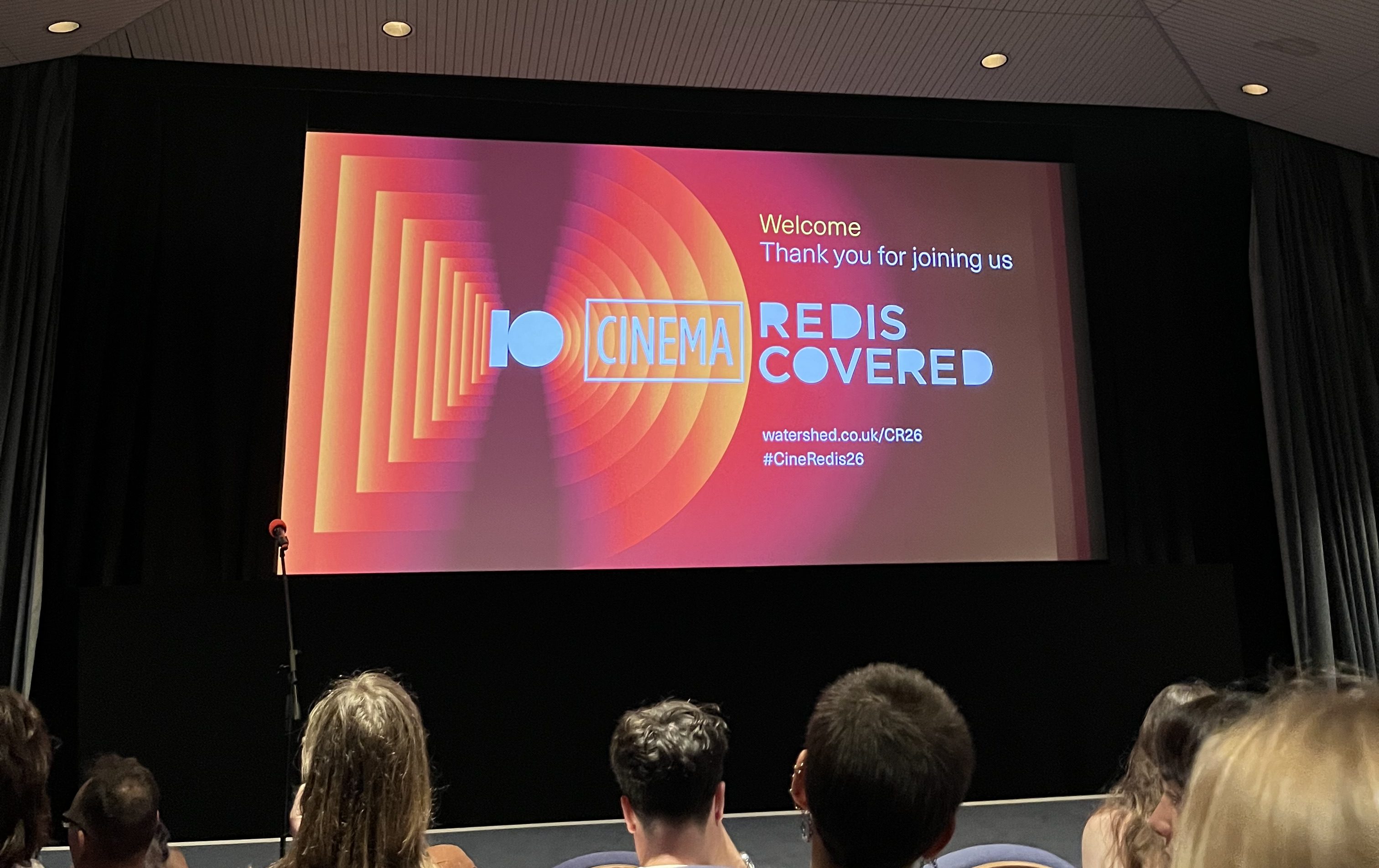
Cinema Rediscovered is a festival consisting of only repertory cinema, including premieres of recently restored and recut films or rare films rediscovered through its programming strands. I was lucky enough to attend and review the films I caught over the 5 day festival, including fun features from Josie and the Pussycats (2001) to late night highlights such as William Freidkin’s controversial Cruising (1980). The opportunity to revisit or discover these films left me wanting to dive in deep to my thoughts on them and the festival itself!
Cinema Rediscovered began on Wednesday 22nd of July for its Reframing Film Sessions for industry members including programmers, distributors and venues. This ran from 11AM including a fantastic lunch, opening drinks from the sponsors and craft tables until the 8PM opening film, the premiere of Mario Bava’s gorgeously restored Danger: Diabolik (1968). I also want to note the fantastic talks on throughout the festival such as Other Ways of Seeing, diving into the nuts and bolts of programming, and 50 Years of Curzon.

Danger: Diabolik (1968) was a great, lighthearted and comedic choice for the opening of the festival. With a prerecorded introduction from filmmaker Edgar Wright, a fan of the film who’s work has been largely influenced by Diabolik, it played in the festival’s Comics Come Alive! strand. Bava’s film was a mischevious, absurd Bond flick on gadget steroids which garnered many laughs amongst the crowd from Diabolik’s ingenuity and the police’s incompetence in catching him. The film’s tactile, high pop art aesthetics and fashion create a visual feast accompanied by Ennio Morricone’s score, and thus was a gorgeous, fun and thrilling choice for the opening of Cinema Rediscovered 2026.

The Party – Nature Morte (1991), starring Tilda Swinton, is a German/English language film and directorial feature debut by Cynthia Beatt. Queenie (Swinton) hosts an all-night party in Berlin filled with interesting guests as a rift strikes between her and her lover. The film had it all for me: a brooding atmosphere, poetic and intellectual, trivial discussions from characters, and gorgeous black and white artistic composition and camerawork. Despite all these appealing traits of the film, it became eternally dull and was for me personally, the largest disappointment of the festival as I fought to keep my eyes open. There seemed to be very little investment into the characters, and even from a snapshot approach, wandering around these people, they just were not given enough depth or intrigue. I can understand how it may work for some, yet it seems I was the target audience and could not gel with it. The cast deliver strong performances and it looks stunning, but the film remains ultimately vapid. If you are a Tilda Swinton completionist, check it out. There may be a potential for kinder eyes upon a rewatch, if i ‘missed’ something about it in my festival tiredness haze…

Dead Mountineer’s Hotel (1979) by Grigori Kromanov is an Estonian Sci-Fi whodunnit film. It’s 4K restoration premiered at Berlinale, and reaches Bristol supported by the Estonian Embassy in London. Cinema Rediscovered prefaced the film with a short conversation between festival founder Mark Cosgrove and composer Sven Grünberg, and an electronic performance of his music was played live in the Watershed Bar after the film.
A police detective goes to a hotel in the middle of the snowy mountain landscape to investigate an anonymous call. The calamitous weather and a guest found dead turns the hotel into a prison of paranoia for the detective and guests, until we discover that some guests are not of this world. The film characterises its lead very well and he suffers the dilemma of helping the aliens or not, with a rigid police mindset of obeying orders. The film sits at a brief 80 minutes yet drags somewhat within the centre, but features compelling performances from all cast members who play the eclectic, offbeat and at times deranged hotel guests – in a way that felt intriguing and effective in contrast to The Party‘s guests. The cinematography is breathtaking and vibrant, contrasting a gorgeous mountainous snow landscape with a retro-futurist hotel building. The eerie, electronic music really adds to the bizarre vibes in the vast, snowy, mountainous landscape. The film was a unique oddity that I was very glad to catch, and was a favourite new watch of the festival! It’s these sorts of almost lost, oddball films that really shine in places like Cinema Rediscovered.

The 4K restoration of Leaving Las Vegas (1995), with a prerecorded introduction by writer/director/composer Mike Figgis, was the sold out Cinema 1 screening of Thursday night. Figgis’ introduction highlighted the time in his life that Leaving Las Vegas was born from and its relationship with his rejection of the Hollywood studio system and subsequent return to a personal, intimate approach. This included personally casting Nicolas Cage and Elizabeth Shue in their roles and a low budget, 16mm shoot completed within three weeks.
I had never seen the film and was left rather emotional after my viewing experience. The cinematography is compelling for its budget, and adds to the intimate, personal feel. I think it goes without saying that Nicolas Cage’s performance for the role was outstanding. However, I was rather disturbed by some of the frequent audience laughter at his ‘funny lines’, and not awkward nervous laughter – it’s not very funny at all. I do think that a relatability factor is of course key to unlocking the impact this will have on the viewer, but that the performances are enough to convey the delicate sense of their worlds’ aching potential to shatter. The narrative felt like a slow motion car crash, and that final scene was astounding, holding a bizarre beauty within its harrowing image.
I would note that I do believe that there are some issues with its presentation of our female lead – not overt misdeed, but there could have been more responsibility in how this was handled. I found it hard to empathise with a film attempting to critique exploitation of women when the camera itself is actively sexualising our lead in scenes where she is not attempting to be seen as sexual, especially in contrast to her costar. Even the narrative’s sympathetic portrayal can be framed within the male gaze as the camera lingers on her form. While she is largely an accessory to Ben’s story and is an object of desire, it is frankly Ben’s film from the start and so it makes sense that, while she is one of the more well rounded and sympathetic portrayals of sex workers in film, she is not in her own story – and the film perhaps subconsciously reflects that she exists in relation to how she serves men around her at a dire cost to herself. Other than that which sometimes took me out, I loved this viewing experience, sucked into another world with good ol’ movie magic…

The Butcher (1970) is a Claude Chabrol film starring wife Stéphane Audran screening alongside other Chabrol pictures such as The Unfaithful Wife (1969). A small town headmistress befriends the butcher while the town experiences several grisly murders. The most compelling aspect of the film for me was the characterisation of the lead which was fantastic. A rounded presentation of a young, smart and above all, kind woman – who addresses the children with respect and care. When her friendship with the butcher blossoms after meeting at a wedding, he begins to have romantic feelings for her which she gracefully declines as she has been heartbroken once before, now choosing a happy and content life alone. The respect the film gives her and her more objective, respectful gaze and framing seems rather progressive for the time. The butcher as the dramatic impact of the film is also of course intriguing as we assess whether he is the murderer – but Audran really steals the show here. The thriller aspects of the film become really strong during the last act, and while interesting, I found this story itself not so gripping. However, others at the festival recounted how invested and exhilarated they were. I’d recommend taking a look and deciding for yourself.

Long lost and freshly recovered Looking for Mr. Goodbar (1977) by Richard Brooks is my favourite new watch of the festival. Introduced by Rogue Hollywood strand co-curator Ellen Smith and shown on a very grimy, damage ridden found 35mm print, the film follows Diane Keaton circa Annie Hall success, as Theresa, a young woman training to be a teacher for deaf children. She embarks into New York bar nightlife and sexual encounters after leaving her family home since her malignant catholic father’s ruling that under his roof, will only be his rules.
The film has raised conflicting interpretations of it’s presentation of women’s sexual liberation, though to me it appeared overt in its ideas of Theresa’s freedom. While trying to create her own life in her flat and effort to her career, she is repeatedly made the punching bag for men, which the film seems to be blatant about. Instances of men becoming ignorant of her wishes, dismissive of her claims that she is not lonely, and ultimately boundary pushing, offended, and violent, occur in succession. The film’s attention to all aspects of Theresa’s life, including lots of scenes at her job, create a truly more than two dimensional character. This screen time dedicated to her broader life encourages understanding of her wants for sexuality as an aspect of her, preventing a shallow portrayal as a sexually voracious woman. This helps to combat her potential exploitation or punishment by the film itself, as we empathise with her enough to feel the injustice of her treatment and misinterpretation of her wants and needs by those around her.
The building mistreatment of Theresa ends in her rape and murder by a gay man in denial after he cannot become aroused by her, after leaving his lover and meeting Theresa. She assures him it is okay and asks him to go home and they’d try another time as he does not need to feel that he must ‘prove’ anything, to which he becomes erratic at the suggestion. The end is truly horrifying, unsexualised and immensely tragic – and to me, heavy handed. Interpretations that the film is an expression of purity culture by punishing the sexually liberated woman is an irresponsible reading of the film’s overt failings of the men, who take out their frustrations on the women in their lives. Theresa’s father aggressively mistreats her for her not wanting to be subservient to his lifestyle when she is not affecting anybody else. Her thieving one night stand who disappears becomes enraged when she considers him in the same regard that he does her, and not as ‘his girl’. The self-hating gay man in denial rapes and murders her when he cannot become aroused by her and she assures him it is okay as he doesn’t need to prove anything. Man’s incompetence in handling emotions deeply rooted in the effects of patriarchy, is put on full display as the film exposes its pathetic and needless nature of causing unwarranted emotional harm to themselves, but how ultimately, women absorb the shock.
Keaton provides a stunning, believable and genuine performance, and the supporting actors including Tuesday Weld as Theresa’s sister also shine. The progression of character and the men she encounters sucks you in for an immersive experience of 1970’s bar culture. If you can catch this print in your city as Cinema Rediscovered tours, I implore you to attend.

As part of Restored and Rediscovered, the new Radiance Films 4K + Director’s Cut of Nadja (1994) by Micheal Almereyda (and produced by David Lynch) was introduced by Geoffrey Badger of Lost Reels. Nadja is a brooding 90’s cult vampire film in New York city, in a realm cohabited by Abel Ferrara’s The Addiction (1995). Nadja takes the Dracula vampire lore and reinvents it – an adaptation that works in some ways, and maybe not so much in others. Nadja is a beautiful vampire stalking the night – with an ill brother and his human lover/guardian Cassandra whom she must revisit after their father, Dracula, has been murdered by Van Helsing. Nadja meets Lucy in a bar and they have sex, before her husband returns to find her ill, who gets together with uncle Van Helsing to track down Nadja. They follow her to Romania like in Dracula to destroy her and cut off her head, yet ‘she lives on’ inside Cassandra, going on to marry brother Edgar. Van Helsing, played by Peter Fonda, is a particular highlight of the film. as an intriguing modern adaptation that works superbly well. He is funny, aloof, and ignorant of people’s emotions and needs around him as he is so hell bent on uncovering more vampire lore.
The film’s bizarre tone is at times incredibly funny in its severe, deadpan humour that seems to poke a little fun at its own broodiness. The costuming and production design are enthralling, alongside a banging soundtrack with the likes of My Bloody Valentine. At times the film certainly drags, but does come back around. It also uses something called PixelVision, a Fisher Price toy camera. This shoots dazed moments influenced by Nadja’s powers or otherwise bizarre scenes. However, it becomes used in random scenes where there is not necessarily a context for this to be used, and increasingly frequently. I loved it at first, and it gets very old. As a particularly fervent vampire film lover, this film does capture key aspects: aesthetics, queerness, and some interesting lore of the types of power dynamics that forms in these bonds. I enjoyed the experience of being sucked into such a rich atmosphere. For anyone like myself or Geoffrey who must watch every vampire interpretation put to screen, it is an interesting and quirky watch that I would recommend. If gothic films aren’t your thing, you won’t like it, as it rather largely relies on its aesthetics, alternative soundtrack and deadpan attitude more so than a watertight story to be compelling.

Obsession (1949) (also known as The Hidden Room) directed by Edward Dmytryk is a British film noir, but with a twist – the murder is being prepared the whole time. It is based on Alec Coppel’s novel A Man About a Dog. The wife of a London doctor has is discovered to have had an affair with an American, whom is subsequently kidnapped by the husband as he plans to extract the perfect murder. The film was presented by Powerhouse Films’ Anthony Nield (alongside another feature, Pastor Hall (1940)) to celebrate their tenth anniversary. The film was smart, witty, and at times rather humorous. I loved the fusion of the noir conventions and a hint of gothic, mad scientist hints here and there. The thriller aspect really was strong – I was hooked. The characterisation is good enough for this sort of film, the wife was witty and sharp alongside her very humorous lover. Our lead has a friendly enough face to add an additional unsettling aspect, as he seems convincing and friendly enough towards Scotland Yard where I genuinely didn’t know where it was going. It’s a simple film, beautifully made, and certainly delivers on entertainment. I would definitely recommend checking out this hidden gem.

Josie and The Pussycats (2001) is a comedy-musical film based on the comic book, starring Parker Posey and Alan Cumming as evil record label executives who collaborate with the government to put secret layered tracks into the songs of a band in need of a big break, brainwashing the youth of America to buy into trends and products. The film was shown at Bristol Megascreen by Party Girl Productions, a Bristol based duo who screen fun, ‘girly’, and nostalgic films with party vibes. The two introduced the film with excitement and humour and a karaoke performance of songs from the film followed, including audience members standing and dancing while singing the words, including grown men and parents bringing their children – proving the cult following I didn’t quite anticipate this film to have. They finished with a catwalk of audience members, showing off their custom crafted cat ears made in the Megascreen’s lobby.

I never grew up with the film unlike many attendees, though I did with its similar company such as Clueless (1995), which shares multiple cast members, so a nostalgia factor was absent. Regardless, it was never unfunny. I think that they fumbled the script’s accessibility as the first act really was fantastic for every age group. I found the brainwashing plot simply too childish and it took me out of the film immensely, though I would note that this felt very largely due to personal taste and the screening was full of adults, men and women. Even if I no longer could really roll with the plot after a certain point, I could count on some laughs. While it became ridiculous, Parker Posey and Alan Cumming’s characters stole the show. The costuming and aesthetics of the film are really fun and of its time. The film is startlingly ballsy in its criticism of American consumerism, using endless brand logos (and taking no money from any of them) on ridiculous fake sponsored items. I’m not jumping to watch it again, but I certainly had a much needed smile on my face to pick me up between a long day of films.

Ghost World (2001), directed by Terry Zwigoff and based on the graphic novel by Daniel Clowes is a black comedy coming of age film starring Scarlett Johansson and Thora Birch. Recently graduated from high school, social outsiders Enid and Rebecca linger in the limbo of their lives after they decide not to go to university. Rebecca becomes a barista and Enid cannot hold a job, instead befriending an older jazz music fanatic and recluse Seymour played by Steve Buscemi. The two are immensely misanthropic, become introduced to Seymour by prank calling him from a newspaper ad he placed to find a woman with whom he shared ‘a moment’ with on an aeroplane. The film is a slice of life piece into Enid’s quirky world and her outlook.
While its not particularly thrilling in plot, the world is very immersive: the American turn of the millennium costuming, chain stores, 50’s styled diners and graffiti help to create a comic book atmosphere that feel like its own bubble Enid is stuck inside. Her contempt for the world and its residents is at times comical, but slowly becomes something holding her back, by an inability to keep a job by keeping her opinions to herself and projecting the worst onto others: She gasps at Seymour “Oh my god, he just ordered a giant glass of milk.” / “That’s a vanilla milkshake.” While I can most certainly relate to a lot of aspects of Enid’s eccentric and troubled adolescence, she becomes gradually unbearable to watch as her unexplained cynicism towards everybody keeps ahold of her in this transitory state of life. Rebecca is excited about her new flat’s fold out ironing board while Enid chooses to lurk around an old man’s flat – Enid falls out with Rebecca by neglecting their friendship as Rebecca’s life evolves. The film does encapsulate the confusion of adolescence as Enid tries to find herself through often inappropriate outlets, and for its honesty and candidness I salute it. While the debate on Enid getting the bus goes on, and the argument for her symbolic suicide is there, I would like to think it is optimistic: the bus she believed wasn’t a possibility, appears at that stop. She was so rigid in her own worldview that when faced with this, she decided to pack up and move on. Who knows. I certainly enjoyed the ride.

Cruising (1980) directed by William Friedkin was presented on Saturday night to a packed screen by independent programmer Ellen Smith as part of the Rogue Hollywood strand. Before the film, UWE Curation MA student George Cruse-Drew presented Cruising the Archive in the Watershed Café/Bar – a collection of archival materials from books to newspaper articles and magazines on the cultural practice of cruising. The collection included many articles about the film from queer activist groups calling to shut the production down after the script was leaked, and articles from gay men defending the film. This difficult discourse was presented in a way to encourage engagement with the materials and with each other before and after the screening, and the programmer’s intentions were explained with a sincere responsibility. Some people left loving it, and I noticed some who disagreed with the film.

Al Pacino stars as a rookie police officer looking to go up in the ranks. His offer for fast progression? Go undercover in New York City’s BDSM gay leather bars to investigate the killings of several men connected to the scene. As he navigates this strange new world, how far undercover is too far?
The film, which I had seen before, was fantastic on the big screen in the dark. Love or hate Cruising, the worldbuilding of the film is extremely effective. The film’s soundtrack and tactile textures of its fashions were so immersive, one could almost feel the humidity and smell the poppers. The film, at least to me, is very progressive in many ways, and regressive in others. The openness with which the world is explored is certainly ballsy for 1980, and Pacino’s character questioning his sense of self as he begins to subconsciously bring the job home with him is intriguing, like showing up at his girlfriend’s house with a leather cuff. I don’t think that this is portrayed as a particularly frightening possibility. The police’s treatment of queer communities is portrayed as tough, unreasonable, exploitative and abusive. Wether it presents gay men as inherently violent is a whole other essay worthy debate, and one I would be somewhat inclined to defend the film from if it weren’t for the tragic ending of Ted the neighbour, killed by his partner which could imply a larger trend – a harmful implication. Regarding the killer, the film presents the serial killer’s motives originate not from being a gay man interested in sadomasochism. If his violence is related to his homosexuality in any way, it is that he is a victim of society, as he is shown to suffer from intense internalised homophobia fuelled by judgement from his late father – and kills gay men as penance. Whether this nevertheless remains problematic is a huge topic of debate.
For me, the film deals ultimately with crisis of masculinity. The killer externalises his issues to cause harm, not dissimilar to Mr. Goodbar, perhaps discussing how men are less socialised to internalise their emotions for others’ sake and are also less equipped with the tools to self soothe or seek help due to perceived weakness. What Pacino feels is left largely internal and unknown – his questioning may be that he is also attracted to men, or that gay culture provided him with a freedom and wider breadth of expression that he wished to try. Or perhaps, he feels emasculated and an appeal to the intensely hyper-masculine leather scene. It explores how men view other men, and even misogyny, as men are not really told how to be manly, just not to be womanly, and I think that Cruising displays this anxiety well. The presentation of the film by its curators was fantastic and certainly enabled discussion on this very tricky, controversial film.
Cinema Rediscovered consisted of fantastically curated strands of films, extra events like craft workshops, introductions and guest speakers that created a wonderful experience for attendees that I adored. For those working in the repertory world, it really is the place to be – but simply as a film lover, it’s one of the best experiences to explore underseen films on rare big screen presentations. The curation of strands was so intriguing and well put together. I cannot wait to hopefully return, and must thank the wonderful Cinema Rediscovered team for having me!
Isabelle Cocozza (Instagram: issycharliedennis) is the Founder & Editor in Chief of Culture Film Publication, a film production student and photographer. She is based in Bristol and Bedford, with areas of interest in horror, cult/genre, and psychosexual filmmaking.


