by Zak Coates
Two monsters haunted Forbidden Worlds: a dragon and a beast. I had the opportunity to attend the Forbidden Worlds film festival at the Bristol Megascreen on 24th April, it proved to be a captivating introduction to the communal energy of fantasy fandom. I attended the festival primarily to see Brotherhood of the Wolf (2001) and Dragonslayer (1981), However I was surprised by how much the festival’s mythology extended beyond the screen. Between various memorabilia stalls, soundtrack and physical dvd collectors of cult classics, themed drinks and a vast range of different ages moving between screenings, the festival felt less like a conventional programme and more like a communal space devoted to genre cinema. Crucially the two films offered different approaches to myth, treating monsters, heroism and fantasy as not simple escapism, but as meditations on power, danger and legend.
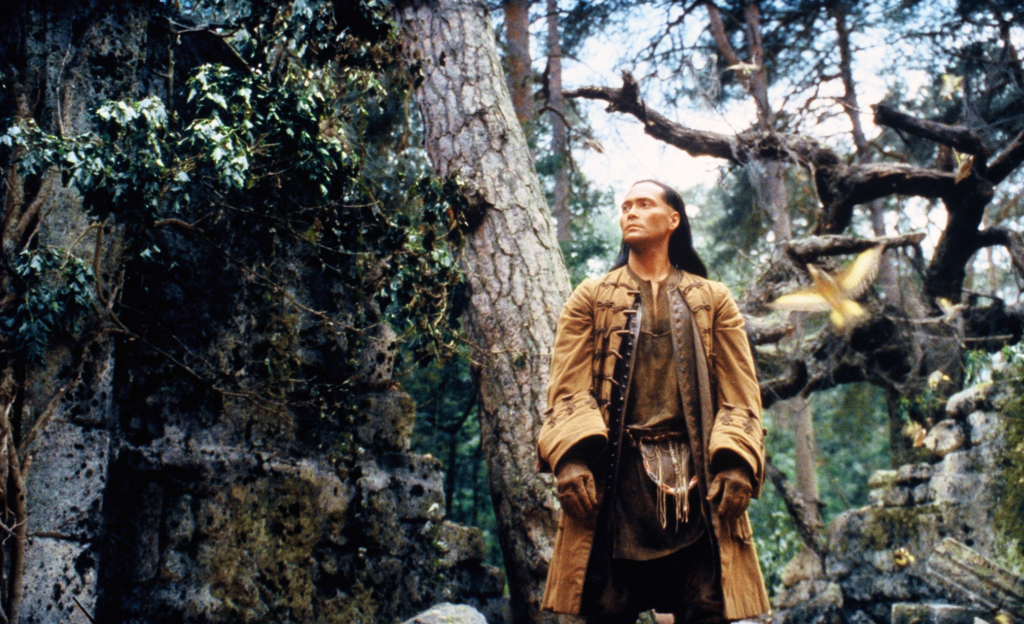
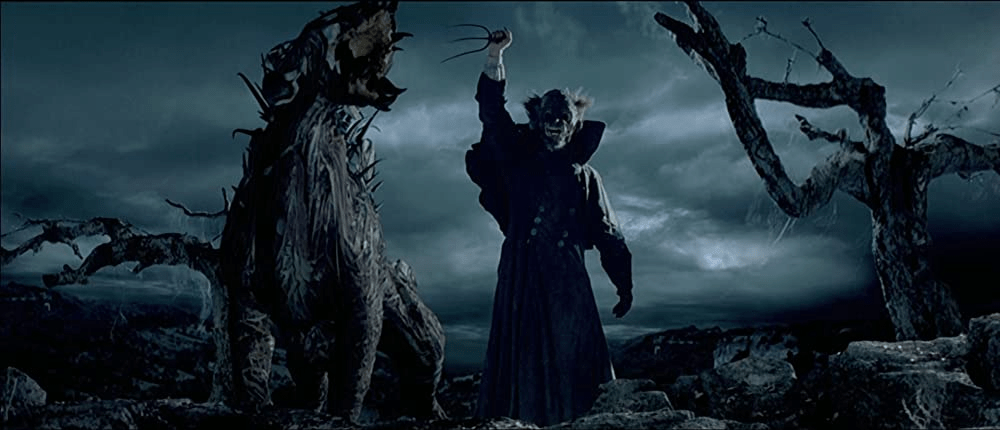
Brotherhood of the Wolf was the first film I saw that day, and the more surprising enjoyment. It’s a film which pulls the audience into a dark, eerie vision of eighteenth-century France, which is recreated through rich gothic textures, from aristocratic costumes and lavish interiors to the harsh visual contrast of peasant life. The film’s attention to the social divide of class is embedded in its design, using costume and setting to make the hierarchy accurate to its portrayal. The world-building seemed reflected by the audience’s response: unlike the communal laughter that is seen later in Dragonslayer, this film is largely played in concentrated silence, soaking up the atmosphere. The film’s use of hybrid energy remains one of its strengths, moving through a multitude of genres: martial arts spectacle, romance, horror and political intrigue. At the core of it is the Beast itself. This mysterious creature initially emerges as a terrifying myth before finally revealing itself to something more feral, a hybrid predator engineered by man, but disguised as folklore. It’s a creature suspended between animal and nightmare. An instrument through which fear is manipulated and controlled by corrupt power. In that sense, this film turns monster mythology into an allegory about politics, suggesting that what lies behind the beast is not only horror, but corruption, death and control.
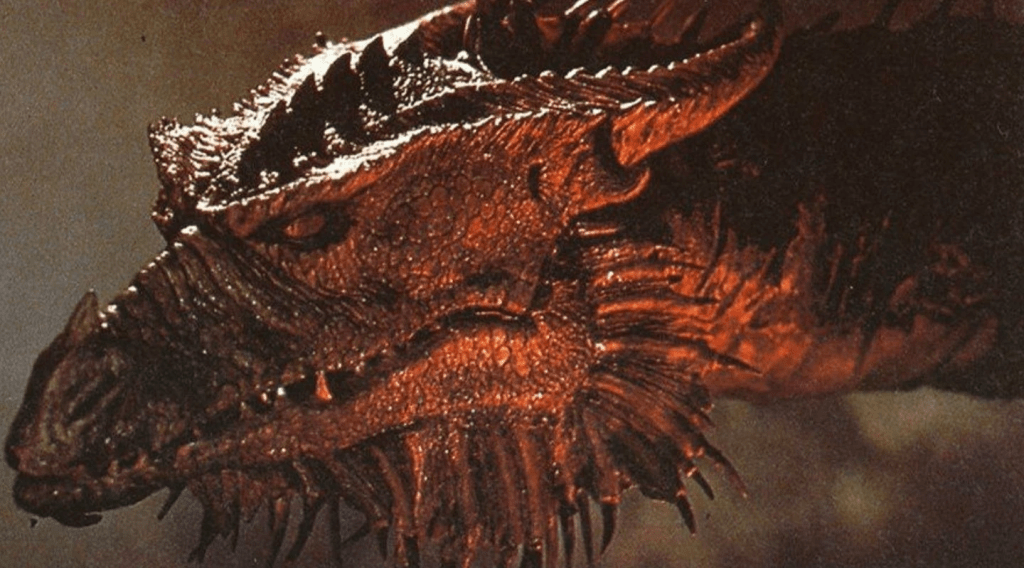
After the gothic density of Brotherhood of the Wolf, Dragonslayer offers a strikingly different vision of myth, one rooted less in political intrigue but more in elemental, medieval fantasy. The world feels immersive and almost dreamlike, shaped by its rugged landscapes – courtesy of Wales and the Scottish Isle of Skye as their shooting locations. The practical effects and a medieval atmosphere gives this film a tactile sense of place. At the forefront of this film is Vermithrax, an ancient, fire-breathing beast, defined by its scale and weight. It’s a creature rendered not as a majestic fantasy icon but as a weathered, almost diseased, predatory force of nature which adds to its menace. The dragon functions less as a conventional villain than as a mythic trial through which heroism is tested.
For a film of its period, Vermithrax stands the test of time. The visual effects might look rugged at times to the modern day eye, showing its age. However this was revolutionary for the 1980s. Dragonslayer was able to make this creature feel physically there and move like an animal and not some fantasy abstraction. The close-ups of the dragon reveal its creative practical effects which help make the creature feel tangible.
The screening was met with laughter and communal enjoyment, a nice break from the cold silence of the previous film, this helped in part by its witty writing. That tonal balance gives the film a sense of play alongside its danger. It also shapes its treatment of heroism through Galen Bradwarden, a young sorcerer-apprentice whose journey follows a recognisably classical arc of uncertainty, ordeal and transformation.

Seen together, both films reveal how fantasy cinema can use myth in radically different ways. Both films use their monsters to create fear, though that nature of fear differs significantly. Vermithrax represents an elemental danger, a primal force of nature that must be confronted by its hero and slain. Whilst in contrast, the Beast in Brotherhood of the Wolf embodies something more political and insidious, tied to corruption and social manipulation from which the hero must stop. Same character archetypes and plotlines but different approaches to how those ideas are portrayed. The screenings themselves reflected this divide. Dragonslayer invited communal laughter and a sense of adventure throughout much of its runtime. It balances danger with moments of warmth and playfulness. Brotherhood of the Wolf however, produced a more concentrated silence, with the audience seemingly absorbed in its atmosphere and underlying tension.
Overall, what did Forbidden Worlds reveal about fantasy cinema? Fantasy goes beyond simple escapism, but rather a large communal appreciation for the genre. Films like Dragonslayer and Brotherhood of the Wolf, helped the festival demonstrate that mythology can explore political corruption, joyous adventure and fear in radically different ways. What made the experience memorable was the communal atmosphere surrounding the place before screenings themselves. Audience members, collectors and long-time genre fans shared a visible love for fantasy culture. In that sense, Forbidden Worlds did more than just celebrate myth; it showed how these stories continue to strike a chord with modern audiences and keep the genre living.
Zak Coates (Instagram: Zak_The_Crack) Is a Film Production student and freelance filmmaker, working in technical fields such as Sound Recording and Lighting. He is Based in Bristol and Swindon, with areas of interest in horror, mythology and sci-fi genres.


