by Isabelle Cocozza
At Bristol Megascreen, the iconic Forbidden Worlds Film Festival returned on Thurs-Sun 23-26 May, 2026. With a packed, shiny new lineup of screenings and panels, the theme is Fantasy Myths and Legends after last October’s Ozploitation themed The Big Scream, consisting of 2 nights of triple bills (which you can read our coverage of here). I sadly could not make as much of Bristol’s leading genre film festival as I would have loved to, but what I got a glimpse of what exhilarating nonetheless!
After looking around the various assorted stands of vendors from Indicator films to horror merch, books and delicious food, the Women in Fantasy panel was about to start. The panel was hosted by Ellie Hendricks (Director of Archaeo-Heritage Film Festival) and included author and film journalist Helen O’Hara (Women Vs Hollywood: The Fall and Rise of Women In Film) and author Mara Gold (Ancient Myths and Legends Without Men).
The panel began detailing the tropes of women within fantasy: the virgin, the warrior, the witch, the madwoman, etc. and their roots in classic myths and legends. This included the seemingly ubiquitous role of sexual assault was raised by Hendricks, noting how the films shown do not stray from this and of course is absent from male presence in these stories, to which the guests noted on how this frequency is largely due to the genre’s roots in mythology which is inherently ‘warning men against women’ as witches, violent women, or Cassandra-like ignored ‘crazy’ women from largely influential Greek, Roman and Norse mythology. The assault of women is frequently referenced to, as in this panel, as ‘fridging’, a term coined by Gail Simone originally pertaining to superhero comics which refers to the disproportionate harm (eg. death, rape) to female characters to propel a male protagonists story.
A discussion of the filmic success and studio backing of female oriented, female led, female directed or just slightly feminine films by O’Hara described the ‘myth’ that old male studio executives are still believing to this day – that men are the principle cinema audience for financial success. After Star Wars, it was established that the male oriented work is studio priority as ‘male films’ are more likely to make money as young men were believed to be the largest demographic that financially supported the cinema industry – though of course this is blatantly untrue. The focus on ‘male films’ aka films oriented around more traditionally established as so called ‘male topics’ of politics, war, or violence, will yield these results as women will happily watch these films too – where men are less likely to adapt to watching ‘feminine’ films.
Briefly mentioned as the ultimate ‘men’s pick’ for a female character – Ripley from Alien (1979) is a woman who men like. This I wish to expand upon here a little. This is likely because Ripley is not necessarily the ‘wrong type of woman’. Ripley is androgynous enough for male viewers to identify with her as a protagonist, speaking to the issue of male spectatorship: where male viewers will not adapt to see themselves within female characters. Women however, having not been the focus for cinematic endeavours for decades, often see their personalities and qualities in male protagonists and thus identify with them as men do. Women enjoy ditsy rom-coms as much as violent action or horror films, whereas cisgender heterosexual male viewers have a tendency to malign with ‘feminine’ entertainment. Male viewers seem to have struggled with this idea since the dawn of cinema. The self is unidentifiable within these women. Their qualities seem irrelevant to the man’s experience of spectation and emotional investment and involvement in the protagonist when she is a woman – and especially a ‘feminine’ one who likes traditionally established ‘feminine’ things. Ripley offers a new solution to these men, as she is more of a blank slate for male projection and empathy due to her gender expression and behaviour (notably not existing sexually) where men tolerate Ripley. Alien however is women’s horror – overtly (and confirmed to be) about reproductive horror and assault, featuring the men’s experience of the rape and forced birth from the Chestburster and oral rape of the Facehugger. So why do men adore a film overtly about largely women’s topics? Men can place themselves within it through the androgynous Ripley, a majority male cast, and to return to the above ‘male film’ conversation, the film is crafted with ‘male’ movie qualities of sci-fi, violence and action and masculine mise-en-scene. Despite truly being a woman’s film, it stands as the ultimate manipulation of the male viewer to align themselves with women and their inherent body horror through a constructed, superficial masculinity. While Ripley may remain a feminist icon for getting down to business and she is not confined by visual constrains of feminine gender presentation, her popularity is tinged with a slight sadness of a double edged sword: she carries the knowledge that, for men, the overtly feminine woman (especially within in a more feminine genre/mise-en-scene) remains something to be departed from if the female protagonist is to be worthy of their genuine empathy.
This conversation expanded upon the mentioned ideas of overtly disproportionate slating for female characters (Rey – Star Wars, 13th Doctor – Doctor Who) compared to their perhaps poorly written counterparts who’s shortcomings (due to writing or performance) are a lot more ignored as a whole, or tolerated as being disappointing, rather than the egregious offence that lacking filmic women garner.
Q&A questions sparked discussion on the importance of translation in the way that ancient myths (and their presentation of women) are perceived. Mara Gold detailed the huge influence that this maintains, citing the example of so called ‘OG lesbian’, poet Sappho of the Greek island of Lesbos, who’s poetry was not faithfully translated until 1885 – where the original female pronouns, which were translated into male ones, were presented as the definitive translation. Emily Wilson’s recent translation of Homer’s The Odyssey was noted as the most important example of recent years that impacted the classics world. When asked about trans legends, Gold mentioned Srikandi, a gender-fluid warrior in Indonesian Javanese wayang mythology, often reimagined in modern queer perspectives as a trans or non-binary figure.
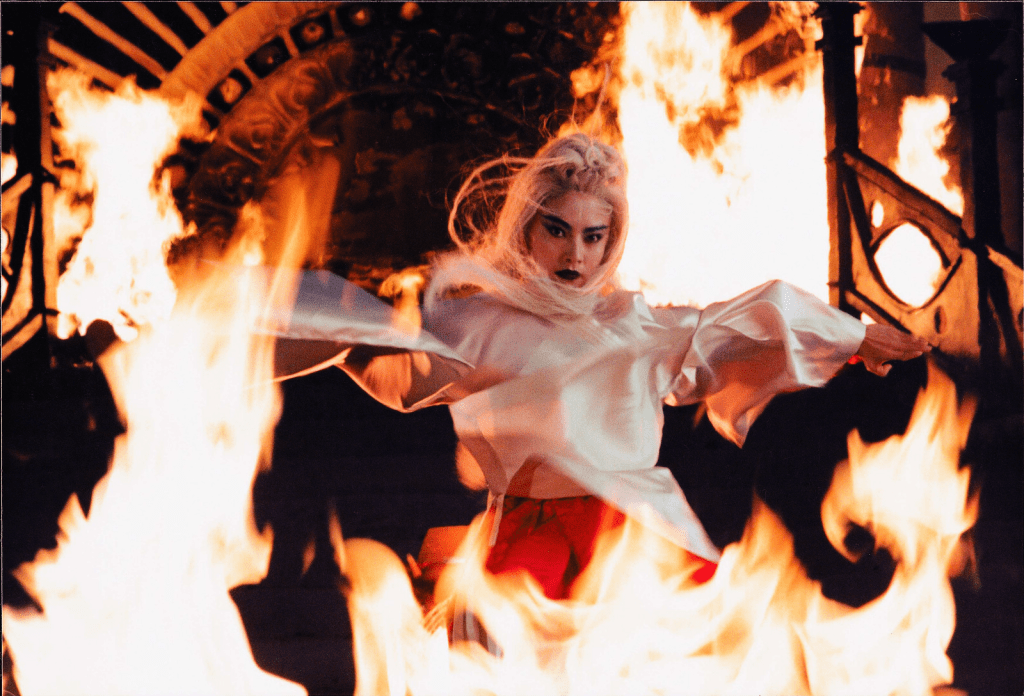
Ronny Yu’s 1993 Hong Kong ‘wuxia’ film The Bride with White Hair was screened alongside the panel. It stars Leslie Cheung and Brigitte Lin as an overly compassionate member of the Wudang clan being groomed to become the next leader and the powerful witch from a rival demonic clan with whom he falls in love.
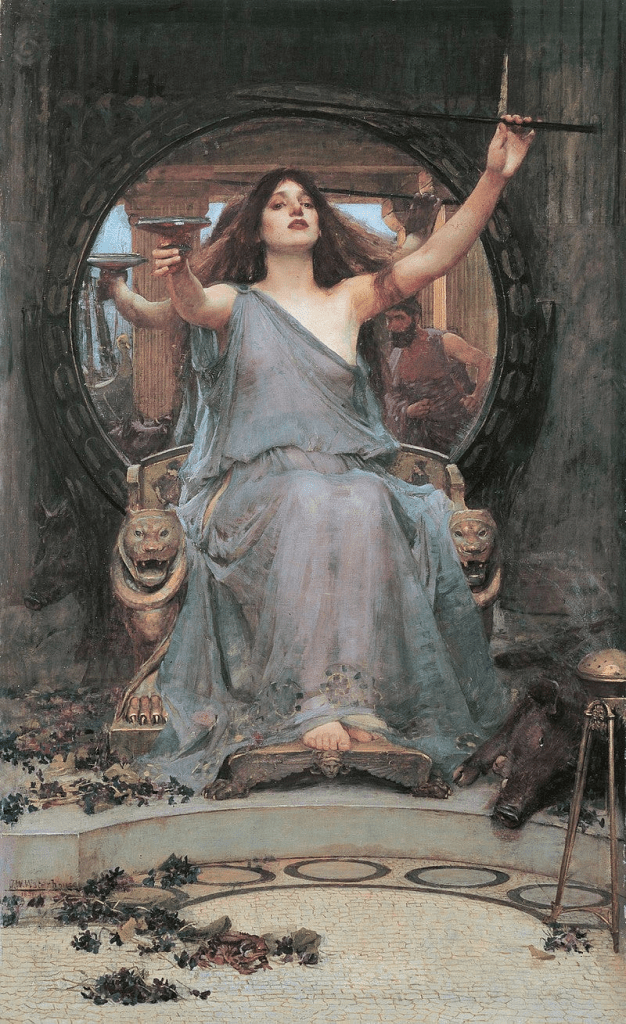
The film was a very interesting pick to show with the panel – perhaps not an inherently feminist one, but one that has many of the tropes on display. The central witch does embody the classic witch legend reminiscent of Homer’s Circe (The Odyssey). Circe lives isolated on an island banished by the gods, who notably turns Odysseus’ men into pigs upon arrival. Though she seems a villainous femme fatale who then seduces Odysseus, there is a sad loneliness within her, which we see here in the maiden witch who at first is presented as a threat to be tackled – but she is slowly shown as vulnerable and lonely, grown up as ‘wolf girl’ with no real given name. She was taken into the demonic cult, who use her as a weapon. When she begins to feel disillusioned with the cult and their unhinged siamese twin leaders, she tries to leave – for which she must complete a trial and nearly die trying, as the cult members watch and beat her. This is after she has fallen in love with our protagonist Zhuo Yihang. Zhuo Yihang and the maiden’s romance is a rather bizarre one. They meet during an attack on a village, where Nichang becomes infatuated by her, wondering who this mystical witch is.
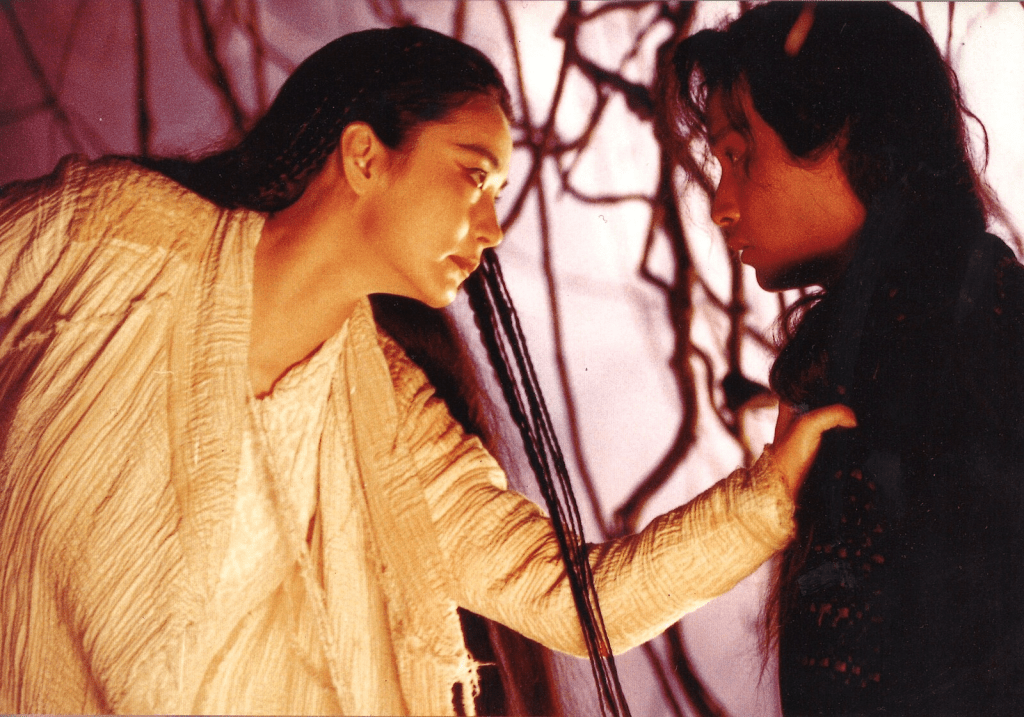
The couple begin to meet, and this perhaps is where the film gets rather silly. They barely know each other but are infatuated with one another – suggested to be a powerful attraction spawned from a childhood memory of Zhuo Yihang’s. When he was a child, he was afraid of wolves. He ran alone through the wilderness and became surrounded by wolves, only for the maiden as a little girl to begin playing her pipe and attracting them away as they surround her calmly. She dances and smiles and the two part ways. However, their on screen chemistry is very unconvincing. They talk of very little that would suggest deep and meaningful love – though he does name her Lian Nichang as she does not have a name which is a very cute touch. They talk, and as mystical music plays, it cuts into them kissing and beginning to make love. However, they then talk again, and it cuts to romance again. And again… The editing of these moments had the audience laughing loudly – not with the film, but at the film.
The film has many moments of intentional humour, however. The beginning with Nichang as a child is very funny, as he sasses his master during training and his interactions with his other child pupils are very endearing and silly. There are even some very strong one liners. When the male twin from the cult is defeated by being split from his twin (they are attached at their backs), he lies on the floor and sighs, saying something along the lines of “So this is comfortable!” as the film had shown the siblings in bed on their sides.
Back to our leads. The witch eventually shows up after an attack on Nichang’s clan to see him, which she is presumed to be responsible for and is attacked. However, when the cult leading twins show up, she assists in killing them. Her hair turns white during the mystical battle, and she flees, not to be seen again. Ultimately, the lovers’ pasts and commitments to battle overtake their efforts to be together. It is rather tragic, as Yihang sits, waiting, until she will return. He is guarding a flower that makes one immortal (turning white hair to black) in case she changes her mind and returns to him – as he said in the film he would love her if she had white hair, but that they won’t have to grow old.
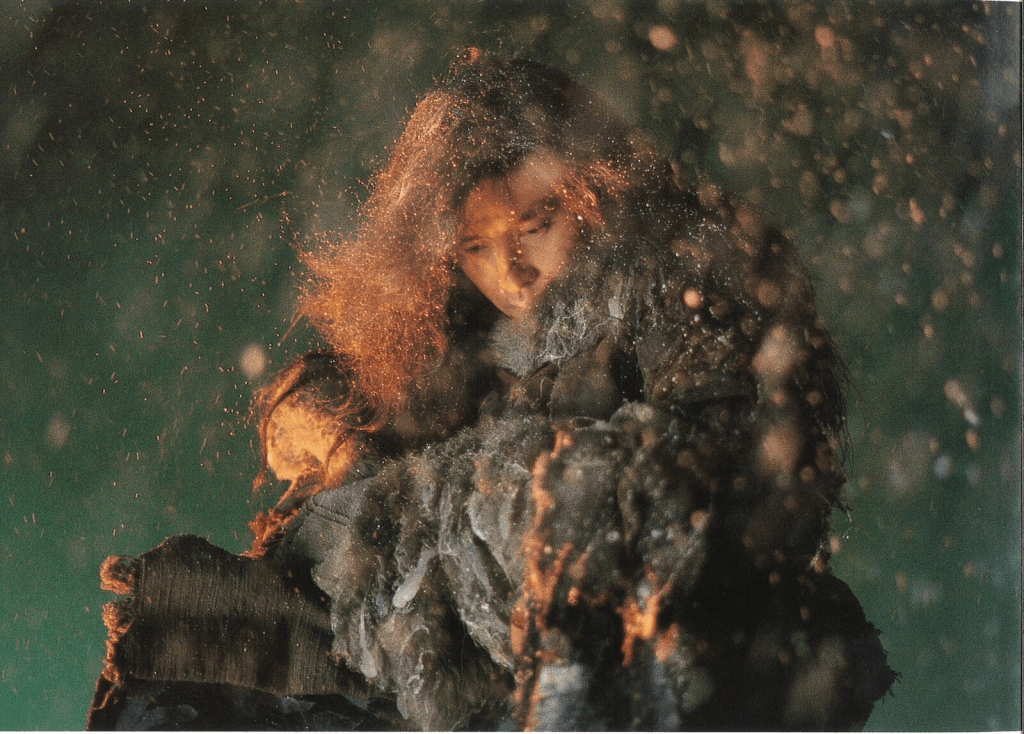
Was this film the best one to illustrate the talk well? No. But, out of the festival programme, it is perhaps most well suited through the inclusion of witchery, women of good and evil, and an interesting presentation of gender. The titular bride is shown to harness her own power and stand up to others while also remaining soft for love. Though, she is always beautiful (with fantastic eye makeup I might add), fashionable and idealised – with an air of a sort of early ‘manic pixie dream girl’ vibe, as she is largely mysterious and so projected upon by Yihang. She is very much a fantasy. His presentation is interesting, as a man who is mocked for his compassion which ultimately does lead to consequences as this is at odds with the success of his battle efforts. Wether he is ashamedly conquered by affection after believing he really can do both, or the clan is criticised for denying the purposeful presence or value of empathy, is perhaps not entirely forced upon to the audience, though as we are with him and his memories for the majority of the film we are definitely positioned to align with him and the romance. His defence of the flower and 10+ year wait for his love is rather sad as we know she is likely not returning may seem as merely harming himself, but I believe the film to be showing us his admirable conviction.
It was a very fun film to watch. At only 90 or so minutes, the film feels like a longer adventure as it really packs contents into its runtime. As someone unfamiliar with wuxia films, I really enjoyed it and am tempted to explore this area further!
Forbidden Worlds remains one of the best curated and managed festivals out there for cult and genre film lovers – especially on the incredible looking Bristol Megascreen. With lovely people and varied stalls of vendors, the experience is truly enjoyable and filled with community spirit. Many thanks to them for having us!
Isabelle Cocozza (Instagram: issycharliedennis) is the Founder & Editor in Chief of Culture Film Publication, a film production student and photographer. She is based in Bristol and Bedford, with areas of interest in horror, cult/genre, and psychosexual filmmaking.


