
By Thomas Kennedy
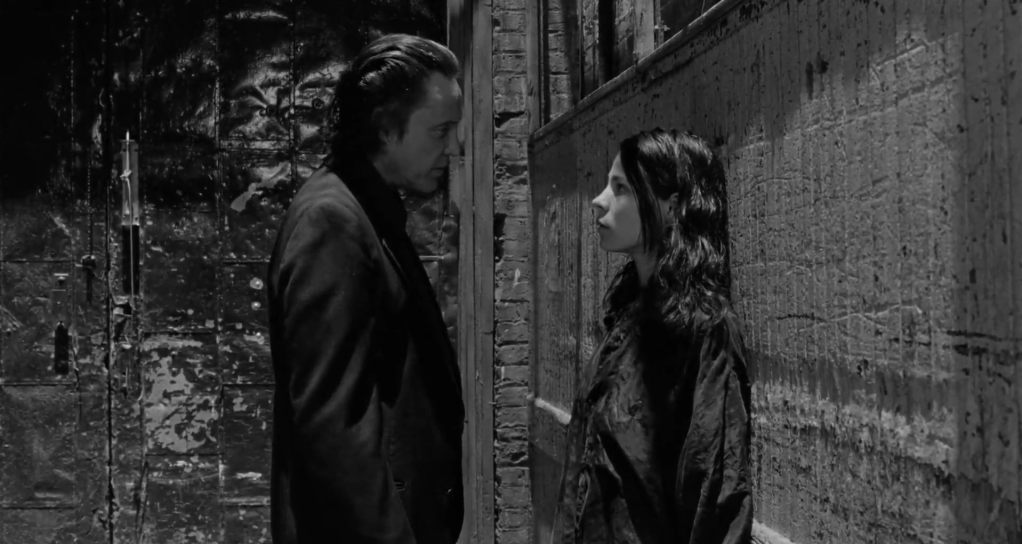
Urban decay, violent crime, addiction, sleaze, redemption. These are the primary concerns of the infamously uncouth independent filmmaker, Abel Ferrara. Following in the wake of New York City independent filmmakers such as Martin Scorsese and John Cassavetes, Ferrara garnered international acclaim for his exploitation films, gritty crime dramas, and brief forays into studio filmmaking, subsequently gaining a cult following and an enduring legacy as one of the defining voices in New York’s cinematic landscape. Yet, despite his proclivities for counterculture and raw guerrilla shoots, Ferrara’s films often lean heavily on generic codes: film noir, gangster film, slashers, and occasionally sci-fi. Ferrara is also repeatedly fascinated by the generic traits of vampire films, manifesting through central characters and regular allusions to the films of F.W. Murnau. This generic thread plays an essential role in the most celebrated decade of Ferrara’s career, but nowhere is it more overt than in the explicitly vampiric The Addiction (1995) and the vampirically charged King of New York (1990). With Ferrara’s evident dislike for conformity, it stands to reason that the typical representation of the filmic vampire should be challenged in his films. But to what end? On this subject, Nicole Brenez states that “Ferrara’s allegorical invention is especially kinetic: his characters allegorise not fixed notions but questions or problems” (Brenez, 2007, p. 12). Therefore, close analysis of these two films is warranted regarding Ferrara’s reformulation of the vampire film and how this fits into his vision of New York City as a site of crime, stagnation, and absolution.
First, it is necessary to establish the conventional traits of the cinematic vampire. Broadly, most writings on vampire cinema cite Nosferatu (1922), and for good reason. Nosferatu is emblematic for its successful (and notably unauthorised) translation of Bram Stoker’s seminal novel to film whilst stripping Stoker’s Count of lavish aristocracy and romantic goals. Murnau’s film makes something primal of the vampire: a gaunt figure skulking in the shadows, wordlessly consuming the blood of the living with an insatiable hunger. This brutal rendering of the archetypal vampiric traits of blood feasting, immortality, and an aversion to sunlight has thus laid fertile groundwork for the cinematic vampire to take on a variety of meanings. Filmmakers have transmogrified the vampire to embody class conflict, sexual transgression, and queer struggles. As such, Ferrara’s typical reformulation of generic traits meets its match in an archetype as monolithic as the vampire.
The Addiction is Ferrara’s most obvious engagement with the filmic vampire. The film follows Kathleen (Lili Taylor), a doctoral student in philosophy who is attacked and bitten by a stranger during a chance encounter. The rest of the film unfolds with Kathleen increasingly giving in to her vampiric impulses by afflicting those around her with her condition and developing nihilism. With Ferrara’s own storied experience with substance abuse, one cannot be blamed for reading the film as a parable of the self-destruction addiction brings. Yet interpreting the film solely as an addiction metaphor cannot account for the extent to which the vampire is allegorised. The alternative, more allegorical, reading then is of course also one of addiction, but more so of an addiction to nihilistic moral abdication rather than as a straightforward allegory for drug addiction.
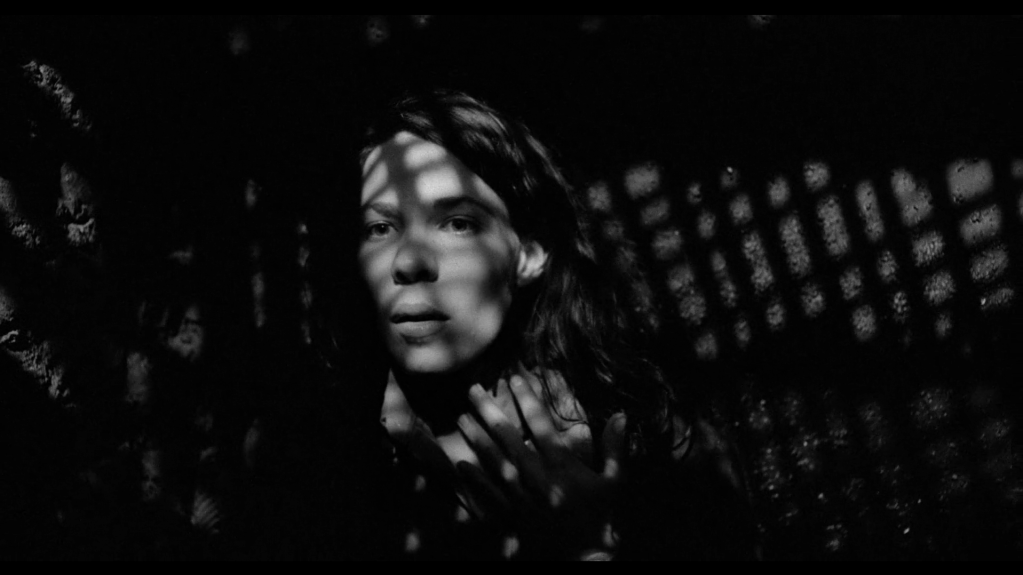
Kathleen’s initial vampiric turn comes not long after she is troubled by images of the My Lai Massacre. Kathleen is understandably appalled by the images, echoing Hannah Arendt’s ‘banality of evil’ thesis. “The whole country, they were all guilty. How can you single out one man?” Kathleen initially states. However, with her non-consensual turn towards vampirism, this collective guilt manifests not as a turn towards activism but as a fact of life to justify her own monstrous actions. In the wake of her transformation, Kathleen seduces and consumes the blood of friends, colleagues, and strangers all the while increasingly buying into the same nihilistic philosophies that permeated the atrocities by which she was once appalled. Thus, nihilism and an embrace of morally abdicating philosophies become as vital to the vampire as blood in The Addiction, a complete surrender to a banal form of evil that leads Kathleen to justify her cruel abandonment of any moral responsibility repeatedly. Repeatedly, the film returns to these real-life atrocities, making the audience sit for extended periods of the film with documentary images of the victims of My Lai and the Holocaust. Here, Ferrara uses the lens of the vampire archetype to cast a critical accusation at the mechanism of the cinematic image itself. Returning repeatedly to these atrocities aligns the audience with Kathleen’s dispassion toward images that should stir agony in the beholder, asking whether engaging with documented cruelty from a safe distance inevitably breeds moral abandon.
Ferrara’s critical reassessment of the vampiric archetype comes to a head in the film’s final moments. At Kathleen’s doctoral graduation party, she and the colleagues she has turned into nightwalking nihilists attack the guests, unleashing a frantic orgy of blood-feasting. The film’s promise established in its title truly unravels here; the scene becomes more frantic, blood continues to spill, and Kathleen overdoses on the blood and her own nihilistic depravity. Ferrara here is working with the purely allegorical regarding the vampire’s demise, an answer to Brenez’s stated embodiment of social and philosophical questions. The film provides a sobering conclusion to where Kathleen’s addiction to blood and nihilism has led her. Therefore, Ferrara utilises the archetypal vampire to answer this problem; such a parasitic fall into the self-serving ideals of a “will to power” can only end morbidly. As is typical of Ferrara’s films, and his screenwriting collaborations with Nicholas St John, Catholic absolution is not off the table, and the vampire is not damned entirely. Kathleen’s final moments are not in the blood orgy but rather in a cyclical return to the hospital where she first began her affliction with vampirism. In an act of self-loathing, or something more (taking control over her morality once more?) Kathleen draws the curtains open and allows herself to be killed by sunlight. Next, we see Kathleen return as a spectre to visit her own grave and regard the Virgin Mary carved into it. Mercifully, the film affords the vampire a chance to view life beyond herself.
King of New York is, on its face, much less a vampire film. Yet the traits of the vampiric are abundantly clear within the film’s protagonist, Frank White, a criminal overlord who, after a long tenure of spiritual slumber in a prison cell, returns to New York with both a newfound distaste for the corruption of the political and justice systems and a burgeoning passion to charitably provide much-needed amenities to the city’s poor and disenfranchised neighbourhoods. For Frank, this manifests in his goal to fund the construction of a public hospital for the underprivileged in the Bronx, which previously had its budget decimated by the council. Frank’s methods for this are of course criminally dubious, eliminating and taking over rival cartels all whilst being hounded by the city’s ruthless law enforcement.
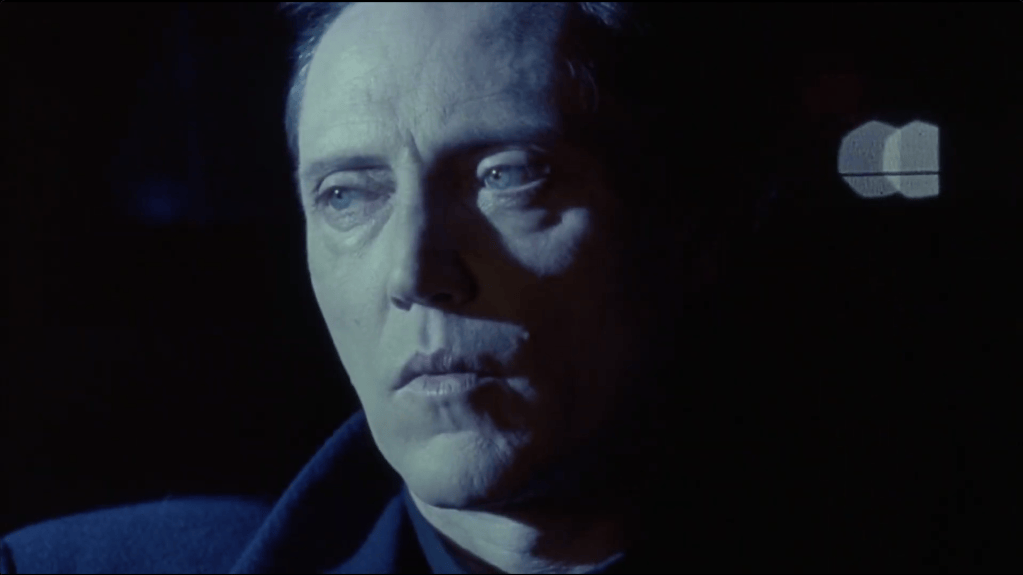
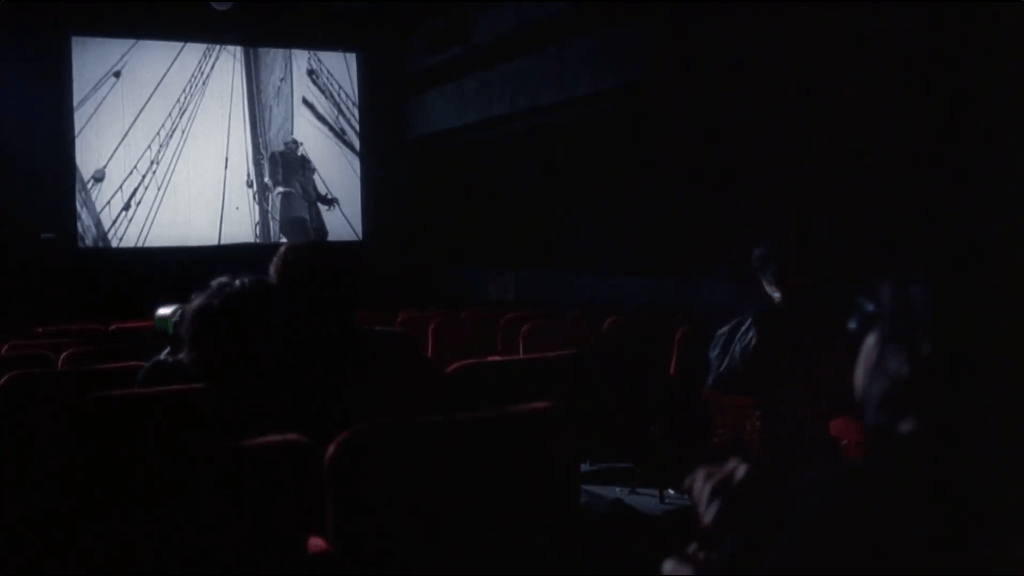
The film contains numerous structural and aesthetic allusions to that most quintessential of vampire films, Nosferatu. As anyone familiar with Ferrara’s film could attest, the works of early German expressionist filmmaker F.W. Murnau are clear reference points for Ferrara, if not for their visual language, then for their manic characters. King of New York, however, is a film that alludes to both aspects of Murnau’s filmmaking. Despite his brief but memorable appearance in the previously discussed The Addiction, Christopher Walken was first introduced as the archetypal vampire here in King of New York. Several aspects of Frank’s return to his criminal empire mirror the voyage of Nosferatu’s Count Orlok to England. Structurally, both journeys are almost identical; in Nosferatu, Orlok leaves his coffin onboard a ship to England, feasting on the ship’s crew until eventually arriving in his recently purchased derelict residence in London. Frank White undertakes a similar voyage, leaving the coffin of a prison he had previously been entombed within to sit in the back of a sleek black limo to his penthouse apartment, from which he will declare his coming assault on the corrupt of the city. The film goes out of its way to make this reference point obvious; early in the film, one of Frank’s first acts after leaving jail is to pensively watch a screening of Nosferatu in a cinema. On an aesthetic level, although the film is not shot in black and white like The Addiction, the scenes appear monochromatic due to the almost exclusive steel blue light sources and emphasis on shadows. The result is a highly expressive portrayal of a city in a twilight world, one in which Frank White’s similarly monochromatically lit close-up visage directs his resentful gaze outwards, his face rendered as gaunt and pale in the light as that of Count Orlok’s. Thus, the insatiable hunger and desire of Count Orlok become those of Frank White, inherited in his ambition to usurp the power structures (criminal or otherwise) in New York. Yet, as is par for the course for Ferrara, Frank’s vampiric lust for power is not purely rooted in a death drive. Rather, Frank’s voyage back to New York and prince-of-darkness persona is rooted in an anti-heroic desire to run his criminal enterprise both with an ethical code and a goal to fund community-based projects that the city’s council will not. King of New York would, on this level, appear to be the opposite of the philosophically Thanatos-driven vampires of The Addiction.
Yet this assumption alone would be a mischaracterisation. On closer inspection, Frank White’s allegorical vampirism reflects many of the same problematizations as The Addiction, mostly in the way that Frank’s power and ‘immortality’ come at the expense of the disenfranchised. Indeed, despite Frank’s stated good intentions to provide essential services to underfunded communities, he is also unable to acknowledge his own taking advantage of marginalised groups to provide the essential labour for his criminal empire. This is something never explicitly stated in the film, yet Ferrara’s complication of Frank’s anti-heroic vampiric turn is alluded to through repeated highlighting of race and class disparities. This relates well to a vampiric analysis of Ferrara’s films, as Frank’s underlings constitute his thralls, mortal creatures bound in servitude to the vampire through mind control or addiction to the vampire’s blood itself. Herr Knock in Nosferatu and Renfield in Stoker’s original novel perform the role of the vampire’s thrall; Herr Knock performs menial tasks for Count Orlok such as arranging Orlok’s property bid before spiralling into insanity once he is no longer needed. In Frank White’s case, the body of his enterprise consists of young Black men who undertake the dangerous and violent takeover of rival gangs whilst Frank keeps his hands clean. Even though one could make the case that Frank wishes well for his thralls, his entire empire is predicated on exploiting an already vulnerable group of people for personal profit. Ultimately, much like the thrall addicted to the blood of the vampire, Frank’s underlings are tethered to him by an unfair trickle-down of wealth of which they are dependent. The film explicitly includes scenes of upper-class gentry taking pleasure from their spectatorship of Black performers whilst they continue to neglect minority group communities within the city, including the very scene where Frank states his intention to fund the hospital. But despite all Frank’s rallying against these people, can he really be so different when his delivery of justice is also predicated on sapping labour from underprivileged minorities?
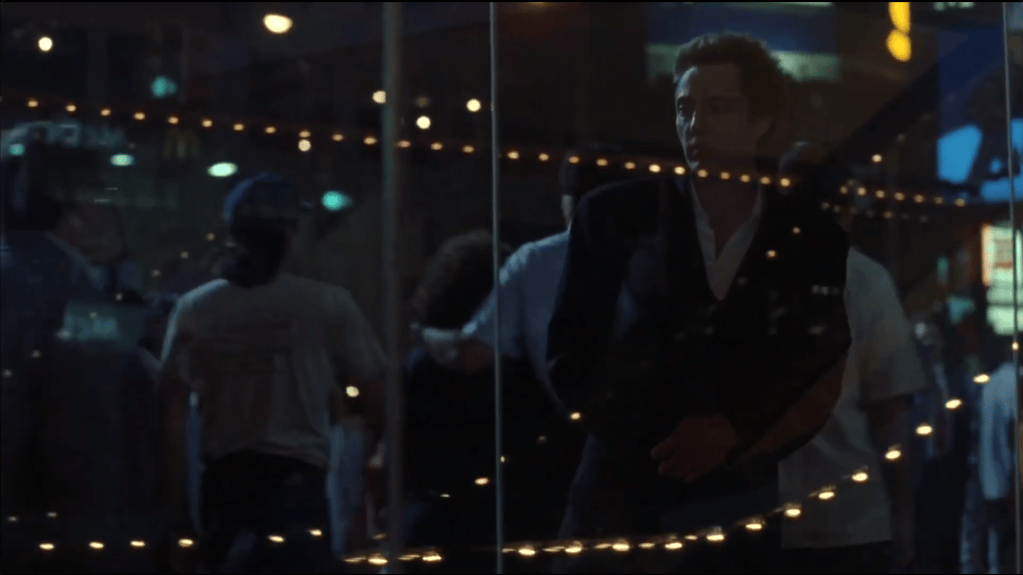
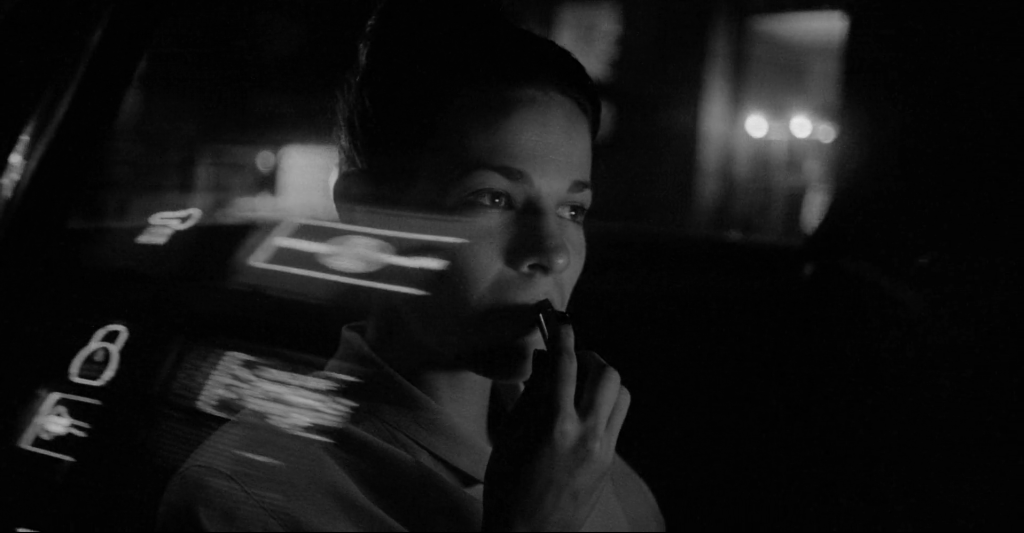
At the film’s conclusion, Frank’s vampiric takeover of the city has failed: the most trusted members of his crew dead or imprisoned whilst Frank himself is quietly bleeding out in the back of a taxi in the middle of the city. In the film’s final moments, a much greater incomprehensible vampiric power overshadows Frank. A giant illuminated Coca-Cola advert looms over the cab, a symbol of a greater order completely unscathed by Frank’s actions. Despite his efforts to redirect the flow of blood in New York’s streets toward something meaningful, Frank has unknowingly played into the hands of New York’s true king all along. So, the immortal, blood-sucking entity of capital remains while Frank becomes dust.
Thomas Kennedy is a freelance writer and filmmaker based in Manchester, having studied Film at a Master’s level at Lancaster University. His prior academic writings have focused on spatial uncanny in horror cinema and the cinematic subconsciousness of surrealist filmmakers.
Bibliography
Brenez, N. (2007) Abel Ferrara. 1st ed. Translated by A. Martin. Urbana: University of Illinois Press.
Gentry, R. (2010) Abel Ferrara. In Post Script, 29(2), p. 52.
Hawkins, J. (2002) No Worse Than You Were Before: Theory, Economy and Power in Abel Ferrara’s ‘The Addiction’. In Mendik, X. and Schneider, S.J. Underground U.S.A.: Filmmaking Beyond the Hollywood Canon. New York, New York: Columbia University Press.
Palmer, S.G. (2014) Transitional Violence in King of New York. In The Journal of Religion and Film, 18(1).
Filmography
King of New York (Abel Ferrara, USA, 1990)
Nosferatu: A Symphony of Horror (Murnau, Germany, 1922)
The Addiction (Abel Ferrara, USA, 1990)


