
By Damien Swaby
What an unruly club film and a cheap-looking science-fiction sitcom can teach us about cultural confidence

There is a moment in Human Traffic when plot seems to surrender to atmosphere. People talk, interrupt one another, drift into private fantasies, argue about music and turn the smallest social encounter into an event. Nothing is being efficiently advanced. The film is not tidying its characters into functions or hurrying them towards a lesson. It is listening to them occupy time.
That looseness is one reason Justin Kerrigan’s 1999 film still feels alive. Human Traffic is routinely described as a time capsule of late-1990s club culture, and of course it is one: the record shops, the clothes, the rituals of Friday afternoon and Sunday morning, the belief that a weekend could briefly reorganise the world. But the phrase time capsule can become a polite way of placing a film safely in the past. It turns energy into nostalgia. Human Traffic matters now because it demonstrates something British cinema has become increasingly nervous about doing. It is cheap, specific, noisy, funny, locally rooted and completely comfortable in its own cultural skin……it has a voice.
Its confidence does not come from pretending to possess the resources of a Hollywood production. It comes from understanding that limitation can produce form. The characters’ speech, the music, the editing and the film’s digressions do not decorate a conventional story. They are the story. The film absorbs the rhythm of the subculture it depicts. Its roughness is not an obstacle standing between the idea and a more professional version of the film. The roughness is part of the idea.
A film that talks too much
The central group in Human Traffic are not exceptional people preparing to change history. They are young workers trying to reach the weekend with enough money, appetite and friendship intact to escape themselves for a few hours. Their jobs bore or diminish them. Their romantic lives are confused. Their confidence can collapse as quickly as it appears. What they possess is language: jokes, arguments, fantasies, boasts, repetitions and the private theories people produce when official culture has little interest in recording them.
A contemporary script report might identify several of the film’s pleasures as problems. The characters talk too much. Scenes wander. Tone shifts without asking permission. Fantasy interrupts realism. Music sometimes matters more than narrative information. The film does not always behave as though every second must justify its place by moving the plot forward. Yet remove those apparent imperfections and very little remains. Efficiency would destroy its social observation.

This matters because an enormous amount of screen development now encourages writers and filmmakers to explain themselves before they have discovered themselves. The project must announce its theme, audience, market position and emotional journey. Characters should arrive with cleanly stated wants. A scene must earn its keep. None of these principles is useless, but together they can create films that are technically legible and culturally anonymous. They travel well because they appear to come from nowhere in particular.
Human Traffic comes from somewhere. Cardiff is not treated as a temporary substitute for London, New York or Los Angeles. The voices are not sanded down into a general idea of youth. The film trusts slang, accent, repetition and local knowledge. It understands that specificity does not shrink an audience. It gives an audience something to enter.
The Red Dwarf connection
Oddly, Human Traffic makes me think of Red Dwarf. One is a club film built around a weekend; the other is a BBC science-fiction sitcom set millions of years into deep space. The comparison sounds perverse until you consider what each work does with constraint.

Red Dwarf never needed to persuade us that it possessed the industrial weight of American science fiction. Its visibly limited sets, model work, costumes and repeated corridors became part of its identity. More importantly, its universe was built through British class comedy. The last human alive was not a military hero, scientist or chosen one. He was a low-ranking technician whose ambitions were small, bodily and recognisable. The grandeur of space was constantly punctured by bad habits, larger, workplace resentment, loneliness and curry.
The cheap-looking environment did not prevent the series from creating a world. It forced the writing, performances and comic relationships to do more imaginative work. The gap between cosmic scale and shabby everyday life became the joke and then, eventually, the emotional centre. Red Dwarf did not win by disguising its Britishness. It made Britishness portable.
Human Traffic performs a similar operation. It turns shops, bedrooms, pavements, clubs and exhausted kitchens into a complete imaginative system. Its characters do not need access to institutions of power because the film recognises the cultural power already moving between them. Records, clothes, jokes, drugs, flirtation and friendship become production design for a world they temporarily own.
Both works show what can happen when British screen culture stops asking whether it looks expensive enough to compete with America. They replace scale with attitude. They know the precise comic value of disappointment. They understand that a restricted space can feel enormous when the people inside it possess a language of their own.
The prestige trap
British cinema has not run out of talent or stories. It has developed a problem of permission. Filmmakers are often encouraged to wait: for a recognised producer, a broadcaster, a development scheme, a market attachment, a casting name, a larger budget or a version of the project that can survive committee approval. By the time permission arrives, the strange local energy that made the idea worth pursuing may have been translated into something respectable.
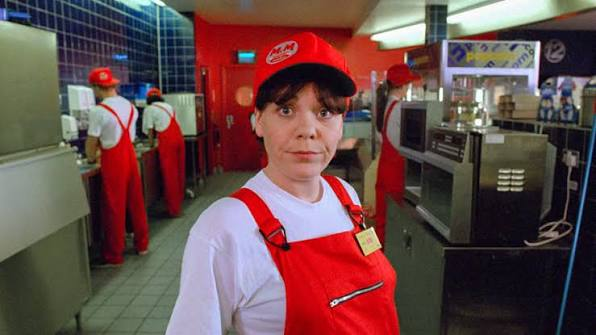
Prestige is not the enemy. The problem begins when prestige becomes the only imaginable destination. A film can then appear embarrassed by ordinary rooms, modest lives, regional
humour or people whose cultural value has not yet been certified. It imitates seriousness through visual polish and careful social messaging while losing the untidy pleasure of observation.
The phrase B-movie is useful here if we detach it from a single genre or historic distribution category. I am not proposing that every British filmmaker make horror, crime or exploitation pictures. I mean a culture of films produced with speed, appetite and an honest relationship to their means. A British B-movie culture would not apologise for being small. It would use smallness to get closer.
It might value a recognisable voice over a neutral screenplay, a real location over an expensive approximation, and a community’s internal humour over the need to explain that community to outsiders.
It could be formally ambitious without pretending to be luxurious. Most importantly, it would allow filmmakers to finish things. A completed £30,000 film with a point of view can have more cultural life than a £3 million proposal waiting for permission to exist.
The Britain Already in Front of Us
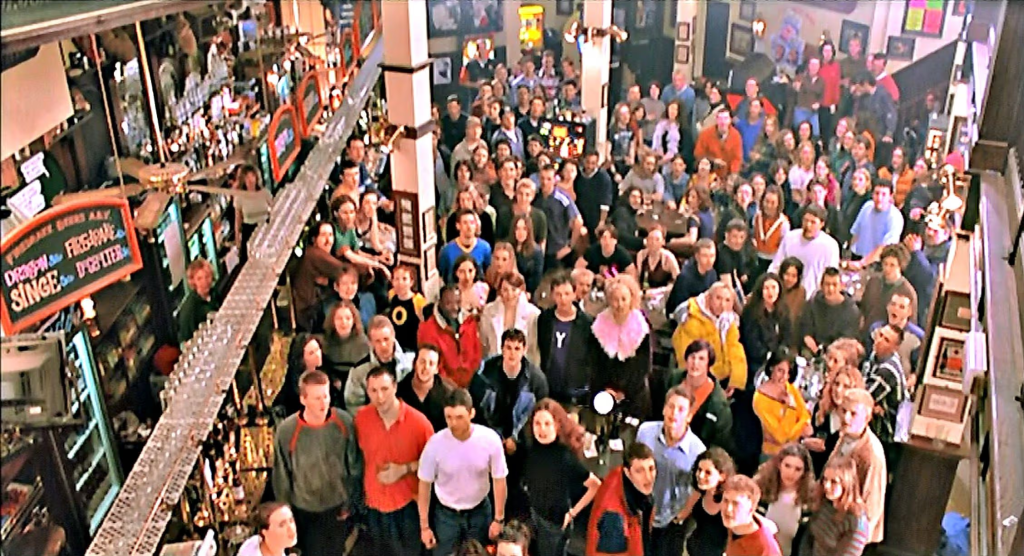
What would the Human Traffic of the present look like? It would not simply replace the soundtrack and put smartphones in everyone’s hands. The weekend itself has changed. Clubs have disappeared or become financially unreachable. Work follows people home through apps. Romance is organised through interfaces. Private bedrooms have become offices, studios, shops and broadcasting spaces. Young people can appear permanently connected while spending long stretches physically alone.
The film might begin with night workers rather than office workers: delivery riders waiting outside a chicken shop, security guards watching empty buildings, hospital staff moving through the city before dawn, uber drivers listening to voice notes between jobs. Its characters might meet through a group chat and misunderstand one another through the same device. They might perform confidence for tiny online audiences, sell fragments of themselves, worry about rent and still construct a night that feels briefly like freedom.
There are films inside laundrettes, barbershops, nail salons, bus garages, rehearsal rooms, corner shops and the back areas of restaurants. There are comedies inside family WhatsApp groups and dramas in the gap between the public optimism of regeneration and the private experience of being priced out. There are strange little communities gathering around five-a-side football, gaming, church halls, pirate radio archives, Caribbean food, amateur theatre and the last pub willing to let people stay too long.
I grew up in Catford learning about films through a mixture of access points that did not form a neat cultural hierarchy: television seasons, video shops, Film 90 with Barry Norman, The South Bank Show, Short Story Cinema and the changing promises of programmes such as CinemaAttraction’s. Hollywood spectacle sat beside British television, performance, music and whatever could be found on VHS. That untidy education mattered. It taught me that cinema was not one official tradition guarded by one kind of person.
We now possess more production technology than the filmmakers who shaped those early appetites could have imagined. A phone can capture an image in low light that would once have required a crew. Editing and sound tools sit on domestic computers. The paradox is that our images can look more polished while our imaginations become more cautious. We have acquired the machinery of independence without always retaining its nerve.
Making Before Permission
I encountered this contradiction while making The People of Brixton. I mention the film not as proof that I solved the problem, and certainly not as an advertisement, but because the process clarified what becomes possible when a filmmaker starts with people rather than an industry-shaped proposition. Brixton did not need me to manufacture culture for it. The place already contained competing memories, performances, rhythms and claims. The work was to approach, listen and construct without pretending that a camera made me the owner of what I found.
The film eventually reached the BFI and later a streaming audience, but those outcomes were not available as guarantees when the work began. If I had required institutional certainty before filming, there would have been no film to show an institution. This is the practical argument hidden inside the romantic call for a new B-movie culture: making creates evidence. It reveals what the project is, who responds to it, where its ethical difficulties lie and whether its imagined audience actually exists.
Low-budget production should not become an excuse for exploiting crews, ignoring access needs or congratulating ourselves for surviving unsafe conditions. Cheapness is not a moral virtue. The point is to spend deliberately and to understand which forms of value money cannot automatically supply. Time with a community, a performer’s trust, a location’s history and the precision of an observed detail can carry more weight than equipment hired to imitate a film from somewhere else.
Nor should cultural specificity become a demand that filmmakers represent an entire neighbourhood, class or ethnicity. Human Traffic works because it does not claim to be everybody’s weekend. It commits to these characters’ weekend. A useful local film is not a census. It is an encounter with a limited point of view, made vivid enough that people outside it can recognise the stakes without being handed a glossary.
Cheap, Specific and Alive
The British films I want to see are not necessarily about respectable subjects, and they do not have to arrive already carrying the language of importance. I want films that know the price of a meal, the sound of a particular bus route, the embarrassment of a family gathering and the politics of who is allowed to linger in a public space. I want filmmakers to treat a semi-broken tripod, a bottle of water, a local market or a Saturday pot of soup as material rather than evidence that the real production has not begun.
That does not mean abandoning craft. It means placing craft in the service of attention. Human Traffic is carefully made, but its craft produces velocity, intimacy and comic exaggeration rather than a polished distance from its subjects. Red Dwarf is tightly constructed, but its craft allows cheap corridors and workplace bickering to hold ideas about isolation, identity and what remains of humanity. Neither work mistakes seriousness for solemnity.

A new British B-movie culture would make room for failure, vulgarity, unevenness and surprise. Some films would be bad. That is not an argument against making them. A culture in which only projects capable of surviving years of development are produced will create a different and perhaps more damaging failure: competence without discovery.
Human Traffic ends, as weekends do, with ordinary life waiting. Escape has not permanently repaired work, money, anxiety or desire. Yet something has been recorded that official accounts of Britain tend to miss: the intelligence inside pleasure, the seriousness inside joking, and the temporary public made by people who are not supposed to possess much power.
The lesson is not that British cinema should remake Human Traffic. The lesson is that filmmakers should make the film close enough to them that nobody else would make it in quite the same way. Britain does not need a cheaper imitation of prestige cinema. It needs more completed films with dirt under their fingernails, music in their walls and the confidence to talk in their own voices.
Damien Swaby is a British-Jamaican filmmaker, podcast producer and artist based in London. His work explores identity, memory and the stories of underrepresented communities. He is the creator and host of Filmmaking Conversations and is currently studying for an MA in Public Art and Performative Practices at London Metropolitan University. His films include The People of Brixton and Invisible Lives.


