
By Josie Allen
For as long as Jennifer’s Body has been around, it has invited discourse surrounding feminism and homosexuality. The 2009 horror-comedy stars Amanda Seyfried as Anita ‘Needy’ Lesnicki, the film’s wallflower protagonist, alongside Megan Fox’s Jennifer Check, the alluring cool-girl best friend. When Jennifer is abducted by an indie rock band called Low Shoulder, she is sacrificed to Satan in the hope of the band achieving fortune and fame – except a key part of the ritual is that the sacrifice is a virgin, which Jennifer is not. This leads to her becoming a man-eating succubus, and Needy being desperate to try and stop her killing spree.
Already, it’s clear that this film deals with themes of sexual awakening, trauma and patriarchy, which suggests a strong feminist angle before we even examine the queer subtext. In a 2019 interview with Variety, writer Diablo Cody described how after Megan Fox had developed a sex symbol image post – Transformers, ‘Fox Atomic chose to market the film to young men instead of [Cody’s] intended audience of young women.’ This can certainly be gleaned from the trailer, which has an emphasis on Fox’s hotness – when she’s swimming naked in a lake, unzipping her top to show nothing underneath, taking off her jacket to seduce Colin (Kyle Gallner). Hell, even the title seems raunchy.

These are all moments that make it to the film yet seem to contradict the film’s messaging. Jennifer is the antagonist, yet she is also depicted as a victim – there is no mistaking how the audience is meant to feel seeing her helpless in the back of Low Shoulder’s van, the doors closing on her, trapping her with a group of strange men. She becomes a monster through the trauma of her assault, and as she becomes ever thirstier for killings so she can grow stronger, Needy sees her less as the best friend she once knew, because her experience with the band has changed her irrevocably.
It is jarring, then, to see voyeuristic close-up shots of Fox’s body, seemingly aimed at instilling desire in the audience. It’s true that there is an interesting exploration of how Jennifer’s trauma has made her hyper-sexualised, and able to use men’s lust for her against them, even while attempting to lure those same men into watching the movie through sexualised marketing. Perhaps in some ways, the film serves as a ‘gotcha’ moment, a challenge to male audiences to think deeper.
Which is funny, because Jennifer’s Body is so intrinsically about girlhood and homo-erotic friendships that I take Cody at her word when she says that this film is truly meant for young women.
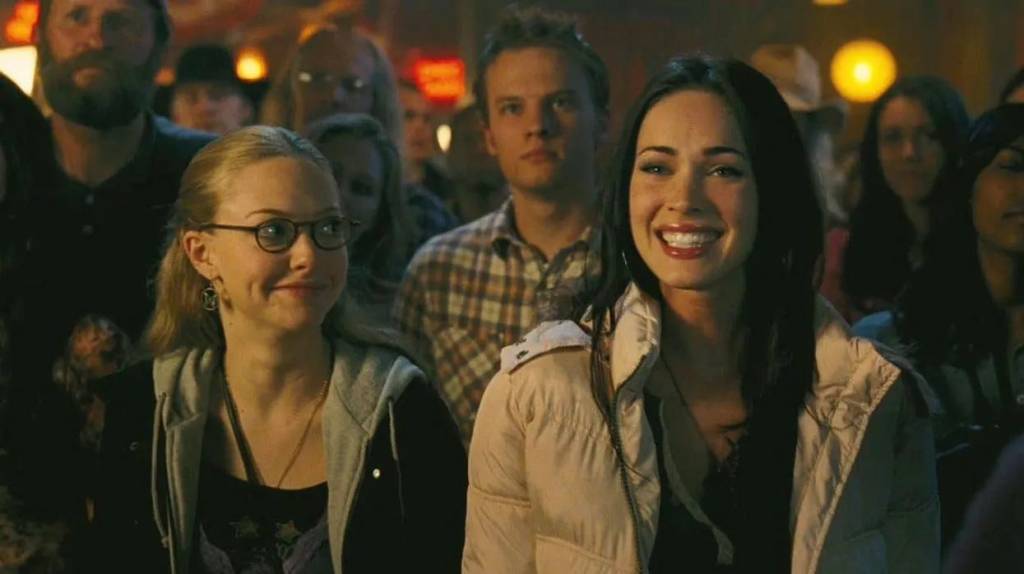
Needy serves as a sort of self-insert for young, potentially closeted, queer women, the ones who are familiar with the homo-erotic high school best friend dynamic, the ones who could easily envision a crush on the stunning, unattainable Megan Fox. This mirrors the age-old heteronormative self-insert in media, which has existed in everything between Japanese harem anime from the 70s, to the kidnapped-by-One-Direction breed of 2010s fanfiction. It’s radical to think of a 2009 movie, plentiful in lingering body shots of its female protagonists, shining a light on this kind of sapphic experience, but we see gay tension that supports it throughout the whole movie. Right from the start, when we gain context for Needy and Jennifer’s friendship, Needy is accused of being ‘lesbi-gay’ because of how much she swoons for her – the film is undeniably setting a tone.
Then, there’s the kiss. Around the middle of the film, Jennifer sneaks into Needy’s bedroom. It’s the first time Needy has seen her since her terrifying succubus transformation, but Jennifer wins her trust enough to toy with Needy’s hair playfully and then kiss her. It’s a long kiss, a close-up shot, and then Needy leans over Jennifer and goes in for more.

One could argue that it serves no purpose other than to satisfy the male gaze. It doesn’t develop the plot and Needy and Jennifer don’t acknowledge it again throughout the rest of the film. On the other hand, the kiss serves as an outlet for the gay tension that has been mounting throughout the film and recontextualises all the moments fuelled by Jennifer’s insecurity. Jennifer has no interest in classmate Colin until Needy points out ‘he’s nice’, which leads to Jennifer seducing him to kill him. The same logic applies when she preys upon Needy’s boyfriend Chip in the climax of the movie, and Needy outs her motive – the beautiful, popular cheerleader is actually jealous of her.
It would be easy to interpret Jennifer’s attempts to fell all of Needy’s potential love interests as simply insecurity in comparison to her. Then again, we see Jennifer’s contempt for Chip from the start, disregarding him when she comes to pick Needy up for the Low Shoulder concert and encouraging Needy to blow off her plans with him. There is a sense of possessiveness – from this, we can assume Jennifer’s jealousy is not just of Needy, who is able to attract happy, stable relationships, but of Chip, an obstacle in Jennifer’s most happy, stable relationship.
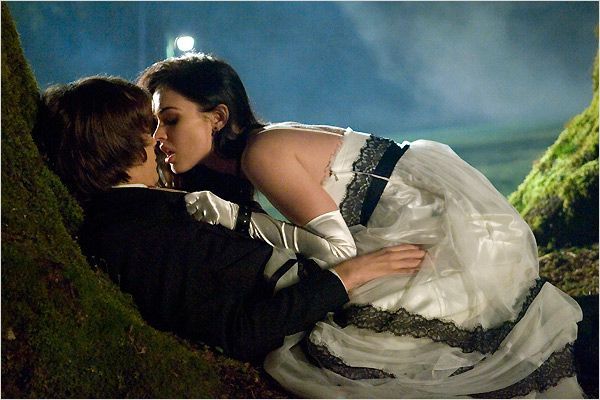
It’s true that as far as queer representation goes, this movie is flawed. Jennifer is far from a good friend to Needy, constantly belittling her and going after the boys she likes, and the kiss could be construed as an act of manipulation – Needy is confused and scared after witnessing Jennifer’s demonic change and it’s a means of soothing her, using her interest in Jennifer as a way to get her on side. The fact that Needy and Jennifer have been friends since they were small – ‘sandbox love never dies’ – and are co-dependent on each other speaks to not just queer girls who have experienced romantic tension in their friendships, but to all girls who have experienced the strain of their lifelong friends growing to be bad for them. It is evident, then, that this film explores toxic relationships and the dangers of devotion, and that as much as Jennifer and Needy’s relationship is not one for queer audiences to aspire to, it’s one they can most likely resonate with in all of its complexity and high school messiness. I would argue that as important as it is for there to be media depicting healthy sapphic relationships, that doesn’t negate the brilliance of a late – 2000s movie that managed to transcend its initial box office failure and garner a cult following of queer women who see it as a representation of their own experiences.
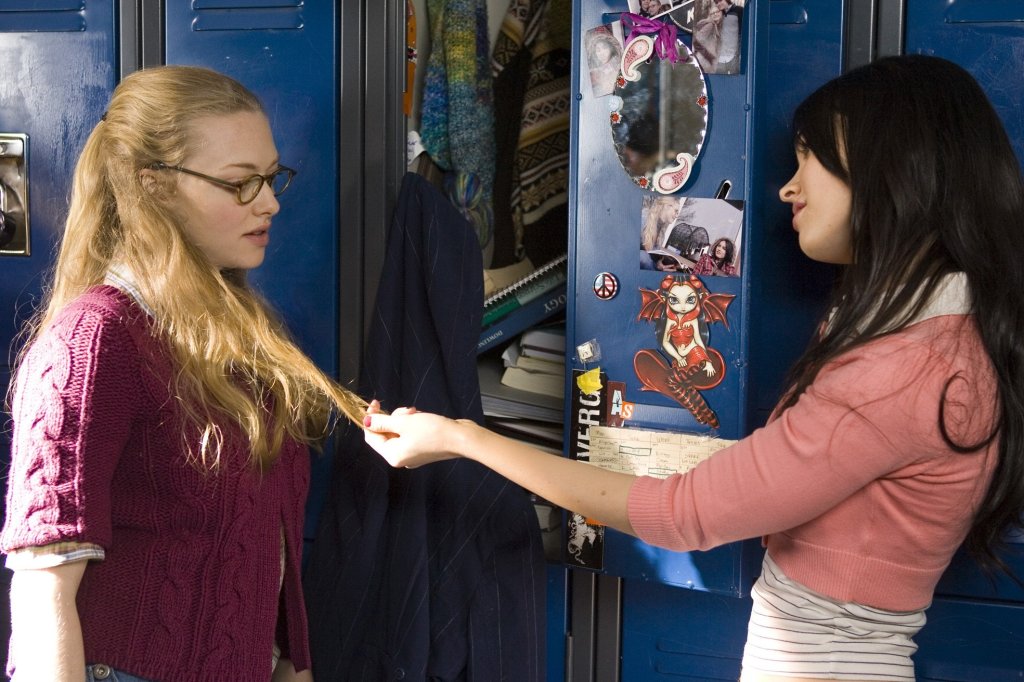
In the aforementioned Variety interview, Diablo Cody claimed that had Jennifer’s Body been released a decade later, ‘it would have “definitely” found its audience and the themes of queer representation and sexual assault would have been clear.’ At a glance, a gay coming-of-age movie for women under the guise of a horny flick for men sounds like a convenient, retrospective reframing of narrative. However, considering it’s a fun horror-comedy, Jennifer’s Body has so many meaningful moments for its queer audience that it’s no wonder it has so many devotees. I would argue that Needy’s adoration is the soul of this movie, because when you strip away the elements of desire that are accessible to men – Jennifer seducing them and generally exuding hotness to the audience – you are left with Needy as an awkward, idolizing protagonist who isn’t as cool or ‘womanly’ as her best friend, and watches life from the sidelines.
And what queer woman hasn’t been her at some point?
Josie Allen (Substack: @josiescribbles) is a freelance writer with a love of fashion and cinema, and a particular fixation on horror movies. She spends most of her time dusting her collection of overpriced horror merch and journalling. She has enjoys a Mike Flanagan show as much as a Wes Craven slasher, and her old Monster High movies have never failed her.


