By Isabelle Cocozza
Advertorial for Forbidden Worlds Film Festival: The Big Scream
‘Giallo’ was an Italian horror film subgenre or movement beginning in the 1960’s and fizzling out around the late 1980’s. It is characterised by eccentric murder-mystery plots featuring leather-gloved, razor wielding killers and their beautiful victims, drenched in neon lighting and accompanied by spooky prog-rock soundtracks. It may be regarded as Europe’s most significant horror export, which Forbidden Worlds Film Festival highlights within this year’s ‘European Slaycation’ at The Big Scream! The programme (which I excitedly guest programmed) spanning from October 22nd to 24th at Bristol Megascreen features Giallo classics: Dario Argento’s Deep Red (1975), Mario Bava’s Blood and Black Lace (1964), The Strange Vice of Mrs Wardh (1971) and Stagefright (1987).
The term ‘Giallo’ is simply Italian for the colour yellow, which became the genre’s namesake as it was the colour with which sleaze, violence and “adult content” became associated after the colour adorned post-war italian paperback pulp fiction. See the original Dracula book cover, adorned with plain yellow acting as a blaring siren to say ‘this novel is not for children’. Today, we may lean to black and red marketing for films and books of that nature, thus it may seem odd to see yellow adorning Shameless Film’s horror/exploitation physical media packaging upon first glance.
However, there’s a bit of an issue with Giallo – one that may put off (especially younger) new viewers. These films almost always centre young, beautiful women being slaughtered – in elaborate, bizarre ways, and all framed in a beautiful light. Because of this, Giallo becomes easy to disregard as a subgenre of a bygone era that deserves to stay kept away. Yet, upon reframing, the films have a lot to offer modern audiences.
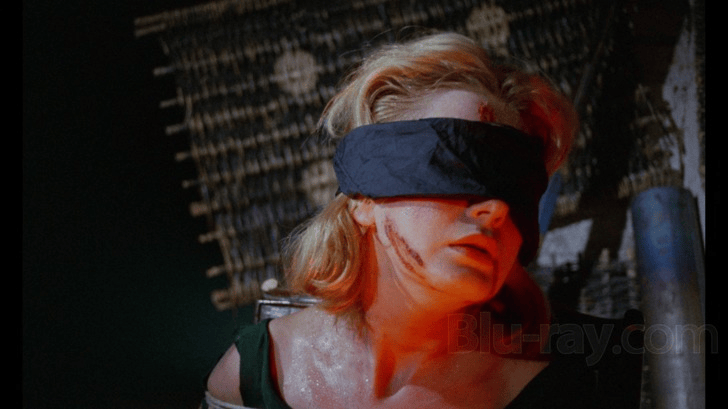
Giallo pioneer Dario Argento famously stated “I like women, especially beautiful ones. If they have a good face and figure, I would much prefer to watch them being murdered than an ugly girl or a man.” The overt link made between sexual preference and violent spectatorship is certainly jarring (especially when filming his partner Daria Nicolodi, or even his daughter Asia) However, it is worth noting that this perspective is not exclusive to Giallo: Hitchcock noted “I always believe in following the advice of the playwright Sardou. He said: ‘torture the women!’. The trouble today is that we don’t torture women enough.” If one were to earnestly disregard Giallo’s legacy, it would certainly be hypocritical to not abstain from most older horror as a whole – which would seem rather difficult. But there is a bit more to the story.
The feminist interpretations of Giallo do not exist instead of these criticisms, but rather in spite of it. There is no denying that Giallo was born as a manifestation of misogynistic power fantasy. However, we can understand that while problematic today, these films have inadvertently has provided us with an array of investigative female protagonists whose anxieties and troubles (including grief and even abortion) are sometimes explored. Explored thoroughly, or without an overtly exploitational and distinctly male lens? That’s asking a bit much. But we must remember that some of these films were often prototypical, boundary pushing and ahead of its time. Giallo was the space in horror to give way to more complex, ableit traumatised, three dimensional women who often are tackling to exert their agency. Some giallo films even exist much more so within the leading women’s experience: such as A Lizard in a Woman’s Skin (1971), All The Colours of The Dark (1972) and the aforementioned Strange Vice, in which the murder investigation (and Mrs Wardh’s sexuality) becomes an investigation into her rich inner world (and evasion of violent men). There is so much to love within Giallo, even for modern women. Films like Suspiria (1977), with its smart and quiet lead Suzy (Jessica Harper) remain adored by women today, and Argento’s Deep Red (1975) (screening on Saturday night!) features Daria Nicolodi as Gianna in a film whose characters challenge the era’s gender perceptions (even featuring a character whose misogyny may have impaired his investigative skills). By putting these women under problematic and tremendous stress, interesting characters emerged which were so often vacant from other areas of cinema at the time.
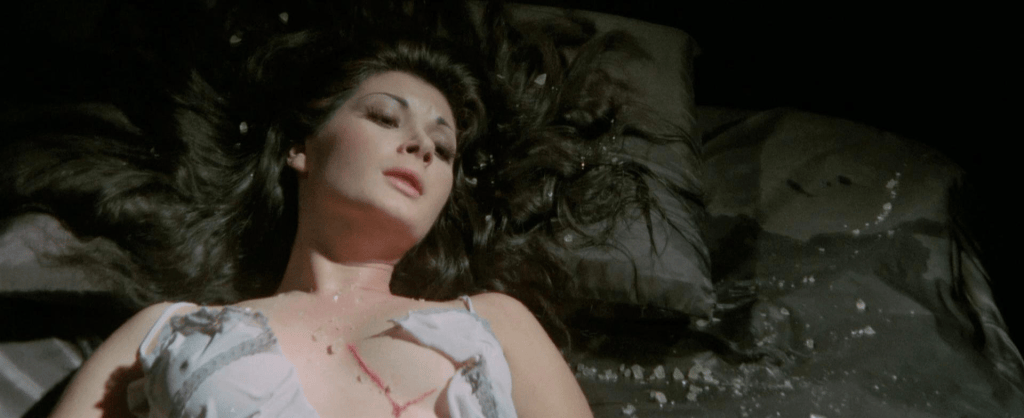
Giallo may have emerged as a response to second wave feminism and the male anxieties that have purveyed since – acknowledging this new woman, and allowing her (in some cases) the survival of the undeniable future – but not without some punishment from the anxious male camera first. I am unsure whether a wholeheartedly feminist argument for Giallo can be given, but what we can do is acknowledge the form of the exploitation film alongside their nuances which make the films so difficult to evaluate. But one thing is for sure: The increasingly appropriate characterisation of women in horror today would not exist without the Italian final girls.
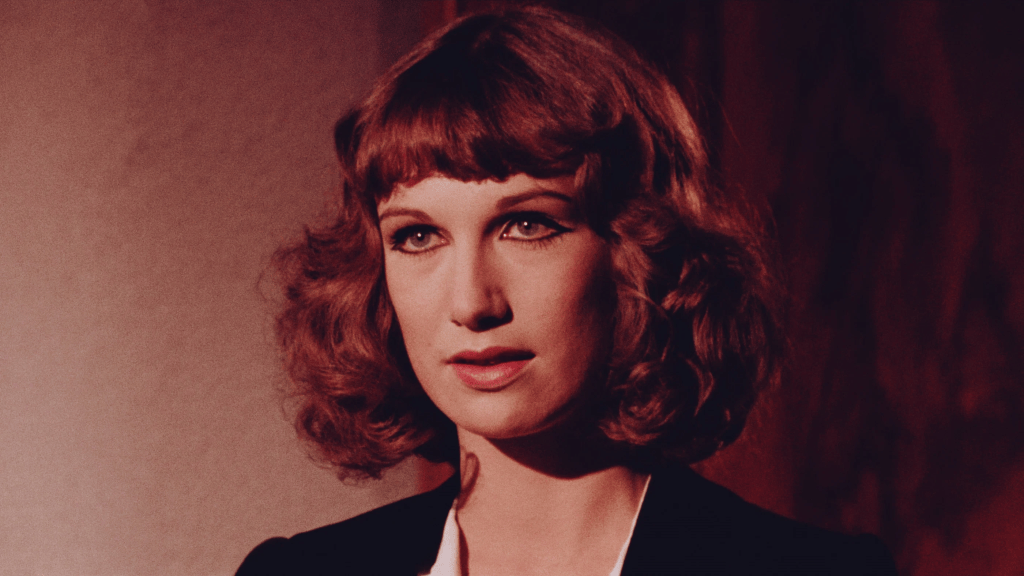
Despite that ethical elephant in the room, ardent fans still go back to Giallo. Why? Of course, the wonderful technicalities of these stunningly artful films have made a huge mark on horror history as a whole and maintain huge appeal. Giallo is the horror subgenre for the aesthete, which I do think that my generation can find many things to love about. The fashion is exquisite, greatly appealing to youngsters (and well, everybody) now priced out of high quality clothes and inundated with Shein or Zara ads. That famous, fever dream lighting is so yearned for in an era of flat ‘Netflix lighting’. Simply, Giallo offers an aesthetic experience that is entirely singular, and most certainly not being provided in the current horror landscape. Italian fashion houses grace the sultry flesh of the model-like leads, selected to be supremely beautiful: Edwige Fenech, Nieves Navarro, Daria Nicolodi. I think Gen Z has shoehorned around into becoming a scared of filmic violence and sex, and I think this is sad. The films most fearless in this regard can often address honest human truths and anxieties underneath with more guts than others. This fear of earnestly engaging with problematic material can stop people from seeing films that may impact them, so I think my generation should remember that film is always an ethical conundrum to be discussed and engaged with earnestly within their contexts – and not necessarily indicative of personal belief. This sounds rather serious, so remember that Giallo is foremostly fun, creative and thrilling, beloved by many generations for a night at the movies!
Enjoying looking at a beautiful woman or some murder may be human nature, and with Giallo or all horror-sleaze, there’s no shame in indulging in some sensationalism every now and then… so let’s choose the films where women dominate the screen! Come to THE BIG SCREAM and enjoy three nights of unadulterated euro-horror bangers – that might make you think! Films from the past create conversation, perhaps more so than unchallenging films, and so these films may inadvertently generate more good by having viewers actively spectating it, and discussing it. Certainly for Gen Z, engaging in discussion regarding gender and our media is becoming immensely needed to combat the rise of violent misogyny, and Giallo could be a fruitful cinematic space to explore this. And even if that’s not your thing, just sit back and enjoy some bloody entertaining chills…
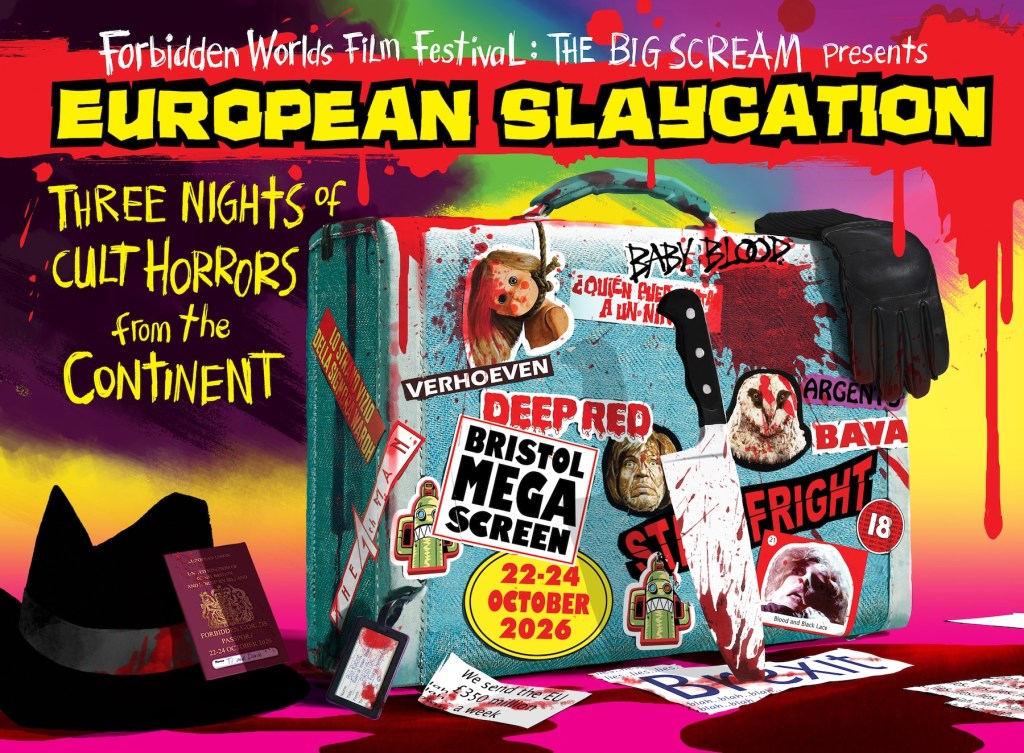
I have massively enjoyed the experience of guest programming this year’s Big Scream and I look forward to introducing Blood and Black Lace (1964) and Baby Blood (1990)! That is, in-between mooching through the fantastic horror themed vendors and devouring hot dogs. Tickets are on sale here now, (with £5 single tickets, £14 day passes and £35 full pass concessions for my fellow
Isabelle Cocozza (Instagram: issycharliedennis) is the Founder & Editor of Culture Film Publication, a film production student and photographer. She is based in Bristol and Bedford, with areas of interest in horror, cult/genre, and psychosexual filmmaking.


