
By Ros Tibbs

A powerhouse in B-movies, cult cinema and direct-to-video sci-fi, action flicks, filmmaker Albert Pyun has has 40 eccentric and dazzling features listed in his credits, beginning with his director debut The Sword and the Sorcerer in 1982, and ending with 2017’s Interstellar Civil War, released five years before his passing.
Pyun’s cinematic world is unapologetically his, with a blanket of dreamy, atmospheric lighting, a pounding yet alluring sense of Surrealism, eccentric, uniquely designed characters and landscapes; all gelling to complement an under text of social messaging. His work is characterised by an alluring and unforgettable kaleidoscope of martial arts, kickboxing, sci-fi elements in dystopian, futuristic landscapes, punk aesthetics and the inclusion of cyborgs.
Despite the heavy presence of the hybrid between flesh and machinery in his work, a 2012 interview saw the filmmaker reveal “I have really no interest in cyborgs. And I’ve never really had any interest in post-apocalyptic stories or settings.”
“It just seemed that those situations presented a way for me to make movies with very little money, and to explore ideas that I really wanted to explore — even if they were [controversial],” he added.
Pyun’s cinema finds a home in festivals and film clubs celebrating cult identity in filmmaking, recognised and defined as over the top campness, a niche release reach, bombing at the box office yet are powered by a committed and loving audience dedicated to keeping the flame going decades after initial release via screenings.
This summer saw The Final Film Festival partner with Radiance to platform and broadcast independent, niche releases of all genres and countries of origins to London-based cult film fans. The festival took on a Pyun curation programme, screening the filmmaker’s work at charming cinema venues dotted around Greater London, to welcome his fans and those who have yet to experience the whirlwind of discovering his work.
Alien from L.A

Kicking off the Pyun programme in East London/Hackney’s Castle Cinema is Alien From L.A, accompanied by an introduction talk by film/media teacher and proframmer Tom Delancy Green, on behalf of the film festival.
The director’s sixth feature film from 1988 can be explained as the love child of the director’s visionary pallette, the 1864 novel Journey to the Center of the Earth by author Jules Verne and The Wizard of Oz by Victor Fleming. It stars the gorgeously charming Kathy Ireland as Wanda Saknussemm, a young L.A based woman working at a diner who’s down on her luck when it comes to dating due to her appearance (she’s a literal supermodel who unfortunately wears huge glasses) and geekish ways.
After she is called to North Africa to sort through her recently deceased archeologist father’s belongings, Wanda finds herself in the underground world under the Earth’s crust and positioned as an alien threat who becomes the city’s number one target.
Alien from L.A. additionally stars William R. Moses, Richard Haines, Thom Matthews, Jamie Du Plessis, Simon Poland, Linda Kerridge, Kristen Tuckess, Lochner de Kock and Deep Roy.
Don’t let the first reviews you come across branding Aliens from L.A. as just a “pretty decent film” to scathing negativity fool you. Pyum’s 1988 sci-fi comedy is non-stop in its tailoured quirk and wit, pulling absoutely no punches with its amusing style and inviting anyone who nerds out for some creative world building to dig deep and right into what is pours out in offering (no pun intended). Audiences are treated with some major Mad Max-esque composition, such as futuristic vehicles powering through sand and dirt, worn leather, post-apocalptic industrial inspiration and other wordly events.
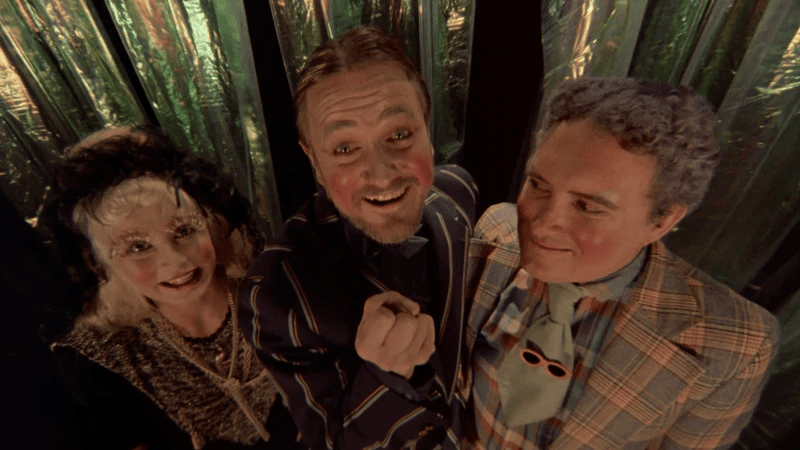
Additionally, Pyun showcases thorough visual narratives wrapped up in his punky style with some distinct character designs and story positioning. Wanda is utterly adorable and enduring as our protagonist, her naiviety and sweetness despite her bizarre and challenging new circumstances is contrasted with Moses’ Gus, who stands proudly when tasked with assisting and protecting Wanda in the hunt for her father, and provides a powerful pack of punches, action and charm. The duo may come in with flickers of character cliches; the damnsel in distress and the rugged, nonchalant hero whose dry sarcasm wins us all over, yet their dynamic sparks the film’s sequences with some dazzling electricity.
The film’s conflict comes in as straightforward and makes sense: Wanda is deemed as an alien and a threat to the civilians underground, but also a means of getting their hands on some big bucks. We get to explore more of this oddball world in the cat and mouse game involving her as an object of major desire, coming across the covert hierachy constructed in Pyun’s take on an underground work, such as mob bosses, down on their luck individuals who stalk Wanda to gain the riches in rewards, and secret political figures posing as civillians. The hunt for Wanda brings action, suspense, comedy and hints of social critique on propaganda and political control via mind tampering, reminiscent of George Orwell’s classic novel 1984.
Alien from L.A. may not churning out Oscar winning performances as there are occasional difficulties maintaining a consistent accent and vast overreactions, but the cheese and corn combo whips us up for some delightful, classic ‘80s style fun.
Nemesis
Next up at South London’s Peckamplex is Nemesis, released in 1992 as the first installment in what would go on to become Pyun’s major film series with three sequels, Nemesis 2: Nebula in 1995, Nemesis 3: Prey Harder in 1996 and Nemesis 4: Death Angel to round the series out in 1996.

This dystopian, cyberpunk action rollercoaster is the director’s 13th film, starring Oliver Gruner as Alex Rain, a cybernetically-enhanced operative with a past in working to counteract terrorism, living in a world populated by androids among humans in 2027. Rain is accused of assassinating his former lover, the leader of an underground militant group, by his previous employers and a bullet filled cat and mouse game follows.
What can be said about Nemeis’s visual pallette other than immediate emphasis on how this film is sexy, slick, sweaty, characterised by the ongoing symbols of bulging muscles, sharp cheekbones, chiseled stomachs, oiled in sweat in between the ammunition and car chases to embed somewhat of a fitness commercial into this action carnival.
And Nemeis feels exactly like a circus at mant distinct points, with Pyun’s film being threaded together with never-ending sequences of characters throwing themselves through the air and flipping like gymnastics in between the flood of bullets. People in the film’s world are so eager to leap through the air and dispay their acrobat abilities that they dive out of the way when they’re not in danger,

As a signal of the filmmaker’s blistering thrist for a montage of wide-scopped ideas, Nemesis reads as a cop story blended into a cyberpunk dystopia with occasional visits to the jungle escapade. It should feel over packed and overbearing in how cramped it sounds but the set pieces and action sequences thumb out all the knots. An extension of its creativity is just how blatant it is that Nemesis is a film which piles on the entertaining concepts. These include man and machine battling it out for top place at the pecking order in various locations and the ins and outs of Rain’s machinery, with an additional, shining highlight being the hero donning a different hairstyle every time he is resurrected and remade.
To top everything off is the pacing of a climax, or two. Most movies give you one major, action packed, pay off climax; Pyun’s Nemesis gives you somewhere between 80-195, so make the most of them.
Radioactive Dreams

Screening at Hackney’s Castle Cinema, Radioactive Dreams is just the director’s second feature credit following his 1982 debut, yet demonstrates how Pyun was a director who was aching to get his filmmaking identity out there and cemented into the cult art world.
This dystopian, sci-fi, comedy shake up stars John Stockwell and Michael Dudikoff as two young men dealing with a reemergence into a post-apocalyptic society having lived most of their lives in a fallout shelter to be protected from a nuclear bomb. They escape the shelter to find themselves in 2010, where gang warfare between a colourful yet dangerous assortment of groups infiltrates the world. Soon, the duo come into ownership of the two keys that will activate the last nuclear missile and so become hot property on a lot of target lists.
Additional onscreen appearances include Michele Little, Don Murray, Lisa Blount, George Kennedy, Nobert Weisser and Christian Andrews, to name a few.
Asforementioned, Radioactive Dreams illustrates how Pyun didn’t necessarily stumble when finding his footing when making his early films in terms of visuals and tone, as the film bursts at the seams with action and humour crossing over with a design that branches between strampunk and occasional glam and gloss. Similar to Alien from L.A, we get treated to some post-apocalyptic grit as we venture into this nuclear wasteland, yet there’s a vibrant radiance to the character design of the freaks
Pyun makes compelling and consistent use of a grand scale with detailed car chase sequences where everything is framed thoroughly, as well as stellar music sequences dripping with ‘80s power and pitch to amplify intense conflict when edited against the latter. These details all make for a rather entertaining watch of the duo hunted down by Star Wars style villains and outsiders, one that is aesthetic as it is outrageous and is a pure, consistent exercise/study of lavish extravagence in cult cinema. Essentially, Radioactive Dreams bares no shame in how ridiclously fun it is, fully dedicating itself to the outlandish antics with our protagonist duo shrieking like little girls when they face a freak gang member on the hood of the car they can just about drive or running through a warehouse which also doubles as a punk night club where a giant mutant rat creature basks in the underworkings.
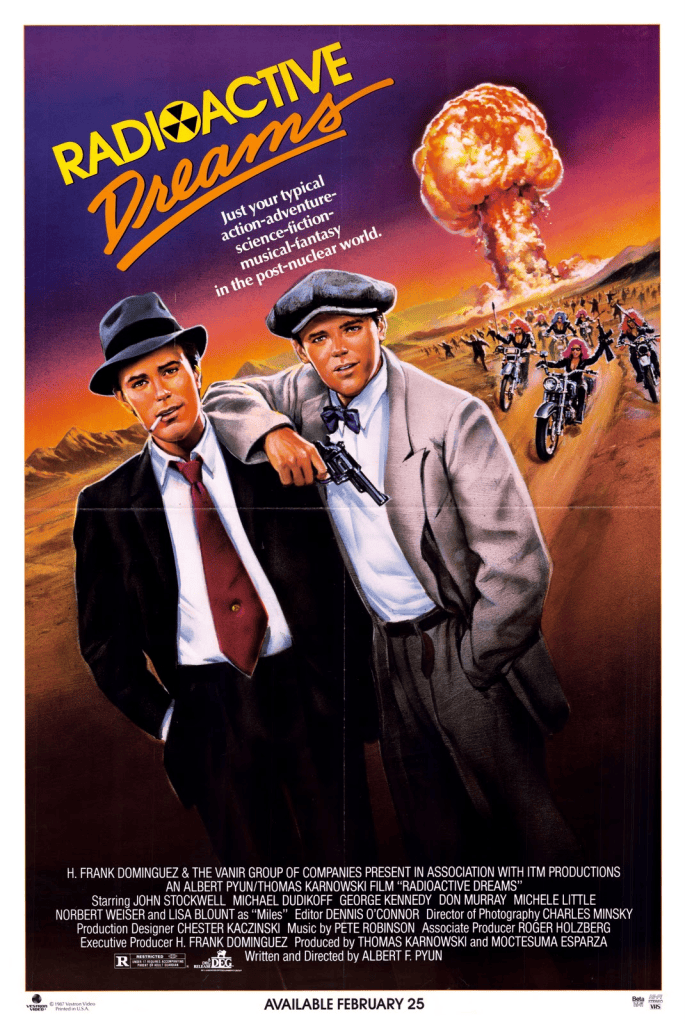
We’ve come to connotate ideas about or imagery of nuclear carnage with major, heavily handed political discourse when presented in filmmaking, typically citing the doom-and-gloom of the aftermath or the ethical mass of warfare through waves of referential dialogue. However, Radioactive Dreams just wishes to cruise through the specifically envisioned new world which nuclear action has birthed, leaving viewers to lace the narrative and imagery with their own intellectual insights concerning the human shortcoming of inventing and using nuclear warfare. It addresses how such an abandonment of humanity and being left in the challenging fall out of it can breed more despicable and brutish villains, something which feels appallingly real and weighted despite the quirky character design Pyun dresses the work up with.
To gel his distinct style with some substance, Pyun explores his own ideas of caste systems and social hierarchies implanted into the dystopian landscapers, with prominent examples being the political and ideological conflict between people from above vs those living below in Alien from L.A. or humans vs synthetics in Nemesis relating to who should gain which freedom and power in our world with the best interests or skills. The director has a fairly solid idea of how such ideals and restrictions from our world can be gelled into his dreamy yet gritty dystopian landscapes, prompting occasional reflective thought in between the popcorn munching and turning your brain semi-off to enjoy the slick fun.
However, a major issue which prevents most Pyun watches above a 3-3.5 star rating is how his work can’t seem to stop suffering from the illness of a pacing issue. He builds up these wonderfully intriguing and mesmerisingly colorful worlds with captivating laws, then just tumbles towards an ending where we are sort of left thinking, “was that it?” as much as we take note of the fun. Likewise, Pyun’s work tends to have bizarre yet relentless habit of introducing and cementing an interesting character tasked with helping the protagonist on their journey and protecting them, only for them to be randomly swapped out and replaced with a totally random character who comes out of nowhere and takes no time in becoming the apple of the protagonist’s eye. This swap comes with a seriously emotional and intense backstory which audiences are forced to care about in a way that can be envisioned as grabbing someone by the neck and forcing their face against a window displaying the sudden emotional agony. It’s almost as though Pyun makes a sudden floundering attempt to christen his action films with a profound, emotional weight at the last minute like he forgot a detail in a check list moments before a deadline.
Regardless of some occasional pacing flaws, Pyun’s cinematic legacy is proud of its cheese, flashiness and humour, wrapped up in some compelling intriguing sci-fi backdrops with details bleeding into our own modern landscape. His films may feel like a parody of action cinema as seen in on-the-nose spoof works, yet they’re just too distinct and memorable in their stand out tone to overlook at significant contributions to a beloved cult cinema.
Ros Tibbs (Instagram: smellsliketeenros) is a freelance film critic/writer based in Essex and East London, specialising in theory, history and the horror genre. She mixes in feminist, political and/or queer frameworks within her passionately written prose and curation work.


