
by Aninda Provati
I had the chance to attend “Breaking Barriers: Colombians in the British film industry” at the University of Westminster on 16th July. It was part of the first edition of London Columbian Film Festival (LCFF 2026) hosted by Col Films Limited. The festival runs from 13th July to 26th July with screenings and talks that celebrate the diversity of voices in Colombian cinema. It is supported by the Colombian Embassy in the UK, the Anglo-Colombian Society and the British Film Institute (BFI).
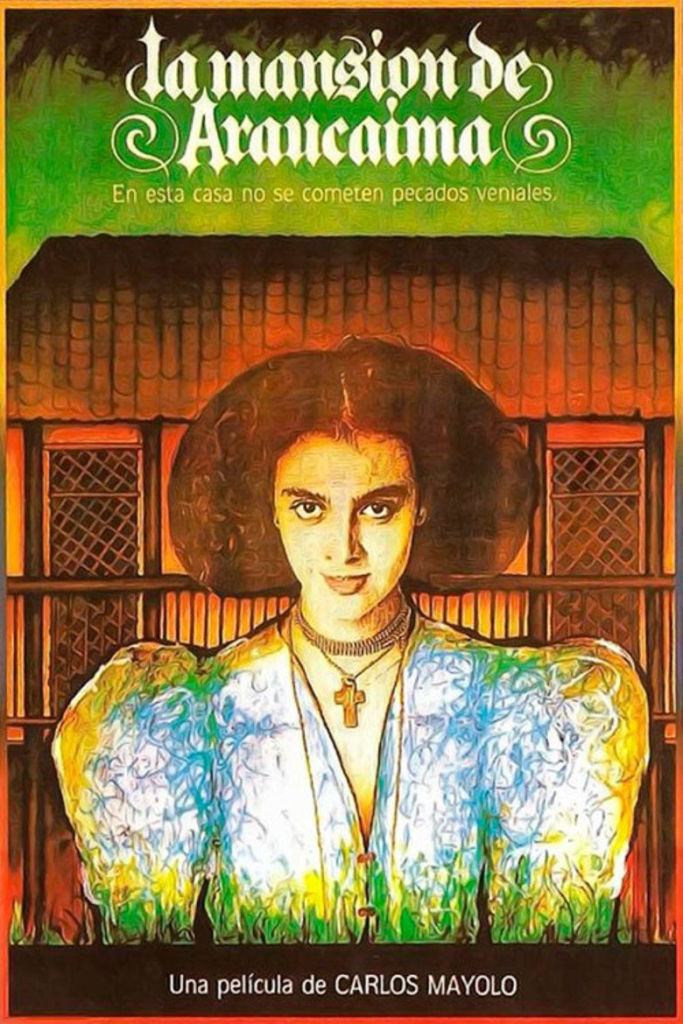
The third screening for this festival was Carlos Mayolo’s La Mansión de Araucaima (The Mansion of Araucaima) (1986). This film is considered a cult classic in Latin American cinema for its historic maturity and intentional aesthetics that marked a new beginning for the Colombian film industry.
The reason why this screening was extremely insightful for me as a non-Colombian is because I learned about the Caliwood Retrospective. So what does it mean? Colombia has always been the target of superficial headlines in global media, mostly drugs and violence. But this retrospective aims to move past them and redirect the spotlight onto the rich magic and artistic dreams at the core of Colombian identity. The festival celebrates Cali, the third-largest city in Colombia, as the powerhouse of the new wave of film industry.
During the 70s and 80s, the radical collective known as “The Grupo de Cali” (The Cali Group) revolutionised Latin American cinema through the creation of the “Tropical Gothic” genre. The pioneering names behind this group were Luis Ospina, Andrés Caicedo and the director of this film, Carlos Mayolo. La Mansión de Araucaima is another addition to this groundbreaking tropical gothic genre that cleverly blends the traditional Western horror tropes of decay, macabre and madness with humid, sweltering tropical landscapes and deep socio-political trauma of postcolonial Colombia.
This film reminded me of John Duigan’s 1993 film Wide Sargasso Sea, based on Jean Rhys’ novella of the same name that explores the haunting narrative of colonial and patriarchal oppression within the tropical Caribbean landscape. Duigan’s adaptation was pretty bad though. That’s why I enjoyed Mayolo’s work a lot because it just brought out the gritty, psychological torment hidden beneath the hot, sultry and decaying environment.
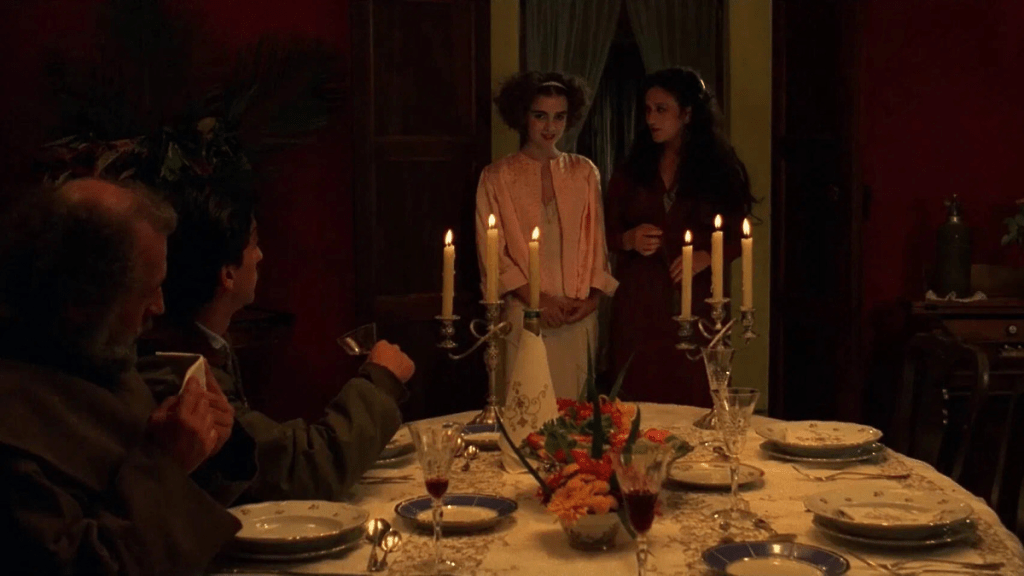
The story follows a young model named Angela who stumbles upon a deteriorating mansion in the countryside. The house welcomes the audience with the warning:
If you come into this house, don’t leave
If you leave this house, don’t come back
If you pass by this house, don’t look
If you dwell on this house, don’t make prayers
The audience is then taken to a surreal trip through the rotting gates of the estate. The most interesting part of this has to be the eccentric characters: there is this supposed old owner, a friar, a young depressed pilot, a Haitian servant, a mercenary and Machiche, the only female in the mansion who dominates the entire group through sexual interaction. Mayolo takes special care to show the power dynamics between the characters. They are extremely noticeable, and quite eerie. There is the master/slave dynamic, along with potent/impotent, matriarch/patriarch and old/new. The true horror lies within these strange dynamics, as one constantly overpowers the other, but the characters see this as a natural structure in their everyday lives. But this routine falls apart when Angela becomes a part of the group.
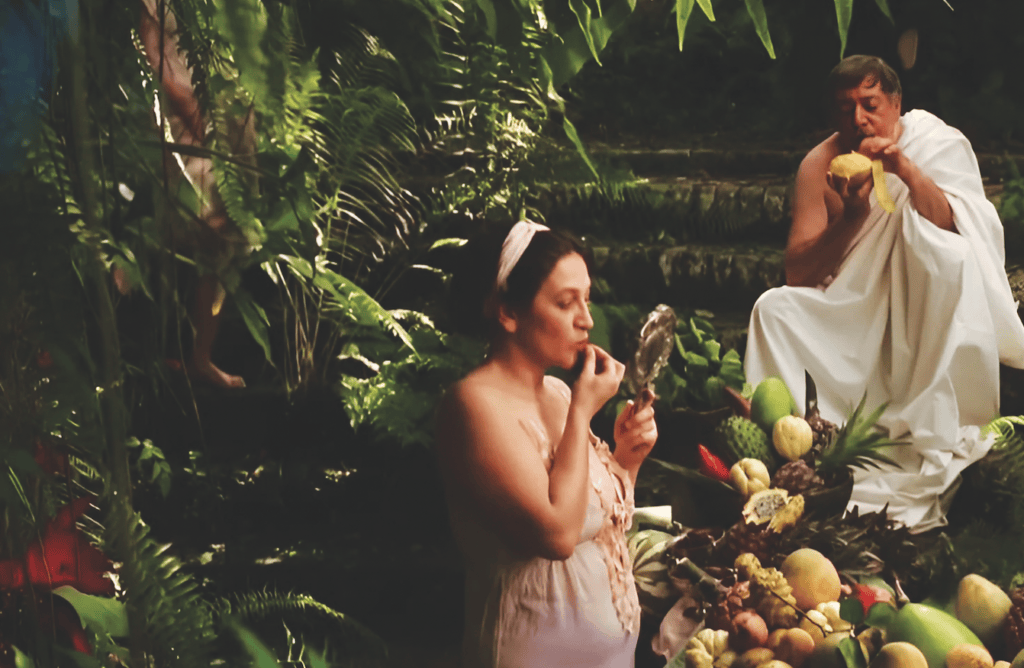
Angela forms sensual relationships with the inhabitants, and although it looks like she is the one holding the authority, the dream imageries show something different. During the intimate moments, she sees herself in bride-like features, trying to run away from the house, adding to the already claustrophobic nature of the film. Machiche starts to grow anxious about losing her grip on the men, who feels carnally more awakened by the new, younger and more beautiful woman. The tension grows, and the residents become worried that things are changing, but they are unable to stop.
This is when the characters try to reclaim their positions. Angela is seen taking a very ritualistic bath with the owner and Machiche. The two women become intimate, along with a snake in between them, reconnecting the city girl with the tropical environment. But Machiche overpowers her immediately. The one to break the power structure in the estate soon falls victim to it.
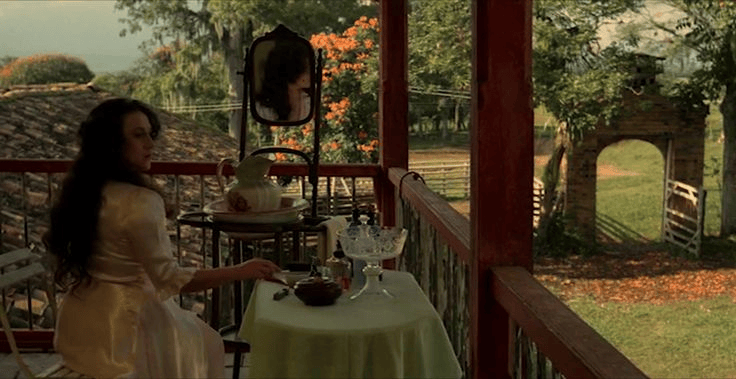
The film takes a turn from the cold, dark European gothic and puts horror inside a sun-soaked environment. The rotting plantations and decaying mansion stand as a reminder of the colonial past on the verge of collapse. The eccentric characters portray disorientation within a generation that struggled with identity during postcolonial Colombia.The lush surrounding provides refreshment, but also creates an uncomfortable, repressed, suffocating presence that does full justice to the tropical gothic genre.
After the screening, a Q/A session took place with Alina Hleap, a producer of 30 years whose career began with La Mansión de Araucaima. This is what I understood from the translator whispering to the non-columbian attendees. Hleap talked about the Cali movement in the 80s film industry, saying how Latin America reinvented the European gothic genre by experimenting with people and landscape. In terms of postcolonial expression within the film, Hleap said that within the tropical gothic genre “anything is possible” which makes the film go beyond reality and reach the extreme. She also said that the cultural shift during the movement also opened doors for many young filmmakers and creators like her.
The event also invited Colombian artists working in award-winning sectors within the British film industry. There were talks from VFX artist Hernán Barros, movement director and intimacy coordinator Andrea Peláez, screen and voice actress Diana Bermúdez and actress, writer, and director Tara Hoyos-Martinez. The conversations revealed interesting aspects of AI and film, the importance of artist protection and the stereotypical representation Colombians still face within the mainstream media.
I managed to attend only one screening – but it was so worth it. I never had the chance to interpret Colombian cinema in this much detail. La Mansión de Araucaima will definitely be my top recommendation to anyone who wants to explore more within the tropical gothic genre.
Aninda Provati (goes by Tiya to everyone) is a freelance journalist who likes to write about art and culture. Her area of interest lies in films and she spends an unhealthy amount of time on Letterboxd. She likes to say she “lives and breathes cinema”. Most of her favourite watches come down to anything and everything by Satyajit Ray, David Lynch and Park Chan-wook. (Substack: tiyajourno, Instagram: tiyajournals)


 Culture Film Publication