
by Adam Page
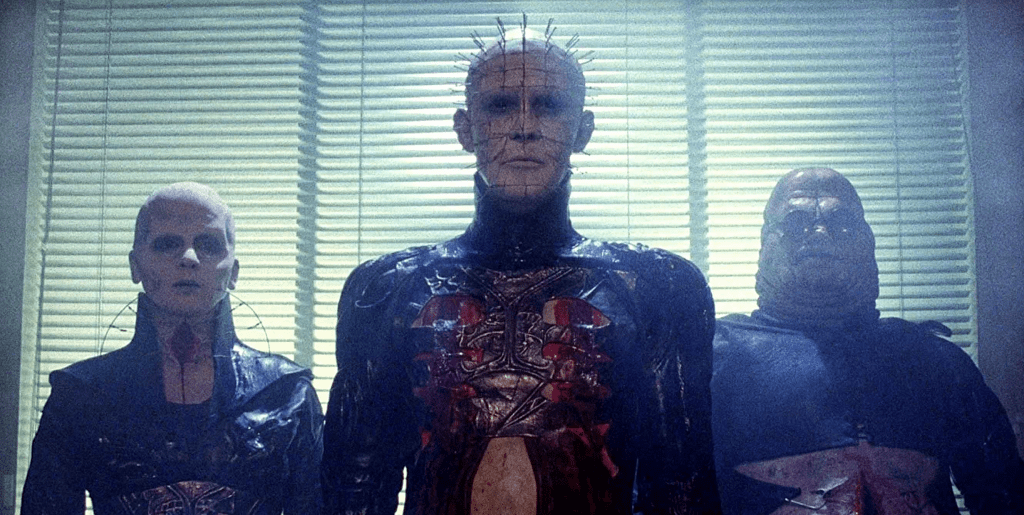
Any honest conversation about body horror has to start in one uncomfortable place: with the recognition that the flesh was never really ours in the first place. It never was. It’s a collaboration between everything that wanted something from you before you had a name for wanting. Your nervous system is a hostage situation and your skin is a treaty.
You grow up in a body, one that was given to you without instruction. Nobody sits with you and tells you, here are the terms of service, this is what happens when desire runs through you like a current you didn’t invite, and here is what society will and will not tolerate that meat-machine doing in the dark. You work it out the hard way, and by that I mean the wrong way, and that wrongness has a very specific texture. A little like shame, a little like hunger, a little like a door you keep finding yourself in front of even though you can’t remember walking there.
David Cronenberg understands this. Clive Barker understands this in a way that suggests he has lived there, set up furniture and chosen the curtains. And what they made, in Crash, in Videodrome, in Hellraiser, is a body of work (pun intended, nothing about these movies is accidental) that treats our human form not as a given, but more like a text. Something writable. Something we can revise. Movies about what happens when the body stops pretending it wants what the dominant culture told it to want. When the flesh gets honest.
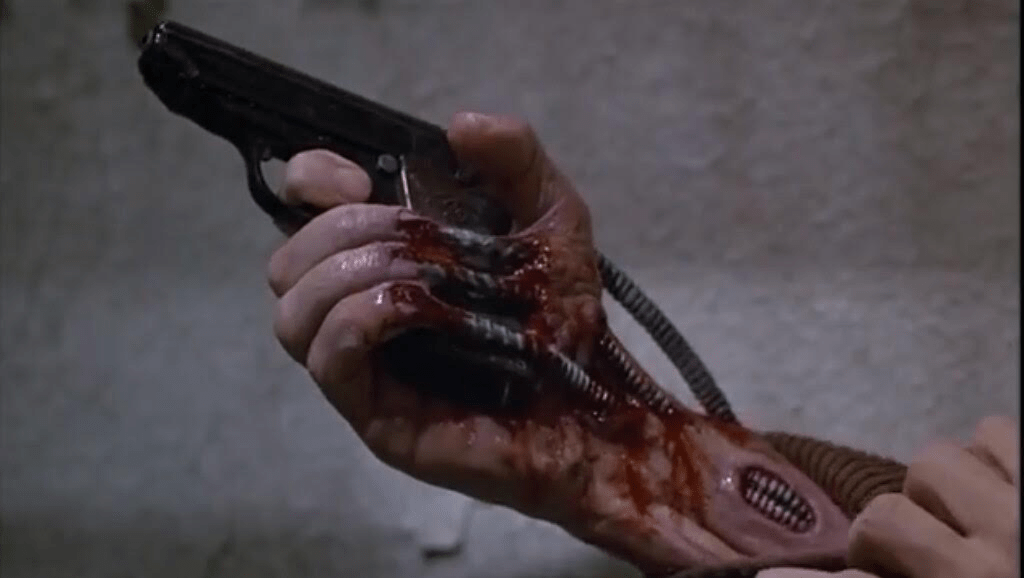
In Videodrome (1983), James Woods grows a vaginal slot in his torso. A gun fuses to his hand, becoming his hand. The television, that most domestic and most surveilled of objects, becomes erogenous. The signal is the disease is the desire. Woods’s Max Renn doesn’t want these things to happen to him. Or he does. Or that fine distinction stops mattering somewhere around the second act, which is exactly Cronenberg’s point.
Cronenberg’s genius is that he refuses to assign any moral weight to the transformation. The regular horror director would typically give the mutation as a punishment; the body goes wrong because something went wrong and the flesh is evidence for the prosecution. Here, Cronenberg gives the mutation as inevitability. Or destination. Max Renn doesn’t become a monster, he becomes honest. The body becomes what the desire always was: boundary-crossing, uncontrollable, penetrated by the world and penetrating back.
‘Long live the new flesh.‘
That line has been quoted so often, it’s become meaningless. And that’s a shame because it is a real manifesto. The new flesh is the flesh which stopped pretending. Flesh that gave up the performance of integrity and admitted what it truly is; hungry, porous, and changed by everything it touches. Changing all it touches in return.
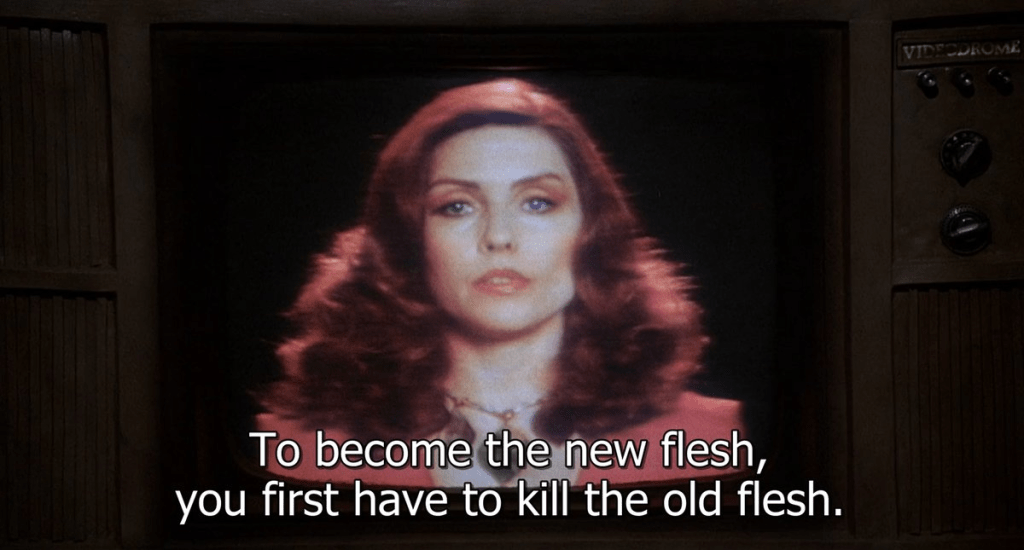
Read that through any queer theory worth its salt and see what you get. A pretty accurate description of what it means inhabiting a body that the dominant culture reads as wrong. A body perceived as porous when it should be sealed. A body that is changed by its desires in ways we can see, that can’t be hidden and announce themselves. Flesh becoming a site of revelation that official culture will frame as disease. Videodrome is a queer text in the same way a bruise is a text. Press it in the right place and it will tell you everything about the force that made it.
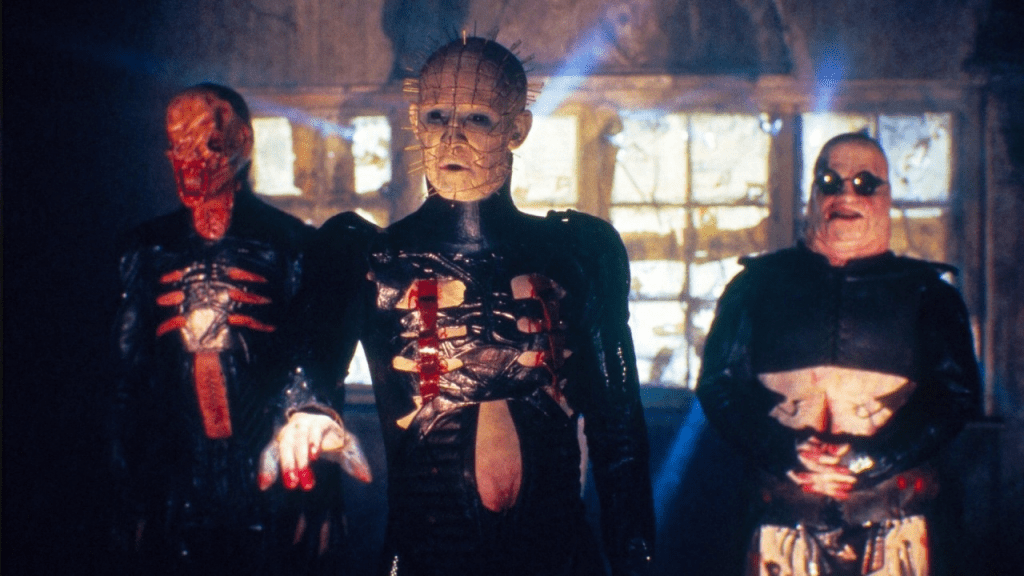
Clive Barker is something else completely. Cronenberg comes at you with the cold and clinical precision of a man who has thought very hard about what bodies mean. On the other hand, Barker comes at you like someone who has felt it in his own skin, has desired certain things that the world had very specific, very violent opinions on and he wrote his way through them. Hellraiser (1987) is a movie about a puzzle box which opens a portal to a dimension of extreme sensation. The beings inhabiting that dimension, the Cenobites, led by the figure whom Barker calls the Lead Cenobite but everyone else calls Pinhead, have bodies that are the logical endpoint of the willingness to be changed by desire. They are pierced, sutured, and scarred. In the movies own language, they are explorers in the further reaches of experience. Demons to some. Angels to others.
The mid-1980s culture, that of the AIDS crisis, Thatcher and Reagan, Section 28 in the United Kingdom which made it illegal to “promote” homosexuality in schools, that culture had very definite ideas about what happened to men who chased transgressive pleasure with other men. And what happened was that their bodies changed in ways that could be viewed as punishment. The flesh turned against them, and the mainstream took this as a confirmation of a world-view.
Barker, who is gay and has never been remotely shy about it, looked at all that same material and wrote something else. He created the Cenobites. Explorers. He created figures for whom the body’s transformation through extreme experiences isn’t degradation but apotheosis. They aren’t being punished; they have arrived. This is not a subtle reading. Over the years, Barker has been fairly explicit that the Cenobites came from his experiences in queer S&M subculture. From rituals, leather bars, the whole apparatus of consensual transgression that was so threatening to the mainstream culture. And it was precisely because it suggested the body could be a site of meaning-making that had nothing to do with legibility, or reproduction, or domesticity. The Cenobites were what the beige moral panic crowd imagined was happening in those back rooms. Barker’s brilliant move was to say: ‘yes. And what?’
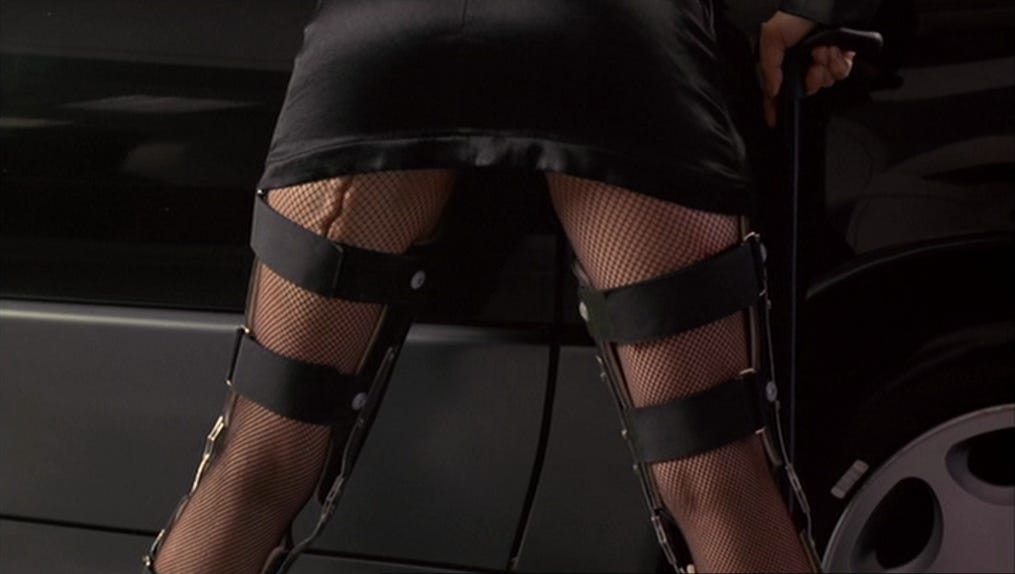
The most rigorous of these movies is Crash (1996), and also the most difficult. Not difficult in that particular way people mean when they say a movie is difficult and mean they thought it was pretentious. Difficult like a mathematical proof is difficult: the logic is airtight, and the premises are uncomfortable. The conclusion will inevitably follow from premises that the majority of us would prefer not to accept. The source novel from J.G. Ballard, published in 1973, when the cultural memory of JFK’s murder was still fresh and cars were both the site of American freedom and American death, is about a group of people who have developed an erotic fixation with auto-mobile accidents. The crumple zones and scar tissue. The highly specific violence of metal and velocity meeting raw flesh. Cronenberg adapted it with total fidelity, and by that I mean he adapted in a way that caused people to walk out of screenings and demand an apology from the festival organisers.
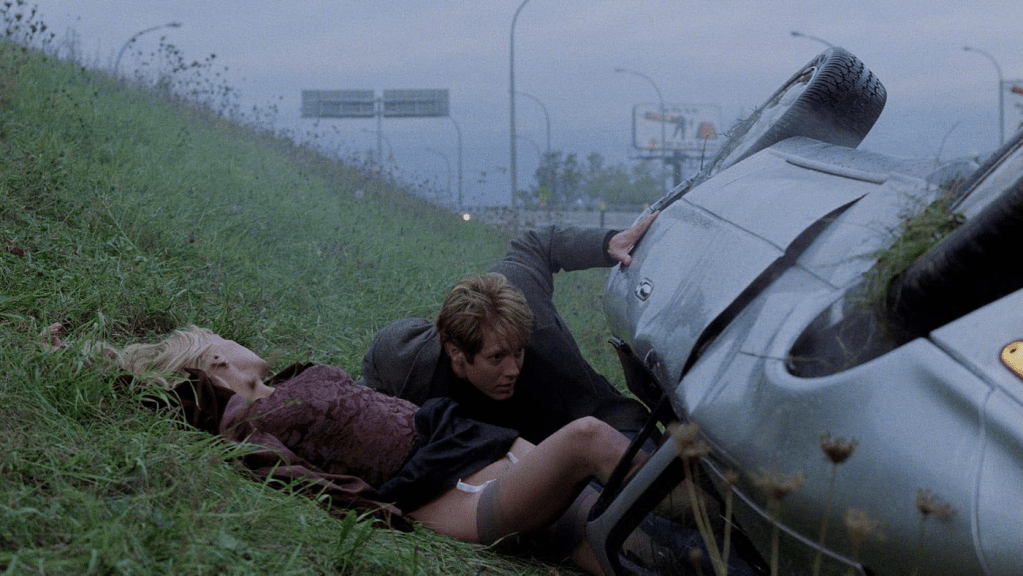
Beneath all the surface provocation, which is real and meant, Crash is really about the body as the site where desire, technology, and death all collide. Crash’s characters aren’t thrillseekers in the conventional sense, rather they are people who have discovered that their desire has migrated to a place our culture has no vocabulary for. In the absence of that vocabulary, they have created their own rituals and hierarchy of meaning, with their own sacred texts. Such as the wreck of James Dean’s car, or the wreck of Jayne Mansfield’s car. And again, this is a pretty precise description of what subcultural queer identity looked like long before any mainstream legibility existed. You create your own language because the existing language doesn’t have the words for you. You seek out the others, the people whose desires have migrated to the same unmapped territory, and you develop rituals. The body scars become a sort of recognition, something the body says to other bodies that language just can’t say. The scar becomes autobiography, with the wound as a chapter you couldn’t bring yourself to write any other way.
What connects these three movies, and distinguishes them from broader body horror tradition, from Romero and Carpenter and the endless parade of infected and invaded, is the relationship to agency. In the majority of horror, transformation is something which happens to you. It’s the act of the monster, or the virus, or the cosmic horror. Fundamentally, you are a passive recipient of someone else’s violence against the integrity of your own self. With Cronenberg and Barker, the transformation happens with you. Or at the very least, in a complicated negotiation with you. Max Renn reaches through the television. Frank Cotton solves the Lemarchand Box. James Ballard (the fictional, Cronenberg one) carries on driving. The horror, to whatever extent there is horror, isn’t the transformation itself. It’s the recognition that some part of you was always moving towards it. The body was always going to arrive here, and you were always going to be a part of this.
Anyone who has experienced desire as something they didn’t choose, and as something which moved through them before they had the framework to understand it, and especially as something the world around them treated as deformity, that horror isn’t unfamiliar. In fact, it is the horror. A realisation that you aren’t who you were supposed to be, aren’t in the body you were supposed to inhabit, and desire who you weren’t supposed to desire.
The difference lies in what you do with that realisation. A straight horror movie will say fight it. Resist the transformation and restore the body to its rightful state. The monster is defeated, social order is reaffirmed and the credits can roll with normalcy restored. Barker and Cronenberg aren’t interested in that story. They are more interested in what happens when that transformation is allowed to complete. When that new flesh is permitted. When the puzzle box is opened and you take a step through into whatever is on the other side. These movies don’t promise it will be comfortable, and they don’t promise it will be anything you’ll recognise. But crucially, they don’t promise it will be worse than the alternative, which is to remain intact and sealed, forever haunted by the door you keep finding yourself in front of.
There is a reading of these movies, a lazy one, the reading of pearl-clutchers who walked out of screenings in Cannes and began writing angry letters, that treats them as nihilistic. Movies that revel in degradation for its own sake. Movies that mistake transgression for profundity, and in the end, are just expensive ways of upsetting nice people.
This reading is wrong, in a specifically political way. It’s wrong because it takes the perspective of a normative body, the body that has never had to think very hard about what it means to be a body because the culture has always agreed this body is correct and acceptable, and uses that perspective as the yardstick against which everything else is measured.
From inside a normative body, the transformations in these movies look like horror because they depart from the acceptable. From outside a normative body, from any position of queerness, disability, gender nonconformity, racial embodiment, or any of the thousand ways a body may find itself in disagreement with the expectations of the culture, they look different. They look like recognition. Like someone is finally making a movie about what it is to move through the world in a body which the world has opinions about.
I am not trying to reduce these movies down to allegory. They aren’t parables. Cronenberg wasn’t sitting down to write a sensitive message movie about the queer experience and chose cars and television sets as metaphors. Barker’s Cenobites aren’t a coded representation of San Francisco’s Castro Theatre in 1979. The movies work because they are visceral and specific. Because the flesh on screen is real flesh and the transformation is a real transformation and the desire is real desire. Not some symbol standing in for desire.
But the best art has always contained its readings without being reducible to them. And what these movies contain, what they always contained and became more visible as queer theory developed the vocabulary to articulate it, is a sustained and rigorous challenge to the idea that there is a correct way to be a body. That the self is a fixed concept, and desire, when it goes to the wrong places, is evidence of damage instead of depth.
I always think about a specific quality these movies share, it’s something about the light in them, or rather, the absence of light. In how they are shot in that certain cold palette which reads as clinical, and also nocturnal. Dissecting-room but also after hours. The kind of place where things happen that the daylight doesn’t want to acknowledge. It’s the light of the inside. The light the body creates for itself when it goes somewhere the culture hasn’t mapped.
There is a reason people find these movies in adolescence, the specific kind of adolescence marked by desires that arrive before the language to describe them does, and don’t find them disturbing but clarifying. Not because they provide answers; they don’t. Cronenberg in particular provides no answers, only implications. The camera’s steady gaze on what the body does when nobody is looking, or when everyone is looking and that looking has stopped mattering.
The clarification is: the desire is real. The body is aware of something. When the transformation comes, and it will come in one form or another for any body paying honest attention to itself, isn’t the end of the self. It might be the beginning of its actual self. The self which exists after the performance of acceptable embodiment can no longer be sustained.
For the people in those theatres, watching the transformed body on screen wasn’t a nightmare. It was a mirror. A greeting. It was someone saying: We see you, we see what you are becoming as the only honest response to the world which has been offered to you.
Horror was the wrong word. The right word was recognition.
So, long live the new flesh. The Cenobites await. And the car is already moving.
It turns out, the body was never the problem. The problem was the idea that it was always supposed to stay still.
Adam Page is a freelance writer focusing mainly on film and literature with a special interest in all things horror related. He is in his final year studying for a BA in English Literature and Language and is somewhat obsessed with Bruce Springsteen. He plays terrible guitar and is definitely a cat person. His favourite film changes depending on what his mood is.


 Culture Film Publication