
by Matt Rogerson
Liminal spaces – thresholds, passages and uncertain states – lie at the heart of horror storytelling. Currently, liminal spaces and liminality are popular terms among horror fans, thanks to the success of horror films like Kyle Edward Ball’s Skinamarink (2023), television series Severance (2022- ) and video game/digital space (and soon to be cinematic) sensations Exit 8 (2023 – ) and The Backrooms (2019- ).
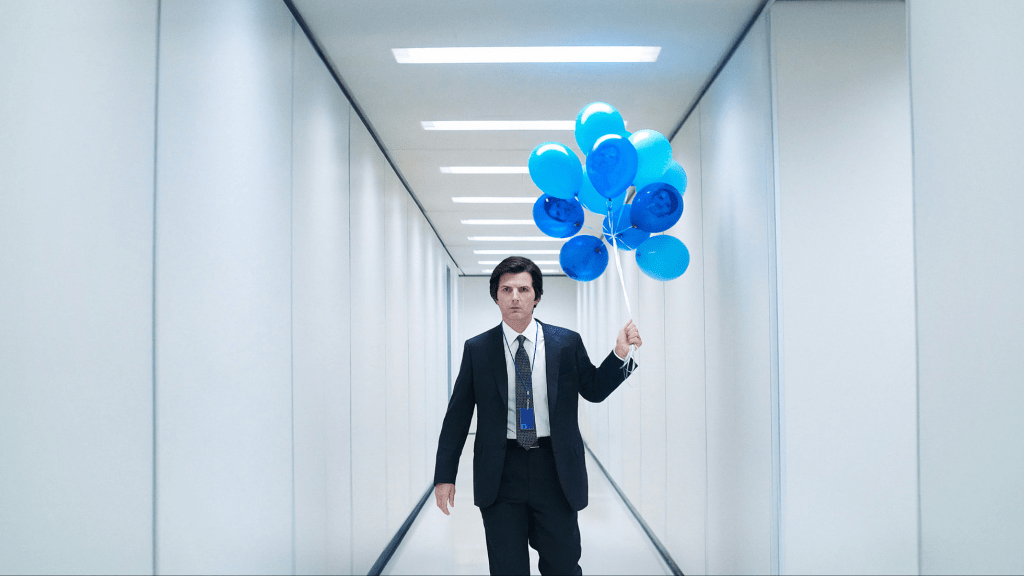
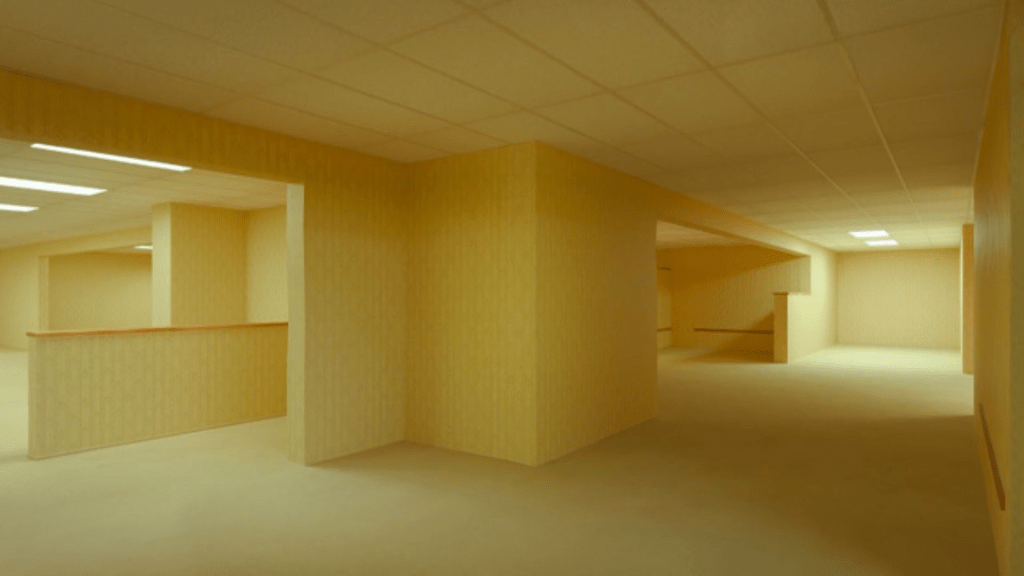
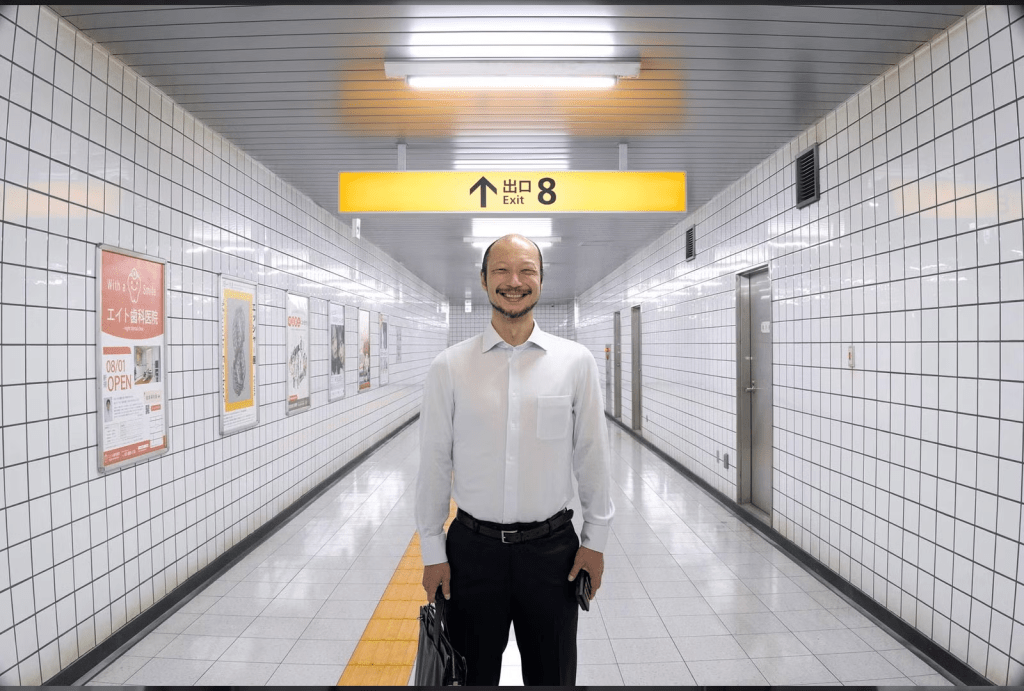
With its roots in Latin (the word ‘līmen’, meaning ‘a threshold’), liminality is a term conceived by Arniold Van Gennep in his 1909 book Rites de Passage to describe passageways between physical locations, time periods, situations or statuses. In the intervening years it has grown to become a popular phenomenon that exists in the fields of Anthropology, Psychology, Architecture and Art.
In Anthropology, liminality is a state of ambiguity or disorientation: associated with rites of passage, it is the middle stage, where those undergoing transition lack a defined social status. For instance, the teenage years of modern humans can be considered to be a liminal period. No longer children, yet not considered to have fully entered into adulthood, they must pass certain markers to determine their transition as complete. Liminality in Anthropology can also be considered in the context of the space that lies between (and often overlapping) defined societies and cultures in history, as one era ends and another begins. It is, without exception, a space occupied by ambiguity or disorientation.
In Psychology, liminal spaces represent the transitional and the transformative, where we find ourselves in between one state of being and another, which in turn affects our psychological and emotional state. When gripped by the uncertainty of any major life decision, we can be considered to occupy a liminal space. Trauma is considered liminal: specifically that period where we typically experience Post Traumatic Stress Disorder (between the original traumatic event[s] and any eventual ‘healed’ state) is a profoundly liminal period marked by a major impact upon the psyche. Through psychological analysis, we can use the liminal state to revisit and redescribe our past, disrupting inherited concepts and ways of being in order to reshape our future trajectory.
In Architecture, liminal spaces are those specifically created for movement from one place to another: whether doors, passages, bus stations or airports, they are the physical thresholds between one place and another, those places we pass through along a journey, short or long. The places we should not dwell in for long. The places where we should keep moving forward, or perhaps go back.
The places horror tends to lurk.
Art – and specifically horror art – is the only field where each of the above definitions of liminality and liminal spaces can co-exist at once. Works of art can comment upon the states of ambiguity or disorientation felt across time and society, or the psychological uncertainty of the transitional. They can depict architectural liminality in a wide variety of creative styles. Where art differs from the other disciplines is not just that each representation of liminality can be found within it, but that the different aspects can be positioned as metaphor to discuss each other – for instance, in the expressionistic liminal spaces of Weimar-era German cinema, where the visual distortions of physical architecture reflects the inner conflicts of the films’ characters as they navigate their own rites of passage and existential transitions.
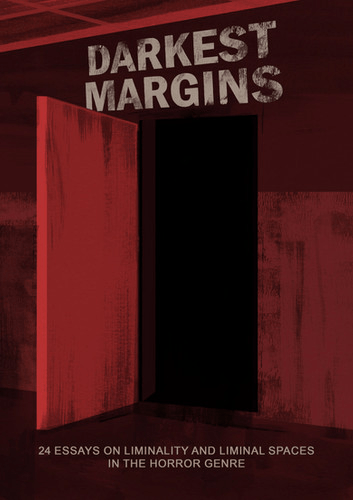
Darkest Margins is a collection of 24 essays from leading and upcoming genre writers exploring expressions of liminality and liminal spaces in the horror genre, across cinema, literature, television, exhibited art and video games. Taking in anthropological, psychological and architectural liminality, the assembled semi-academic and engaging essays undertake what has not been done on this scale before: to explore, map, analyze and discuss those rites of passage, states of ambiguity or disorientation and physical waypoints in a wide variety of works across more than a century of horror media.
Exploring the horror of Anthropology section are Matt Rogerson (The Vatican Versus Horror Movies), Alex Secilmis (Phantasmag), Lea Anderson (Fangoria), Cristina Resa (Singolare, femminile), Sally Campbell (Berlin Final Girls Festival), David Bamford (EasterCon), Jessica Rose (House of Leaves Publishing) and Keri O’Shae (Warped Perspectives).
The existential liminality of adolescence is reflected through The Lost Boys (1987), the state of transition felt by marginalised queer youth is explored via Jane Schoenbrun’s I Saw the TV Glow (2024). Lea Anderson investigates the Gothic Afrofuturism and Speculative Sankofarration of Mati Diop’s Atlantics (2019). Cristina Resa contributes a take on an important but underappreciated Italian gothic folk horror, Brunello Rondi’s 1963 film Il demonio, and liminal states that manifest in the fear of being annihilated by uncontrollable forces in both Italian culture and the world of magic. Sally Campbell invites us to consider the plight of the involuntary childless, and those who aim to ‘save’ them from their woes via surgery, in David Cronenberg’s 1988 film Dead Ringers and Alice Birch’s 2023 television redux. David Bamford discusses liminality and the case against queerness as a force of evil lurking in hotel rooms, particularly the Hotel Cortez of American Horror Story: Hotel (2015) and the Ambassador Hotel of Netflix’s Monster: The Jeffrey Dahmer Story (2022). Jessica Rose looks at the tragic liminality of cognitive decline in those afflicted with dementia in her analysis of The Taking of Deborah Logan (2014), The Visit (2015), and Relic (2020), while Keri O’Shea rounds out the section with her exploration of the very soil beneath our feet as a place of concealment, a keeper of the dead, and totemic power associated with ritual and magic.
The Psychology section features Ygraine Hackett-Cantabrana (What a Scream), freelance critic Jessica Scott, Dr Megan Kenny (Monstrous Flesh), Dr Vincent M. Gaine (Lancaster University), freelance writer Hannah England, Mo Moshaty (Night Tide Mag), Matt Konopka (Dread Central) and Matt Rogerson.
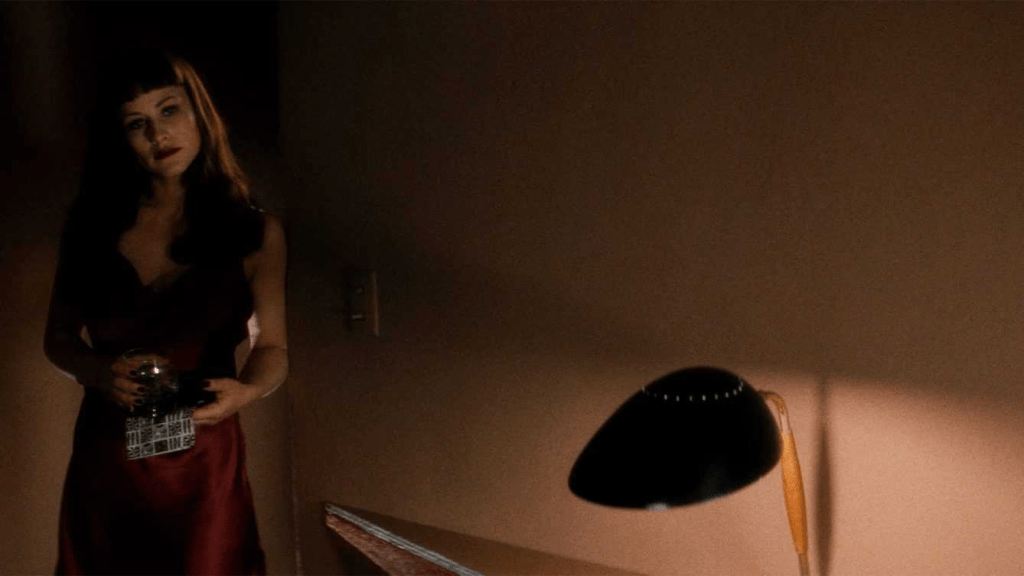
Ygraine Hackett-Cantabrana undertakes an exploration of one of the earliest examples of liminality in film as a medium, the psychological nightmares, paranoia and anguish of Germany’s Expressionist period. Jessica Scott discusses the use of the mirror motif as it relates to queerness and female identity in Robert Wise’s seminal The Haunting, while Dr Megan Kenny immerses herself in decadence and decay in the nightmarish world of David Lynch’s Los Angeles, as depicted in Lost Highway, Mulholland Drive and Inland Empire. Dr Gaine focuses on the cinematic incarnation of Marvel’s Blade, asserting the horror hero as an embodiment of Freud’s theory of Eros and Thanatos and discussing the character’s contradictory desires and impulses of life and death. Hannah England considers the act of cannibalism in horror television, specifically Hannibal and Yellowjackets. In her Bram Stoker Award-nominated chapter, Mo Moshaty focuses on the psychological disintegration of women across multiple genre media, moments that capture how grief, anxiety and fractured identity unfold when the liminal usurps the stable. Meanwhile, Matt Konopka offers a meditation on the trauma inflicted upon children by divorce, concentrating on modern surrealist masterpiece Skinamarink and found footage film Life of Belle (2024). Finally, Matt Rogerson’s second contribution examines the fractured characters of Apple TV’s Severance, and how the disparate psyches of ‘innies’ and ‘outies’ represent specific stages and existential conflicts found in Erikson’s Psychosocial Stages of Development.
Finally, the Architecture section features art curator Myroslava Halushka (ALIENation), Italian genre cinema expert Rachael Nisbet, Matt Rogerson, Jill Vranken (Ghouls Mag), Ashe Woodward (Spooky Scholars), Emily Malone (The Nottingham horror Collective), Clelia McElroy (Monstrous Flesh) and video game developer Nathalie Lawhead (she danced in the wind like a holographic dream before the world died).
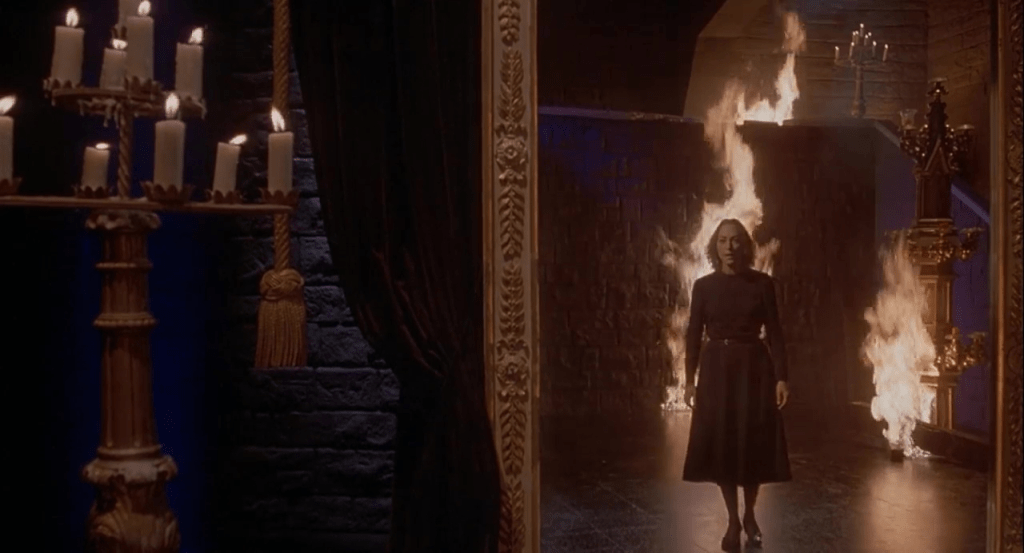
The section begins with Myroslava Halushka’s exploration of the work of HR Giger, and the birth trauma symbolism inherent in the Swiss artist’s visual worldbuilding. Rachael Nisbet analyses the world of Dario Argento’s Inferno (1980), and the fictional creations of the alchemist-architect Varelli that house the Three Mothers – Mater Suspiriorum, Mater Tenebrarum and Mater Lachrymarum. Matt Rogerson’s final contribution comes in the form of a map of sorts; a detailed description of a space on the threshold between consciousness and unconsciousness; the architecture of the uncanny that is the A Nightmare on Elm Street franchise’s dream labyrinth. Jill Vranken’s narrative and mise en scène analysis of the original Hellraiser trilogy discusses the concept of Hell in all its ungodly glory, and the geography and architecture in 1990’s Flatliners and its 2017 remake is studied by Ashe Woodward, highlighting how physical locations both reflect and affect the psychological states of the films’ protagonists. Emily Malone was driven utterly insane by Mark Z. Danielewski’s House of Leaves (2000) so that we could enjoy her essay on the book as a form of Ergodic literature. Clelia McElroy invites us outside to explore the shifting topology of the Black Hills Forest, the area of woodland in Burkittsville, Maryland that is home to the malevolent manipulations of the Blair Witch in The Blair Witch Project (1999) and Blair Witch (2016). Finally, Nathalie Lawhead provides a very personal journey through the beautiful existential horror of the digital realm, taking in cyberspace, broken systems, glitches, and the all too often accessible out-of-bounds dimensions that speak to the imperfect recreation of reality in virtual space.
In addition, the beautiful cover art of Kim-a-tron (LucasFilm, Vanity Faire, The BRIT Awards) perfectly encapsulates the concept of liminality, which the interior art of Aamina Mahmood, Raven Rose and John Ann Klein complement the essays of each of the three sections.
Over the course of 24 engaging and entertaining essays and four stunning pieces of artwork, Darkest Margins hopefully provides an extensive, if not exhaustive exploration of liminality and liminal spaces in the horror genre. This collected edition provides a plethora of possibilities with regard to anthropological states of ambiguity or disorientation associated with rites of passage, psychological transitions that serve as transformative moments for the human psyche, and architectural thresholds, specifically created for movement from one place to another, but so often becoming places where the individual is inexplicably trapped, isolated and helpless.
Most of all, Darkest Margins aims to show the sheer scope of horror, how the darkest of genres encompasses the entirety of the human condition, tapping into the most deep-seated of fears and exploiting them perfectly to create a visceral vicarious experience that is enjoyed precisely because we can transition through it and emerge, safely, on the other side.
Even if, sometimes, it feels as though we might not.
Matt Rogerson – Director and Editor-in-Chief, 1428 Publishing Ltd
Darkest Margins is available to purchase now from 1428 Publishing, Amazon, Waterstones, and a wealth of independent bookstores across the UK.


