
by Ros Tibbs
Pushing transgressive, Queer, anti-establishment and punk art into the filmic spotlight, legendary cult director John Waters proved his status as a culturally significant filmmaker when he kicked off the 1970s decade with 1970’s Multiple Maniacs, an independent black-comedy starring the director’s muses Divine, Mary Vivian Pearce, David Lochary, Mink Stole, Edith Massey, George Figgs, and Cookie Mueller, also known as the Dreamlands. Waters’ second feature film and first “talkie”, following 1969’s Mondo Trasho, narrates the shocking antics of a gang of self-proclaimed sideshow freaks, led by Lady Divine, who rob unsuspecting audience members who judge and isolate them. Soon, Divine finds herself caught in a web of sexual acts and murder when her boyfriend plays with fire behind her back.
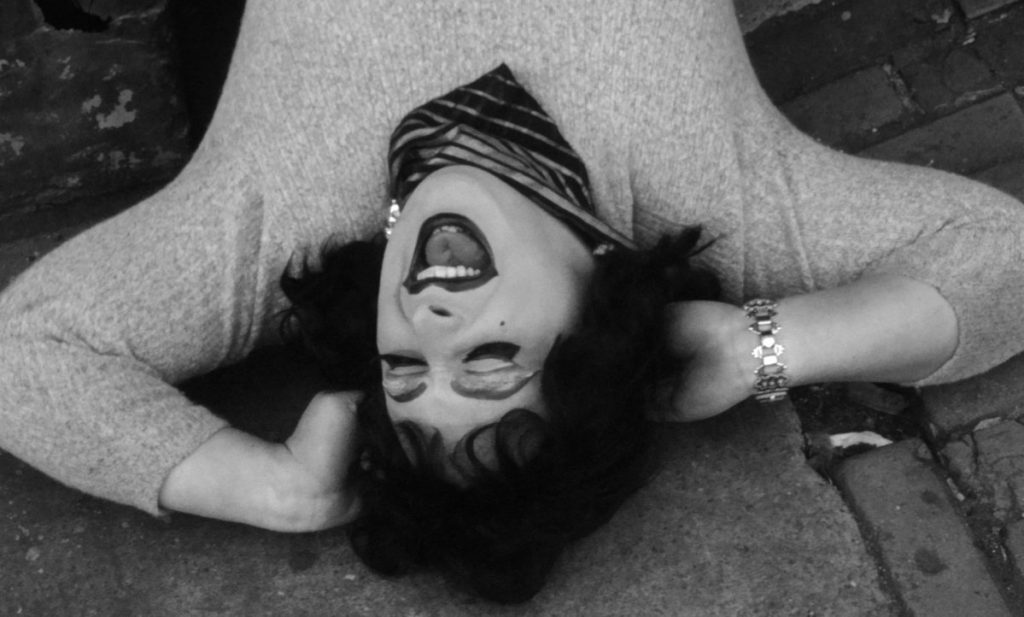
This was drag legend Divine’s third appearance in a Waters project, followed by Pink Flamingos, Female Trouble, Polyester and Hairspray.
The film is formatted and edited to appear almost as a documentary, with a sense of naturalism holding its own against Waters’ artistry. Multiple Maniacs presents long takes, hand-held camera work which zooms in and out of focus and pans across from one figure to another, as well as long, rambling dialogue which feels improvised at times.
Multiple Maniacs was recently screened at the British Film Institute in London’s Southbank by Stims Collective who present accessible and affordable screenings for neurodiverse audiences by neurodiverse curators. These films often touch on topics of neurodiversity or general challenges of ‘otherness’ and are followed by discussions on the films through a neurodiverse lens. The film was introduced by film programmer Molly Miles of Category Horror Film Club, who explained that Multiple Maniacs is the film that earned its creator the title “Pope of Trash”. They also addressed how Waters’ goal when making the film was to “scare hippies” and uses consistent references to the “end of the hippie dream”, such as Sharon Tate’s tragic murder at the hands of Charles Manson and his cult. Miles explains how Multiple Maniacs decides its “not the drifting hippie that’s celebrated, but instead it’s being unrelentingly and unapologetically queer and therefore, unrelentingly yourself.”
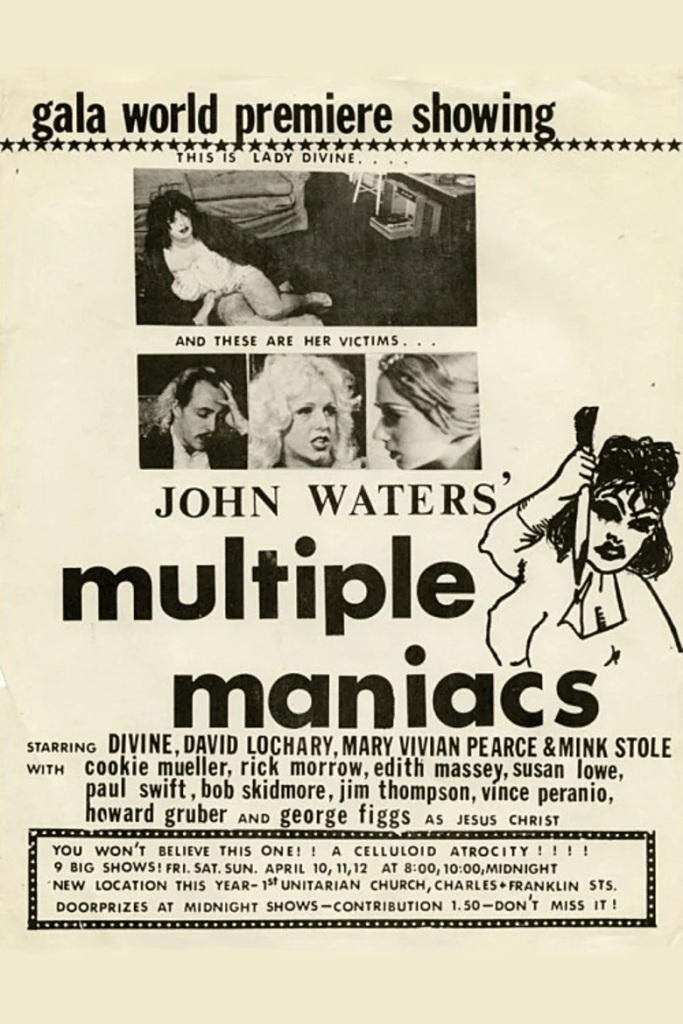
Multiple Maniacs is adored by the Queer, cult film and transgressive art communities due its roar of trash and campness, existing in its visual composition and the presentation of the central characters, expanded upon by Miles’ statement that in the film the word, “‘Freaks’ is used as the term maniac, meaning it’s been wholly embraced by those who have been referred to as it by society.” The film drowns its audience in its portrayal of soaring against the norm, holding them by the face and pushing them against a window which is relentless in depicting those “‘Othered’ by society” as Miles explains. The ‘freaks’ are loud, brash, explicit and anti-establishment like there is no tomorrow. They fight the police, they refuse to censor their thoughts in speech, they showcase their bodies in full, bold nudity, the list goes on, demonstrating how Waters’ “early work showcases his disregard for taste.”
The freaks Divine lives and works with thrash onto the screen to bask viewers who resonate with ‘Otherness’ in the “joyous relatability” of “the freaks’ decision to live together and actively shock people.” Miles addresses how this signals that “the behaviours and habits” of neurodivergent people, the focus of Stims Collective, “are shocking to those who don’t understand them … .yet here they are framed as something positive, therefore we are removed of the shame surrounding this public subversion of the norm.”
Miles also addresses how any “Shame” presented in Multiple Maniacs is re-steered by Waters to instead “shame how square, heterosexual members of the public respond to these behaviours.” This is illustrated brilliantly in an opening sequence of the freak show which places two American men kissing passionately as the source of one of the biggest reactions of disgust from the attendees, beating drug use and physical turmoils. This demonstrates the director’s bang-on-the-nail vision as “a fascinating director,” due to how the “transgression” portrayed in his craft “still holds up today”, as immense Right-Wing spotlight of queer identities and existence burns out in mainstream news while actual ills, atrocities and evils remain unresolved.
Waters was tackling such concepts and interpretations in transgressively bold manners in a time “…before Jaws”, as Miles addresses. This imagery of drag queens pointing guns at groups representing American purity and conservativeness, queer sexual acts, vulgur language etc. came before more socially acceptable releases such as The Godfather, A New Hope, Saturday Night Fever and also Willy Wonka and the Chocolate Factory, demonstrating how Waters held no fear in jumping the gun and straying from the crowd in his artistic identity. Miles stresses that audiences and academics must remember it’s “important to reiterate how shocking this work was and still is,” showcasing betrayals and demises which are a shocking blend of theatrical and halting.
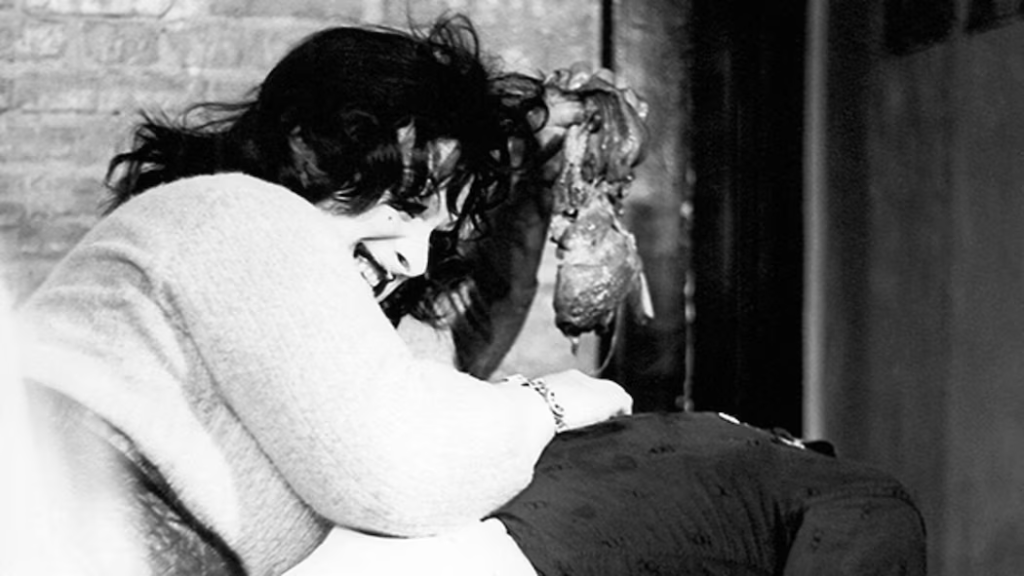
Miles additionally noteda how Multiple Maniacs is “sacrilegious, perverted and makes absolutely no apologies for that.” This is crucially evident in one outrageous yet significant sequence which sees a vision of the infant of prague leading Divine to a church to pray where she envisions Christ’s kidnap and crucifixion carried out by the Romans, while a lesbian suddenly performs sexual acts upon her using a Rosary. An artistic choice allows for us to still hear the sexual encounter overplaying on top of the visuals of Christ carrying the same cross he would then die on and images of the two having sex are cut across in a shocking rhythm. This highlights Waters’ dismantling of a Puritan, holy world, challenging the same mythology that has been corrupted and eroded by bigotry to oppress, control and omit any expressive identities its narrow minded construction deems unworthy.
The film’s climax unleashes all the flamboyant chaos and madness that Waters’ piece has been teetering towards the entire runtime. Everything just bursts out like an overheated aerosol can as the pressure proves too much. Here, we see a complete toss out of any logic and safety, with cutting insults, guns firing, blades slicing skin, cannibalism, a blood bath and a terrorising of the surrounding town. Divine’s character submits to her new level of insanity like a reborn Christian flings themselves to God like a child to their mother, with total trust and faith in where this path shall take them. Divine seemingly cannot get enough of herself in this new, fractured mental state, embracing and kissing her reflection, depicting blood and organ-stained skin and maniacal, fiery eyes, and proclaiming a verbal appraise and commitment to her breakdown. The imagery of her pouncing down the streets chasing unsuspecting, terrified civilians like a wild animal locked in on a flock of meaty prey exemplifies her pioneering into lunacy, her jumping off the deep end away from conventionality and societal acceptance. If the film’s environment felt uneasy and detrimental beforehand, it’s certainly found a new rock bottom now.
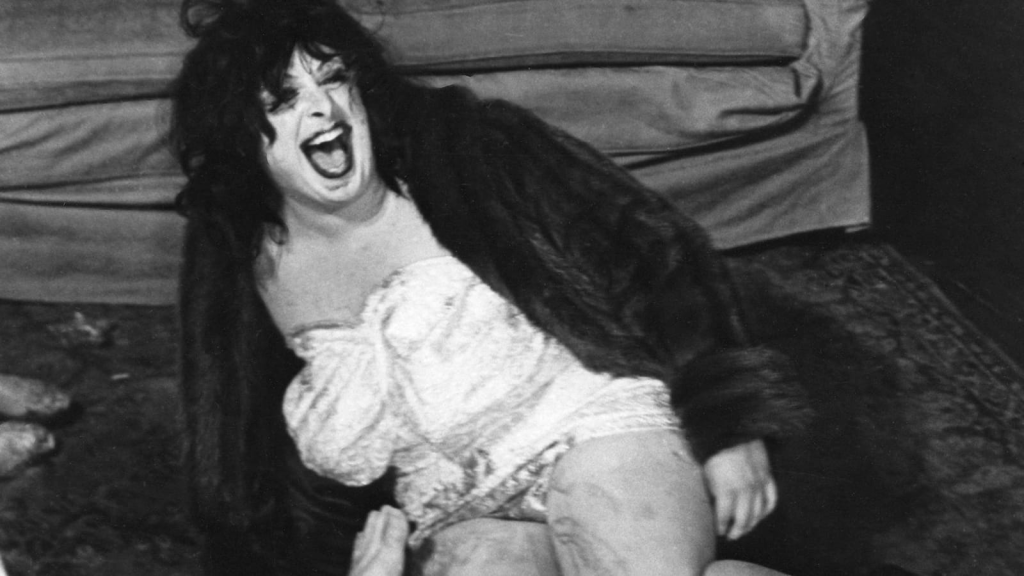
Essentially, Multiple Maniacs is Waters’ love letter to those who, like Miles, “struggle to fit in” and are “considered too much or too weird or too intense”, and Waters, as a visual and tonal artist, lovingly proves that “you can be all those things and it was okay.”
“It’s the freak who is celebrated but is still put at odds against regular society as the champion, not as the loser,” Miles concludes.
Ros Tibbs (Instagram – smellsliketeenros) is a freelance film critic/writer based in Essex and East London, specialising in theory, history and the horror genre. She mixes in feminist, political and/or queer frameworks within her passionately written prose and curation work.


