By Adam Page
There is something which isn’t mentioned in film school, or if it is, it’s mentioned in the same way a sommelier will mention the house red; fast, with no eye contact before moving on to the bottles that matter. The French New Wave, a glorious, cigarette-burnt revolution in cinema, a movement that cracked the form open like an egg and let something wild out, was not made exclusively, or even primarily, by those men whose names were tattooed onto its mythology. Truffaut. Godard. Rohmer. Chabrol. The Cahiers du Cinéma guys. Critics-turned-directors who blew into the French movie industry like a cold Parisian wind and loudly announced that all that had come before them was wrong. They weren’t completely wrong. But the thing about revolutions is they have a bad habit of eating the women first. So pull up a chair, or order a glass of red. We have to talk about what happened in those Parisian apartments, on those handheld-camera streets, and most importantly, who was really there.
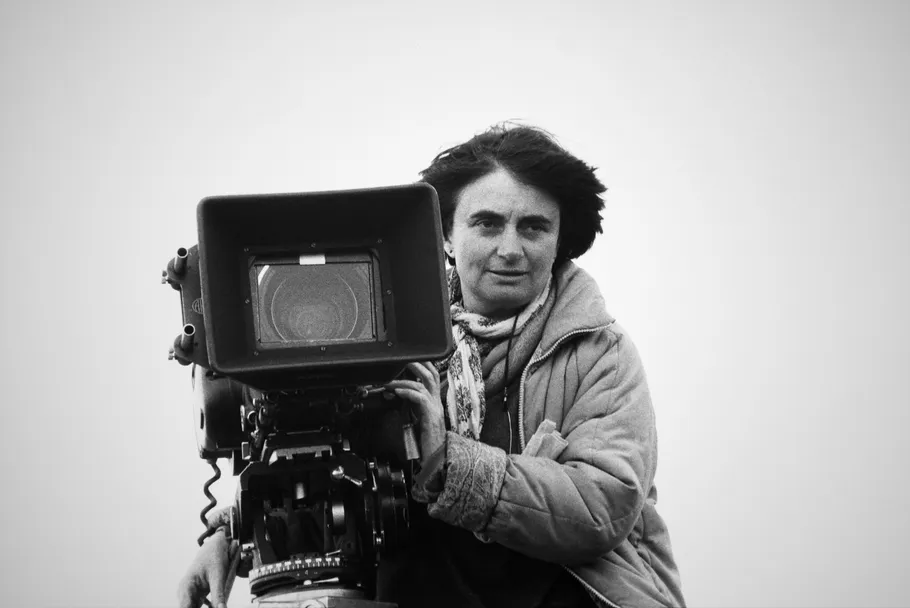
I’ll start with the most obvious omission, and the most insulting one. Agnès Varda directed La Pointe Courte in 1955. Nineteen fifty-five. Breathless from Jean-Luc Godard, the movie that supposedly detonated the Nouvelle Vague into existence, was released in 1960. The 400 Blows from François Truffaut, which is often cited as the emotional ground zero of the movement, came out in 1959. Varda was filming in a fishing village on the Mediterranean coast half a decade before they had a camera in their hands, and was doing everything the New Wave would later claim to have invented: shooting on location, non-professional actors and a broken narrative structure which owed more to the nouveau roman than classic Hollywood grammar. She did all this with no formal movie training, with a shoestring budget, and in a community she photographed with a documentarian’s eye and poet’s heart. She was then 30 years old and had just invented a cinematic language that a generation of men would later claim as their own.
When the history was written, Varda was given the most patronising honorific; “The Grandmother of the French New Wave.” This designation was so perfectly condescending that it could only have been coined by someone who wanted to acknowledge her existence, but not actually examine her influence. Grandmother. Not pioneer or founder. Not the person who was doing this before the rest of you.
She spent the following decades making incredible and formally daring work. Movies such as Cléo from 5 to 7, Vagabond, The Gleaners and I, and spent a lot of that time being described as “underrated.” This is film criticism’s polite way of saying “we got this wrong and would rather not dwell on it.”So they called her the grandmother of the Nouvelle Vague. In fact, she was its mother. A much more different kind of power, and a much more threatening one.
Do you want to understand a cinema movement? Don’t start with the directors. Start with the editors. The editing suite is where cinema lives or dies. It’s where the rhythm gets established and what looked like a mess in the shooting script becomes either a transcendent artwork or expensive mess. The jump cut, a jarring, deeply influential technique which became synonymous with the visual language of the New Wave, didn’t emerge from the genius of Jean-Luc Godard alone. It emerged from the editing room, under harsh fluorescent light with someone making hundreds of exact, consequential decisions.
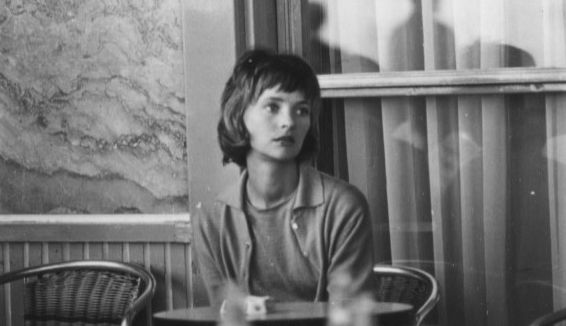
Cécile Decugis edited Breathless. If she is mentioned at all, she is mentioned in the same way the grip is mentioned; in passing, before the conversation gets back to Godard’s vision and audacity, his revolutionary instincts. What usually never makes it into the official account is that Decugis herself was a highly experienced editor who brought skill and craft to those decisions. The famous jump cuts were born partly of necessity; the movie was too long and needed cut. But the person doing the cutting wasn’t Godard.
Anne-Marie Cotret edited several of Èric Rohmer’s early movies. Claudine Bouché edited Jules et Jim by François Truffaut, one of the movement’s most celebrated films, one whose incredible editorial rhythms; rapid cuts, freeze frames and almost musical pacing, are usually cited as the evidence of Truffaut’s cinematic genius. And there is some truth to that. But it’s also evidence of Bouché’s. This is how erasure’s machinery works. It doesn’t need malice, although that sometimes helps. It needs only the persistent application of a certain grammar, the one which assigns authorship upwards to the director and renders invisible all the collaborative labour, a lot of it performed by women, which makes the “auteur’s vision” possible.
If Varda represents so-called “respectable erasure”, that is, the woman too significant to ignore but too threatening to properly canonise, then Jacqueline Raynal represents something much more raw. She also edited movies for some of the New Waves more celebrated figures, doing that invisible work which made their visible. Then she picked up a camera. Deux Fois, which she made in 1968, is one of the most formally radical movies of its time. It’s a work which dismantles narrative and deconstructs the relationship between audience and screen with a confidence and wit which feels less like an art movie and more like an argument. Pretty much shot on the fly, it was screened to confusion and sometimes hostility and quickly disappeared into that category of movies that specialists know about and general audiences have never encountered.
But what’s interesting about this disappearance is the New Wave was supposed to be a movement which celebrated just this kind of formal radicalism. To celebrate breaking the rules and daring the audience to keep up. That was the story, anyway. What the story skips over is that the formal radicalism was much more welcome when it came from men. Coming from the women, it had a way of being put aside in the “experimental” file. In cinema culture, that functions as a polite quarantine, a way to acknowledge something exists but not granting it the cultural weight of being considered influential. The New Wave was celebrating rule-breaking, but the rules around who got to be a rule-breaker remained stubbornly intact.
Then we have Marguerite Duras, who exists in a complex adjacency to the New Wave; close enough to be influenced by it and influential enough to have shaped it. And distant enough in her own genius that the chroniclers of the movement have never known quite what to do with her. Her screenplay for Hiroshima Mon Amour by Alain Resnais in 1959 is by any reasonable measure, one of the foundational texts of the whole movement. With its fragmented structure and meditation on memory, trauma, and the impossibility of fully knowing another person, these themes and strategies echo through the New Waves entire output. Duras wrote it, and Resnais directed it. That collaboration produced something extraordinary and that eras history tends to frame it as a Resnais movie with a Duras script, instead of a work where the literary and cinematic imagination are genuinely fused.
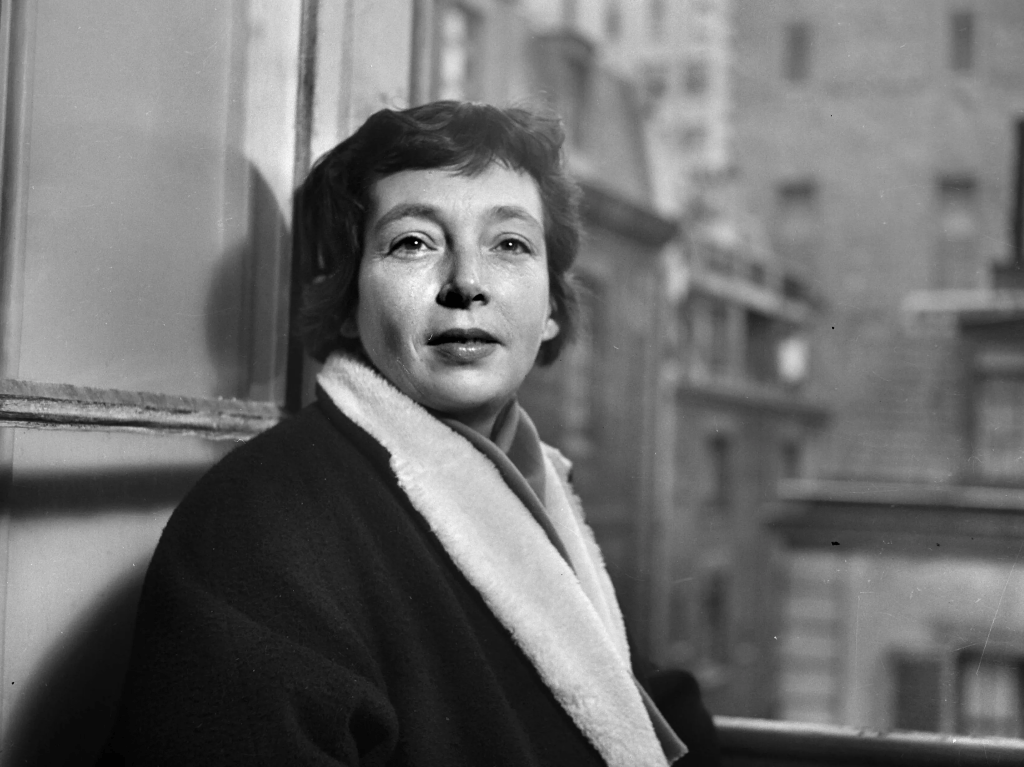
Duras would direct her own movies, which were increasingly austere and uncompromising works in which the spoken word and image work in deliberate, maddening tension. What she was doing was what the New Wave directors claimed they aspired to; pushing the cinematic medium towards its formal limits, refusing the neat narrative resolutions and trusting the audience to cope with discomfort. She was generally considered too literary, too difficult, too much. It seems the New Wave had limits on how much formal disruption it really wanted to accommodate, especially from someone who wasn’t working in its institutional structures.
There’s a question worth chewing over here, over whatever you’re drinking in whatever city you’re in. Just why does the canonical history look like that? Why is it still, in most movie courses and critical accounts, mainly a story about Godard, Truffaut and their ilk, with the women appearing in footnotes and honorifics? Or the occasional “underrated gem” sidebar?
Part of that answer is structural. Those Cahiers du Cinéma critics who became New Wave directors were, after the fact, also writing the first histories of the movement. They wrote themselves into the story’s centre, which is what people do when they’re given the opportunity. Their friendships, networks and feuds all became the skeleton of the narrative. Those women who worked alongside them, who edited and wrote their movies and in some cases preceded them entirely, existed outside those homosocial networks, and so existed outside the stories those networks generated.
Part of it is the auteur theory itself. The critical framework the Cahiers critics developed and became the dominant lens through which cinema was evaluated for decades. At its core, the auteur theory is a theory of individual genius, and that particular type has a way of crowding out the collaborative labour that makes individual genius visible. For certain purposes, it’s a useful framework. A blinding one for others. One of the things which makes it very hard to see is the work of editors and screenwriters, the people whose contributions are structurally subordinate but artistically essential. And part of the answer, lets be honest and name the thing, is that the story of a group of talented young men flipping over the established order is a story our culture loves to tell. It has a clean shape and heroes. It’s got a revolution with a legible face. The real messier, collaborative and gender-integrated reality is harder to narrativise and gets simplified. And in that simplification, people disappear.
But things have shifted, a little. Varda lived long enough and worked enough that the critical establishment ran out of ways to minimise her. Her late-career documentary work, including the brilliant 2017 Faces Places, made with the street artist JR, became impossible to condescend to. In 2015 she received an honorary Palme d’Or at Cannes. An honorary Academy Award in 2017. She died in 2019, aged 90 and still working. Still making things which were formally adventurous and alive emotionally. The recognition, belated as it was, was genuine and a little embarrassing. The spectacle of an institution acknowledging in its 80’s what should have been apparent in its 30’s.
There has also been renewed scholarly interest in the women editors and directors who existed in that movements orbit. Cinema historians like Ginette Vincendeau have done incredible archival work reconstructing what was really happening and who was really doing it. The picture that is built from that scholarship is stranger, richer, and more interesting than the canonical version. And that’s something which usually happens when you look at the whole picture instead of selected highlights. But the canonical version lingers. It lingers on in syllabi, and in the movies that get programmed at cinematheques. Or in the casual references which circulate about cinema. In popular imagination and much of critical discourse, New Wave remains primarily a story about its male protagonists. The women are stuck in the margins, called experimental or overlooked. Or most damningly, absent from the account completely.
This is the work which remains. Not hagiography: the women of the New Wave don’t need to be transformed into saints any more than their male counterparts deserved to be. But they deserve the same contextual, rigorous and historically grounded examinations that the Truffaut’s and Godard’s have received. They deserve being argued about and reassessed. Or criticised and taken seriously as artists whose choices mattered and who had real influence. Varda knew this. She worked her whole career making it impossible to ignore her, something which artistically triumphant and also an indictment of the conditions that made the fight necessary. She once stated that she didn’t want to be a part of the New Wave because she was already doing her own thing. And that was a perfect Varda response; exact, slightly defiant and totally true.
The wave broke long ago. What’s happening now, imperfectly and slowly, is mapping the coastline. Working out who was in the water, who constructed the boats, and whose names were left off the charts. It’s long overdue work. But then, the best meals usually are.
Adam Page is a freelance writer focusing mainly on film and literature with a special interest in all things horror related. He is in his final year studying for a BA in English Literature and Language and is somewhat obsessed with Bruce Springsteen. He plays terrible guitar and is definitely a cat person. His favourite film changes depending on what his mood is.


