
by Janine Riddell
On 15th April I had the opportunity to attend an intimate screening of Ana Lily Amirpour’s A Girl Walks Home Alone at Night (2014).
The location was Nottingham’s very own The Carousel. Located in the Hockley district, it’s a vibrant hub of artistic flare and home to some of the very best in creative minds the city has to offer. A perfect location for one of my personal favourite films.
As I arrived The Carousel was buzzing with excitement for what was to come. The room laid out theatre style with a laidback vibe, allowing for a relaxed environment. I couldn’t resist grabbing a craft beer from the bar before taking a seat and chatting with a wonderful couple; one of whom had enjoyed this film before, the other a first timer.
The screening was organised by Rambling Cinema, who run intimate screenings of carefully curated films across the city with a mission to eventually show a film from every country around the world. They are currently 20 countries in. Mark Morgan of Rambling Cinema gave a brief introduction to the movie, advising Iran is the only Middle Eastern country with two nominations in the BFI Sight and Sound top 100 poll. To note those films are Abbas Kiarostami’s Close Up (1989), and Forough Farokhzad’s The House Is Black (1962).
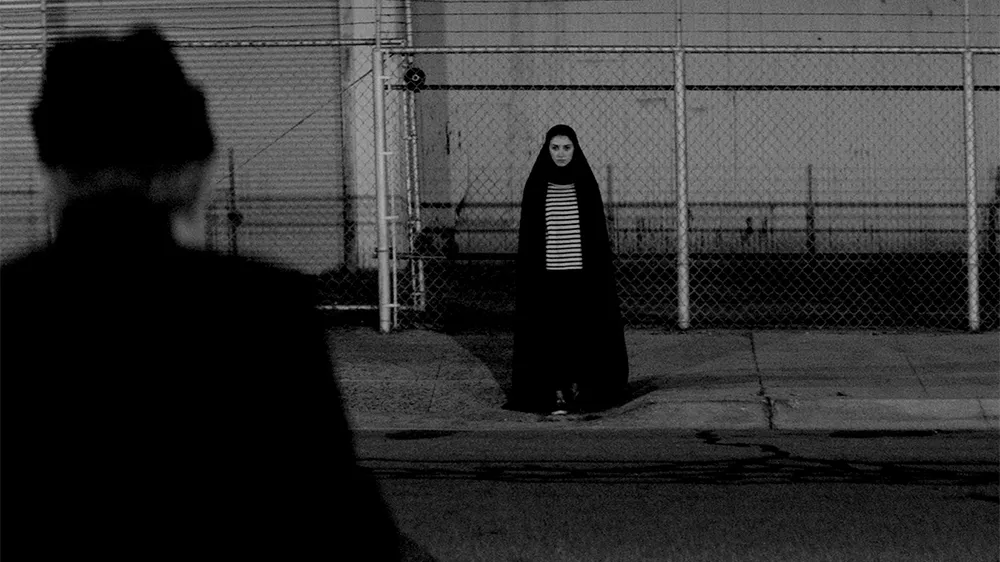
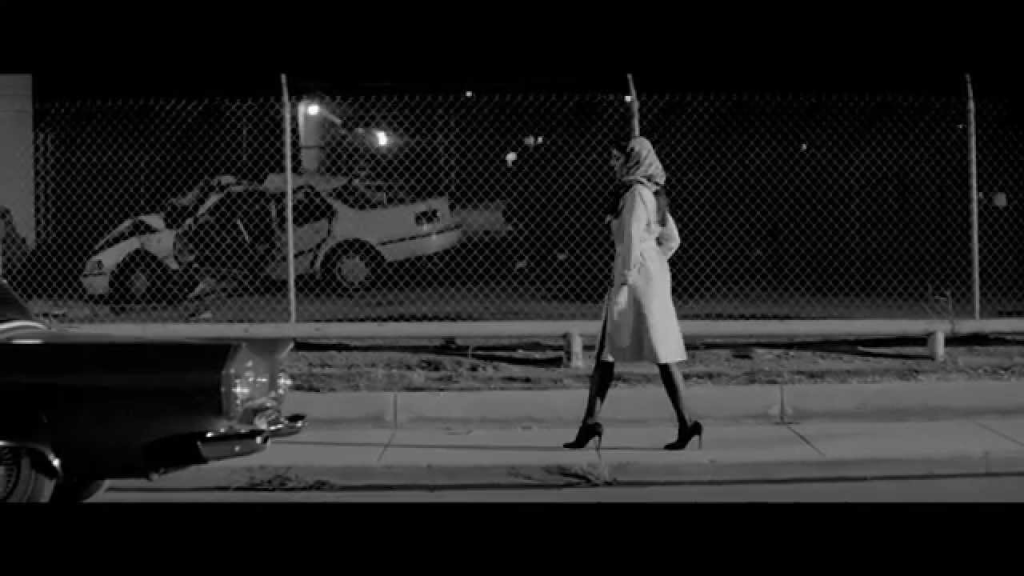
Before I knew it, it was time for the feature to start, and what a film it is. The debut feature from Writer/Director Ana Lily Amirpour (Guillermo del Toro’s Cabinet of Curiosities), is a visually striking film focusing on a mysterious vampire who stalks the streets of an Iranian ghost town, known as Bad City. This place reeks of death, decay and loneliness, the perfect hunting ground for a lonesome creature of the night.
Now I know what you’re thinking, all vampire films are built the same, but A Girl Walks Home Alone at Night hits different. We’re all familiar with the lore of these beings, and where famed genre defining features show blood curdling scenes packed with jump scares and visceral imagery, Amipour’s vision is that of unsettling calm. This is a feature length adaptation from the 2011 short of the same name that provides a new experience in a neo-noir style, devoid of colour yet rich in tone with plenty of moments for artistic flair and award-winning cinematography to shine.
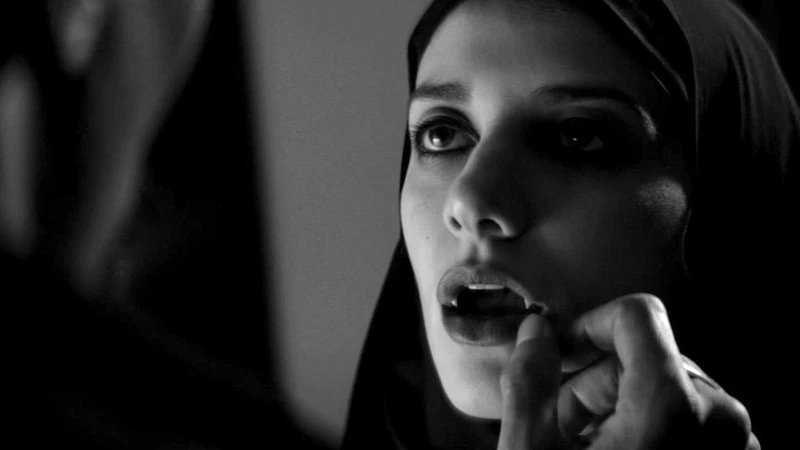
Our vampire, known only as The Girl, portrayed by Sheila Vand (Snowpiercer), is a lonesome character who exhibits a calm, yet chilling demeanour. For the moments of brutality that lie within the folds of this narrative, we see glimmers of humanity. It’s as though The Girl makes conscious decisions on who their next victim shall be, instead of slaying anyone in their path. This depiction reminds me of a snake’s behaviour, calm on the surface and motionless, yet ready to strike with unprecedented force and speed without any warning.
We see The Girl interact with a young boy as he skateboards through the vacant streets in the early hours. There’s a moment of intense anticipation; we know the power they hold and the violence that lurks within, yet the young life is spared on the provision that they uphold decency and behave. We see The Girl take his skateboard. I mention this as it leads to one of my favourite shots in the film. They glide effortlessly down the street, their chador gently floating behind in the breeze. It’s a truly memorable and iconic moment that yields the cinematic vision the film demands so effortlessly.
Now I’d be remiss if I didn’t mention Arash, the deuteragonist in this feature portrayed by Arash Marandi (The Deal), a young man who’s balancing menial jobs and caring for his drug addicted father Hossein ‘The Junkie’ (portrayed by Marshall Manesh). There are clear internal struggles within this character, mourning the loss of his mother, trying to make a living in an environment that’s the antithesis of a thriving metropolis, and ultimately falling into temptation. They make for an interesting counterpart to The Girl, and when their paths cross for the first time, we’re treated to moments of humour and joy. Arash becomes infatuated with The Girl, and as much as they try to navigate separate paths, their fates are sealed in the final scenes.
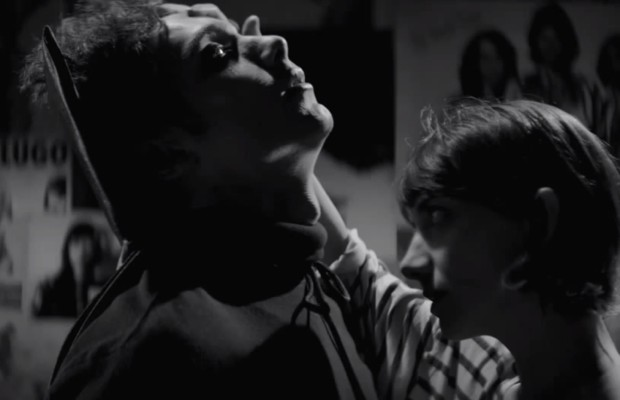
I loved the feelings this film evokes, treading the line between fear, raw emotion and some light humour. The chemistry between our two leads is undeniable and watching their respective journeys collide in an unexpected way is a joy to behold. Arash’s life is depicted early on as one of hardship; he’s seeking a way out of the mundane existence and striving for something more. His chance encounter with The Girl is a formative moment; he realises there’s so much more to discover. He develops a strength from that moment, which plays out later in the film. I was routing for this character; the traditional familial values remain strong, but he’s at a breaking point. The strength shown to break free is a crowning moment of the film.
The cinematography is a real highlight for me; I loved the way the filmmakers played with various light sources to create striking imagery. The noir style leaned perfectly into creating tension and drama, without depending on viscera. Of course there are moments of violence, but when they arrive it’s impactful, purposeful and tastefully executed. I felt this added to the overall tone and style of the film; it has a classic cinema feel with modern storytelling and is a masterclass in how to convey familiar narratives and themes in a new, creative way.
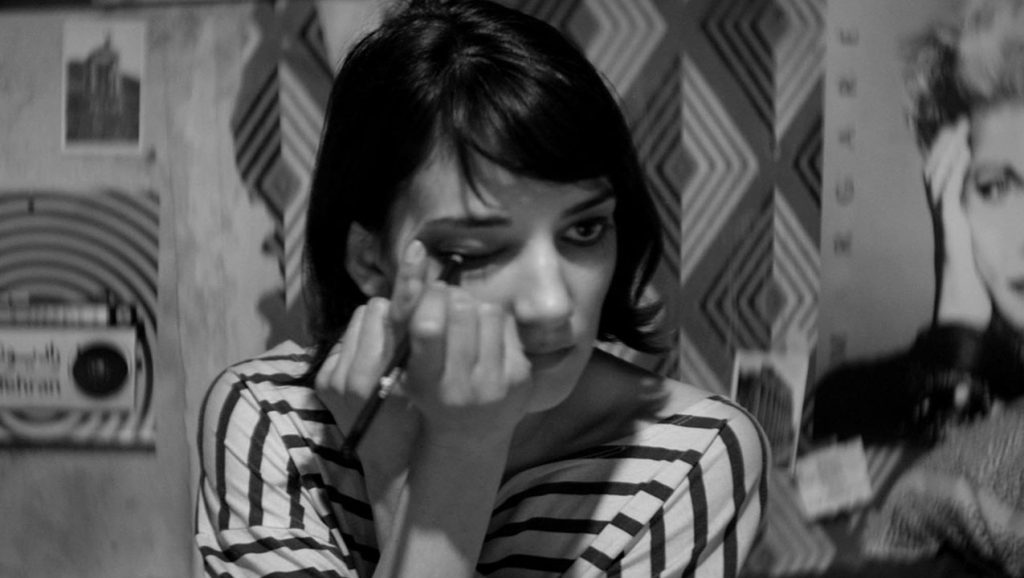
A Girl Walks Home Alone at Night is an absolute treat for the senses. An emotionally evoking score acts as the perfect accompaniment to the feature’s stunning visuals. Themes of loss, addiction, greed, morality and the emotions that come with being human are evident throughout. Scenes where we see Arash’s breaking point are hard to watch, but a natural evolution for the character. The addiction storyline is a carefully woven thread through the first half of this film; we see Hossein is a shell of his former self, seeking a high to numb emotional pain. It’s a hard watch, but essential to drive forward Arash’s character arc.
The theme of greed is most evident in the character of Saeed ‘The Pimp’ (Dominic Rains). He’s self-indulgent, materialistic and shows little regard for the lives of others. A scene in the back of his car depicts the latter to perfection and later leads to his downfall. Saeed is an essential part of the narrative; not only to give us a first kill for The Girl, but as an antagonist for the wider story. They play so well against Arash’s good nature, providing him another crutch to build strength.
Ana Lily Amirpour has created an important piece of filmmaking. It’s an opportunity to open discussions about female representation, with roles representing strength and determination in the face of misogyny (most notably with the role of Atti ‘The Prostitute’, portrayed by Mozhan Navabi. To have The Girl be both a sign of strength and fear is a powerful metaphor for feminism and could be considered an icon in the new wave of empowerment in a genre that has for decades portrayed women as either sexual cannon fodder for killers or final girls. Although the latter is a highly recognised trope, there’s something to be said for female leads to not always be the downtrodden girl next door archetype who overcomes an obstacle to be strong in the finale; we can have leads written for women that have strength throughout and do not rely on others to know their worth.
For me there’s so much more to A Girl Walks Home Alone at Night. It acts as a moment of true reflection, to think about how there’s more than meets the eye and how initial perceptions are often misplaced. Each character here is introduced in a certain light, yet the more we see them, the more depth they display. Hossein is numbing grief following the passing of his wife; Atti is using any means possible to save for a new life far away from Bad City. Then there’s The Girl, a metaphor for the secrets we all carry and how sometimes these are not always what lays buried is not always good.
Then there’s the unique genre style; not a fully fledged horror, but more an international noir with flashes of Western genre filmmaking, romantic undertones, dramatic scenes and recognisable horror characters. I loved the fluidity of these styles; they took me on an unexpected journey, captivating at every tonal change and leaving me to wonder what was to come.
It’s easy to see how this film has been revered for so many years. The visual storytelling gives it a timeless feel; the cast each give outstanding performances and there are so many memorable moments. I would personally recommend anyone who hasn’t yet experienced the joy that is A Girl Walks Home Alone at Night to make time in their day to do so, you won’t regret it.
Janine Riddell is the creative force behind Graeae Horror (Instagram: @graeaehorror). An advocate for fiercely inspiring filmmakers providing independent reviews of shorts, features, novels and audible stories. Her work includes coverage for some of the very best international film festivals, as well as reviews of UK and world premieres. She’s committed to building a strong, inclusive and safe community for all through a shared passion of immersive and memorable storytelling.


