by Ros Tibbs
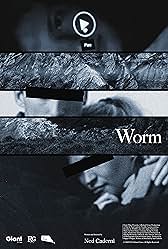
British horror has yet to truly be given its flowers, especially independent British horror. However, the Rich Mix in Shoreditch is dedicated to platforming and pushing for underground yet artistically passionate genre filmmaking to receive the appropriate attention. One event which demonstrated this was the world premiere of Ned Caderni’s Worm, a stylised and thematically prevalent feature made outside any major studios yet with great heart and thought.
The Rich Mix was a fantastic place to host an independent, auteur piece. The facility stands in one of London’s most expressive and artistically diverse places and offers some great cinematic experiences. This event was my first time at the Rich Mix and I was deeply excited to finally get to go there; all my expectations were more than met with an intriguing decor relating to film and some absolutely lovely staff who were the utmost welcoming and approachable.
The upstairs bar was open to those in attendance, where staff worked hard and with an upbeat attitude to keep everyone fed and watered before the viewing. It also provided the opportunity for the guests to all converse and share their own interests and journeys with film; a fantastic and needed use of time.
The screening was then opened with a talk by director Caderni, who was accompanied by the two leading actors, Freddie Acaster and Joshua Dowden. Caderni took the time to express his deepest gratitude for everyone in attendance, stating how overwhelmed he was by the amount of people who showed up, showcasing how London cares and shows up for independent filmmaking. It was a heartwarming and uplifting expression of love for underground, auteur cinema, as well as deeply inspiring. The director then explained his thought process for Worm and the intentions behind it, building up audience anticipation as he emphasised intriguing thematic concepts centred around deep emotional states.
The horror genre has worked tirelessly to familiarise our landscape with traditionally terrifying images of ghostly figures haunting dark hallways, mask-wielding slashers stalking hormonal teens at camps and extraterrestrial beings abducting civilians and threatening an invasion. Within these conventional presentations of fear, the genre occasionally explores scares that are more emotionally and subjectively tailored, ones that cater to the agonies and hardships life throws our way and the subsequent psychological warfare they generate.
This illustration of a more thematic depth and intense psychological tension and trauma over regular jump scares is cited in film talk as ‘elevated horror’, aiming to distribute a scare which is more terrifying than a ghost or a masked killer because it is real.
Worm, by writer and director Ned Caderni, is a new example of the growing elevated horror genre. Starring a two-person cast of Freddie Acaster and Joshua Dowden as a couple called Belle and George, the film’s tagline reads as “Your past isn’t dead. It’s just rendering,” alluding to a portrayal of a personalised horror.
“On the first anniversary of their relationship, a couple escapes to a remote country house in rural Wales. Their weekend is unsettled by a series of emails from her former partner, a man who is supposed to be dead,” reads the synopsis. “As the messages continue, past and present begin to blur, and the isolation of the landscape gives way to a creeping digital haunting.”
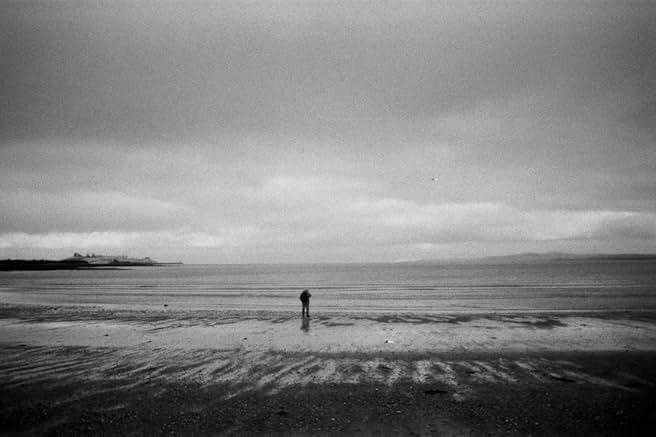
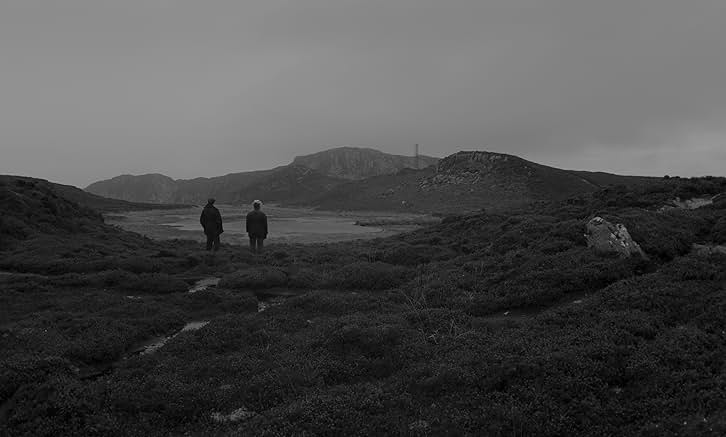
First and foremost, Worm comes in with an unapologetic and consistent stylised presentation, such as its visual composition of a black-and-white, highly stark presentation, which combines with its great location choice of a rented house near the Welsh coast to prompt flickering memories of Robert Eggers’ artistic feature, The Lighthouse. Caderni’s piece maintains its enticement and quality with some brilliant visual composition, with the two characters mostly framed deep into their location, with the camera placed far away and with some great attention to detail. It’s almost as though they are nearly swallowed by their surroundings, showcasing how the director identifies setting as a key player in this film. The camerawork bridges a composition that is both signature and uniform, as well as fresh and attentive to the narrative stage, with highlights including placement in a high corner to capture Belle’s growing state of isolation and ones encompassing the characters in mirrors to accentuate the feeling of being severed from everything. Additionally, Cardeni offers an intriguing blend of imagery between the couple sinking into the house and the almost found footage style imagery from the mysterious emails, almost pulling two worlds (Belle’s world before she was made to face or grief and after) together in a way our central character hates.
Music is another highlight, working as a tool to set the appropriate tone and accentuate any needed dread, lingering threat or anxiety.
Worm is deeply atmospheric throughout the writing framework, in addition to the visual and audio structure, with the writing choice of a two-person act intensifying the two emotional states which gel yet counteract at key moments of narrative progression. However, it is Acaster’s performance as Belle which shines above as the star, although Dowden’s work as the boyfriend who tries to understand wholly yet cannot, does occasionally spark out. The film works hard to make sure we feel the cold and gravity of the situation. Despite the context of a romantic getaway celebrating the long-term relationship of a seemingly happy couple, nothing feels cosy or loving, and we cannot escape that lingering, dooming threat which is festering at every corner like a parasite.
This parasite can be cited as grief, a huge thematic value to the piece, and almost like mould slowly decaying a home, it slowly builds up in Belle’s psyche until she breaks. The writing feeds us bits and pieces of the details of Belle’s grief, threaded as the days draw on, coming off as painfully realistic and amplifying the tension. The character’s grief and breakdown feel postponed and halted at moments to align with the unnerving mystery and tone of the film. Is this a real-life person stalking Belle through her deceased ex-boyfriend or supernatural presences? Both are equally terrifying scenarios, demonstrating the genre’s ability to scare viewers in numerous ways, fictionalised or boldly grounded. Worm scares us through its presentation of such a traumatic and devastating emotional state being exploited. It’s an awful thing to imagine, your grief and pain of a loved one spiralling out of control and being used by someone else to haunt you; our grief and painful emotions are sacred, and we wish to hold the reins when and how we wish. Cardeni’s film demolishes all of this.
Something divisive about the film is its status as an achingly slow burner, which may not be everyone’s pallette. The plot embeds a great deal of emotional agony within it, yet takes its time. It isn’t the horror film to watch if you want your scares pouncing out at you in overdrawn cliches.
The past is cited as a huge factor, yet we rarely see it in visuals to compare to the present; just a few words in an emotional speech made by Bella, it just comes in as a fleeting ghost for a few seconds scattered throughout. One would infer that showcasing it slightly more would assist in the tone and messaging, but perhaps this represents Belle’s fight to keep the painful memories at bay. Caderni himself at the Rich Mix London premiere cited his work as a “horror film about feeling homesick and the horror of not being able to let go of someone in the past.” Worm strives in decent, attentive attempts to explore how our own emotions are a great source of horror, especially when we suppress them, when we think we can control them without the needed tools.
“Beyond the surface-level threat posed by many horror antagonists—the sharp knife of the serial killer, the gnashing fangs of the werewolf—horror often concerns itself with the fears, anxieties, and traumas, real or perceived, that assail ordinary human existence,” writes Becky Millar and Johnny Lee in Horror Films and Grief. “Grief is a key theme that falls under this rubric.”
Horror exploring grief exposes the lengths one would go to curb the agony of being granted such an offer, evident in the adaptations of Stephen King’s novel Pet Sematary and Justin G. Dyck’s Anything for Jackson, or force hold audiences’ heads to witness the spite and venom it can generate between bonds, such as Ari Aster’s Hereditary. Grief lingers in both a terrifying, tormenting way, as manifested in literal ghostly hauntings such as The Night House by David Bruckner or The Babadook by Jennifer Kent, as well as long-drawn-out and slowly dripping through like Ari Aster’s Midsommar.
Caderni’s Worm makes for an intriguing study on grief in horror and the dangers of repression, as well as the agony of having your pain torn from you and utilised as a weapon against you. Its style and story are treasured by its creator, leading to something thematic as well as stylised, which clearly understands its attentive vision.
Ros Tibbs (Instagram: smellsliketeenros) is a freelance film critic/writer based in Essex and East London, specialising in theory, history and the horror genre. She mixes in feminist, political and/or queer frameworks within her passionately written prose and curation work.


