
by Megan Hilborne
Last week, I had the incredible opportunity to interview Mo Abudu, whose passion for amplifying African storytellers through her company, EbonyLife Group, left a lasting impression on me. Her commitment to showcasing authentic African narratives is nothing short of inspiring. It’s no surprise she was named one of Time Magazine’s 100 Most Influential People of 2025—a well-deserved recognition of her impact on the global media landscape.
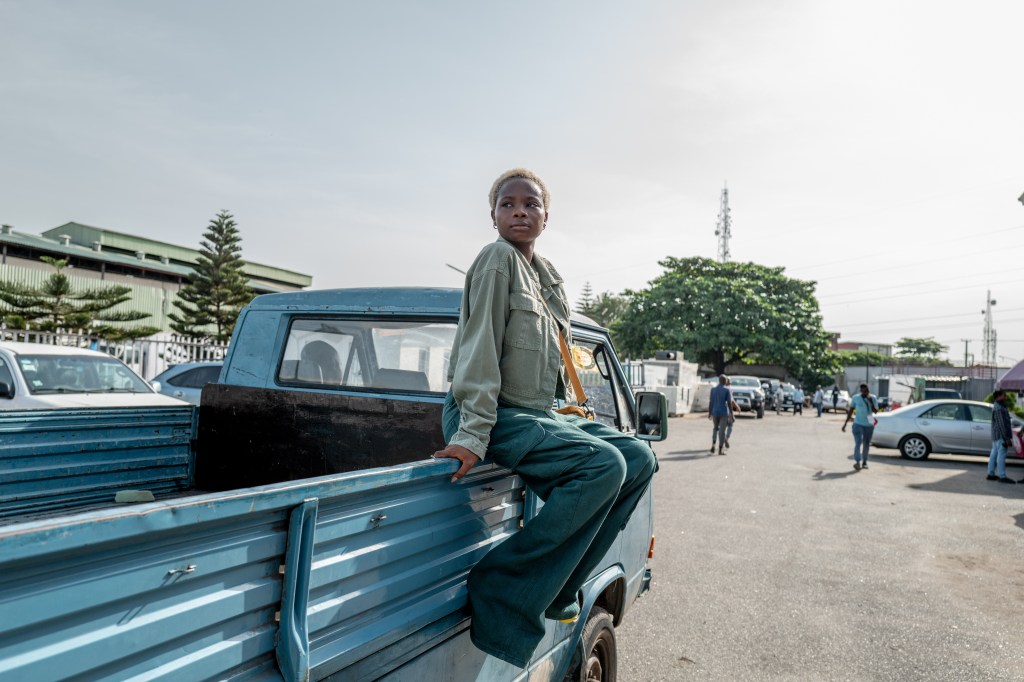
During our conversation, Abudu shared insights about her latest project: a powerful short film she co-wrote and produced with Idris Elba, who also directed the piece. The film centers on Millicent, a Lagos nightclub owner who hopes to pass her legacy on to her musically gifted daughter, Bisi. When Millicent is diagnosed with a terminal illness, she reaches out to Bisi’s estranged father (played by Seal), a former soldier who left before Bisi was born. Told through the lens of their shared love for music, the story unfolds with emotional depth and paints a vivid, heartfelt portrait of African culture.

I just wanted to congratulate you on this film, I thought it was really powerful. What was the inspiration behind this story and what inspired you to write it?
“The final draft was written by Idris, but what inspired me was that I wanted to tell a story from our continent that we could share with the world and that they could relate to. I find that stories coming from our continent a lot of the times are skewed towards what I call ‘poverty porn’. I just didn’t want to do another story like that. I wanted to do a story about family, about legacy, about love, about even the fact that she was dying and she has this daughter that she needed to make sure was going to be okay even long after she was gone. And about music. Afrobeats is big in Lagos, is big in Nigeria. And it was important that I was able to draw on all of these cultural elements of who we are to bring to the world a story that they can relate to. Idris and I wanted to show that we’re just as human as everyone else in the world, because sometimes I think people forget that.”
“We committed to the fact that it was really important again to take African stories to the world”
How did Idris and Seal get involved with this project?
“Idris and I met a few years ago and we committed to the fact that it was really important to take African stories to the world, because there just isn’t enough of that. Then I wrote this script and I shared it with him and he redrafted it. I wanted Idris to be the singing soldier, and he actually agreed to playing the role but then he said “there’s someone else I think can play this role better than I can.” Then he suggested Seal. I said, well, Seal, is great. I mean, five-time Grammy Award winner. He’s not acted, but I’m sure he can. And he said, ‘leave it with me’. And then as you guys say around here, Bob’s your uncle. Idris has gotten us Seal to be in our film.So here you have these two powerful black men. One is the director, one is the lead cast. And just seeing the brotherly love between them in Nigeria, working to bring this together. We did a beautiful BTS as well of this film, which I can’t wait for the world to see. It was such a loving set. Idris had such commitment to the work. He’s a very busy guy, but he still found the time to say, “If I’m going to do this, I’m going to do this properly.” The treatment we gave this short film was the treatment you would give to a feature film and it was really awesome to see him work with our actors and crew- the way he interacted with them. And it was just magical watching everything happen on set. We were in Toronto a couple of weeks ago with the film and the response was outstanding. I’m keeping our fingers crossed that it’s going to be loved. The response has been overwhelming. It’s a beautiful feeling that people are happy to see something come out of our continent that they can relate to“.

Regarding what you just said, I found it quite relatable. Just on a personal note- I don’t know my father and I think seeing a film that showed the reuniting of those two people, it was something that actually meant quite a lot to me. And I’m from England and as you say, people have related to it from different areas of the world. So I think it’s a really special film. Can you see it being a feature one day?
“Yeah, absolutely. The feature will be made one day if possible, because I call it a slice of life. We’ve just taken a moment in everybody’s life and we’ve presented it as the short film. But it would be lovely to expand it and see it fully fleshed out as a feature. Who knows? Maybe one day.”
The title, Dust to Dreams, where did that come from?
“The reason the title is Dust to Dreams, it’s that everybody sees Africa as this dusty place. But, it’s from that dust and from that desert that dreams become a reality. It was about bringing it home to the fact that something can start in a particular point, but it can end with that dream being realised. We wake up every day, all of us, no matter where we’re from in the world. We wake up with with something buried deep in our heart. For me, that’s the dust. The dream is when it becomes a reality. And the reality of this was this mother that was dying, it was seeing her daughter reunited with her father. And the dust was, there was no uniting, but the dream was they were united, at the end of the film. So when I kept thinking in my head about a title, a title, a title, it’s how sometimes things just happen, like things just get buried in your brain somehow. You wake up and it’s there. And it’s got to be that basis that the two stories are Africa is very dusty, but our dust can become dreams. And also the story of this mother that had this dream in her heart about reuniting her daughter with her father. So that again was from the Dust to the Dreams. And so those are the two storylines for me that helped create the title.”
“I felt that it was important, rather than be part of the problem, be a solution to the problem and start telling stories. The only way you can change the narrative or the only way you can get people to understand who you are is to tell the stories”
I watched an interview that you did with CNN when you said that you wanted to supercharge African storytelling through your company, EbonyLife Films. And I just wanted to say that I think this is amazing. But I wanted to know what drew you to cinema, because I believe you started with TV.
“I actually got into media as a sector just 21 years ago. I was turning 40 and that’s when I decided that I’m going to do this. It had been on my mind for many years before but I think due to peer pressure, societal pressure, I didn’t have the guts to see it through and I decided to stay doing the work that I had been educated to do which was being a HR consultant. I woke up at 40 and realised that I needed to start living my life for me and doing the things that were important to me and it takes me back to when I was brought up. I spent the an earlier part of my childhood in a place called Tunbridge Wells in Kent. Probably one of three or four people in the entire town that was black. I found myself pretty much defending who I was for the better part of my life even when coming back to England as a teenager, because I went back to Nigeria when I was seven, came back when I was 11. You still find even till tomorrow, you’re defending your nationality, you’re defending your continent. So I felt that it was important, rather than be part of the problem, be a solution to the problem and start telling stories. The only way you can change the narrative or the only way you can get people to understand who you are is to tell the stories. So having no previous experience in the world of film or television, I woke up at 40, started a talk show. From the talk show, I started a TV channel. From the TV channel, I then started making films. This is actually is my second time screening at LFF. My first film screened there, a feature film 10 years ago in 2015, about four Nigerian women turning 50, because I happened to be turning 50 around the time. And I thought to myself, imagine if I made a film about what could have happened to four women on on the eve of their 50th birthday. So 10 years later, I’m back at LFF with a short film. So that in itself is a bit of a journey for me and quite an emotional one. But the journey for me into media, be it TV, be it film, it’s really about the fact that we need to take responsibility for telling our stories because left of the world, they’re going to tell the story in the lop-sided manner and way that they have done for many years. And the only way that can change is if you take some responsibility for that.“
From Dust to Dreams premieres at London Film Festival 8th October 2025.
Megan Hilborne (Instagram: meghillbilly) is a freelance writer and film critic based in Portsmouth. She graduated with a degree in Film in 2020 and has continued her study of the medium in her day-to-day life. She takes particular interest in indie, horror, feminist and queer cinema.


