by Isabelle Cocozza
This review is attemptedly spoiler-free, only generally known plot point spoilers are included. I would advise going into this film blind, before reading regardless.
On Sunday 24th of August, I went to London’s Leicester Square ODEON Luxe for Frightfest – the UK’s biggest horror and genre film festival – for the worldwide premier of THE DESCENT (2005) 4K RESTORATION. The cast and crew attended, and director Neill Marshall opened the screening with a Q&A with a festival director as per most Frightfest screenings, and closed the screening again, this time with lead actress Shauna Macdonald coming down from the stalls to join the conversation. The two then did a book signing for the new book written by Janine Pipe and Marshall, ‘The Making of The Descent’.
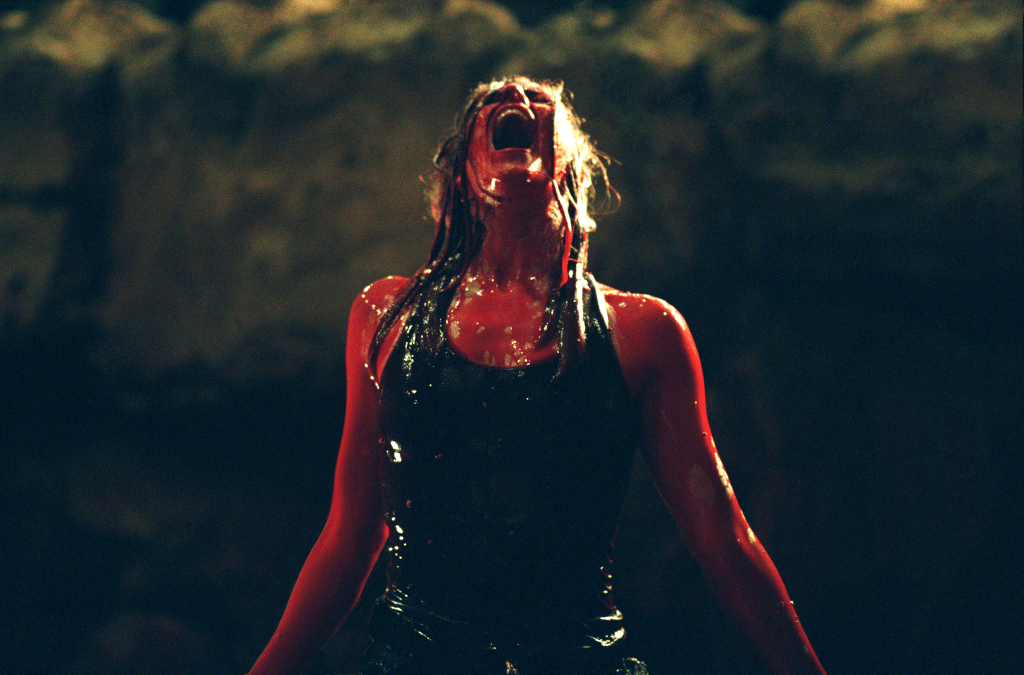
The Descent takes place in modern day (2005) highlands, where an all-women group of adrenaline junkies take on a daring mission of cave exploration some time after the lead character, Sarah, has suffered severe trauma after the death of her husband and child in a car accident. That is, until dishonesty and group conflicts paired with the natural world’s threatening environment (and then another threat unbeknownst to them ) proceeds to dismantle their expedition and their crew one by one – literally.
The film’s 4K restoration was undoubtedly gorgeous. The film is composed of so many shots of wet caves (none of which were real, but constructed at Pinewood studios), in which the light of torches or flares glistens sharply. The textures on display feel like a real feast for the eyes and emphasise the already harrowing environment, to an even more immersive picture – every drip, every shift of light, we are even more on guard with the team. The film is beautifully shot, and fantasically edited, too. I have seen the film before, albeit a few years ago, and am hard to make jump. Yet, some of those tense moments and jumpscares did get me, admittedly. The jumpscares are not unlikely within their contexts and placements, do not feel cheap or overly relied upon and so work very well. I would however argue that the sweeping orchestral score, while beautiful, can become a disservice to the film in it’s especially tense moments where silence or more minimal scoring may have been more effective.
The horror in this film is very interesting, as it emanates from many corners: the caves and natural world as a threat, the inner conflict between the women, Sarah’s trauma, the creatures, and the claustrophobia. If you are claustrophobic, this film might be your worst nightmare. Before the realisation of how dire their position is by introduction of the crawlers, the cave tunnels pose the biggest originator of stress in the film, as the women shuffle one by one through them before getting stuck and nearly crushed by breaking rock. This section of the film is really solid as a realistic, tense and thrilling horror – and I say horror, not drama/thriller, because of the threat of bodily harm, slow and painful death, the emphasis on finding or preserving light. It is for sure frightening.
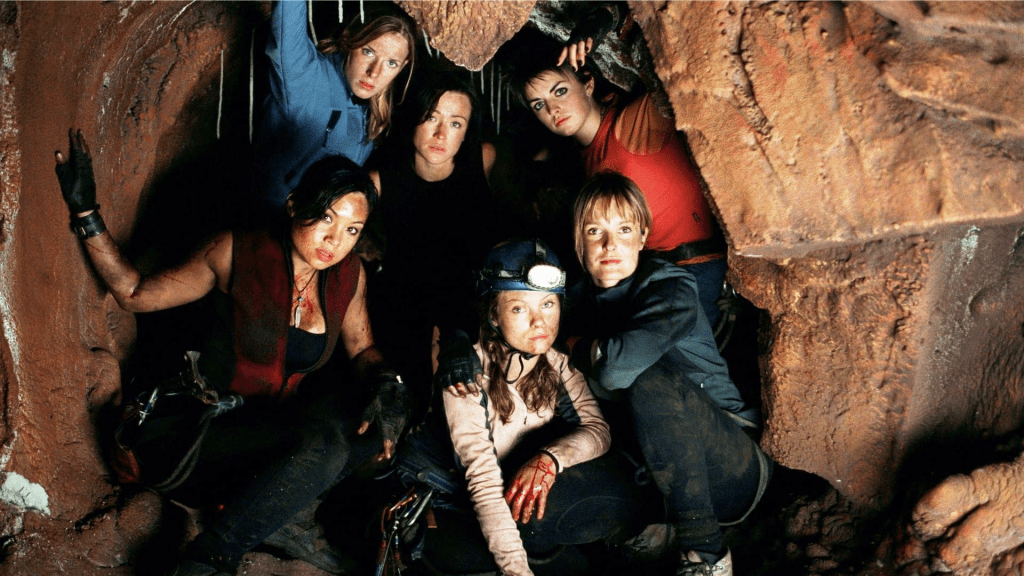
The film is led by its performances. All of the actresses deliver genuine emotion and authentic quivers to our screen. Shauna Macdonald detailed the challenges of filming such an intense film after the screening, such as filming around the cold temperatures and various goops and joked with Marshall about wanting to stay in the blood pool as it was the only warm relief on set. The roles are also well written and are discernible from one another, also showing how the women are attempting, successfully or not, to support Sarah after the accident and exploring the relationships inside the group.
Each death, even those that seem quick and cruel, add to the film’s plot and/or the development of the leftover characters. The deaths of these women are genuinely nail-biting, and of course bloody! Yet, they don’t feel cheap, as a serious tone and a real feeling of loss accompanies them. One in particular which may seem unnecessary brings such a strong sense of failure to the audience, as the events of the film truly become too far gone to be salvaged. The fiIm does well at humanising them as we come to know these women, in comparison to many other 00’s horror films which pick off their group. This film would work for many different people. For slasher fans, there is certainly enough blood and some truly cringe-worthy injuries. For those like myself who prefer less supernatural/monstrous, more human threats, the creature aspect is plausible enough for it to work (for me that is, at least). They are humanoid, and we can have an explanation in that they are humans who stayed in the caves and at their evolutionary stage. For creature feature lovers, this would satisfy. The two versions of the ending is widely discussed online, and here the correct version is inserted (spoilers, it doesn’t end well.)
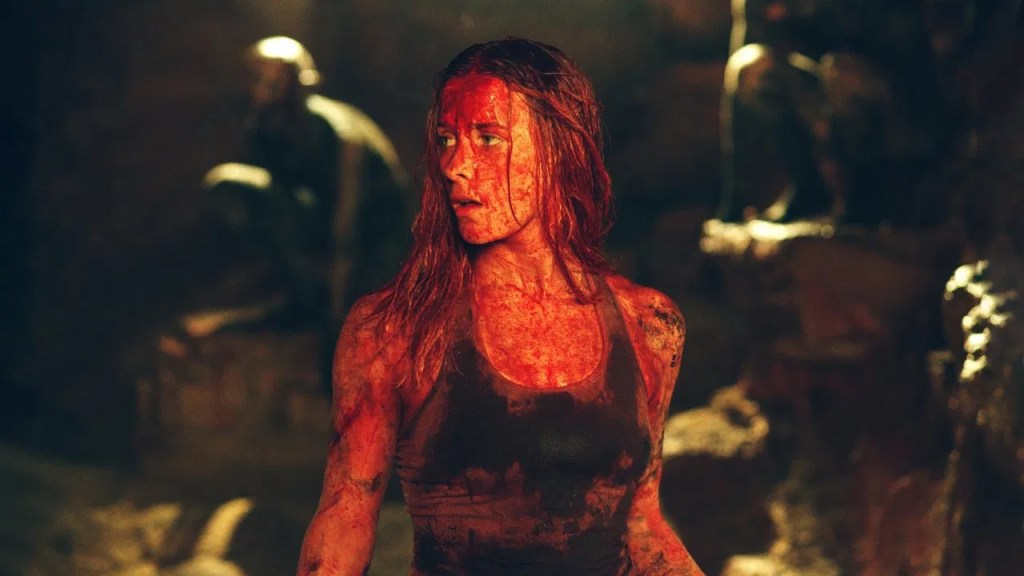
I also, of course, must commend its focus on women. Sure, that doesn’t inherently make the film a good one, but boy is it refreshing to see an entire group of girls in survival horror. Especially also lacking in tropes, for example, the final girl (if you see the correct ending), or a mixed group’s lascivious eye candy girl who gets picked off in a manner that feels like retribution. The women here seem more freed of both good and bad gendered tropes, and can exist more so as simply women in a horror film. They also seem well presented. While there’s nothing wrong with female characters dressing scantily, male directed projects tend to have them dress as such when in situations where real women would be very unlikely to dress so. This male gaze creates a voyeuristic simulacra of a world for its women, often unpleasant to watch as a female viewer. Here, the women are kitted out appropriately for what they will be doing. While I may not say that it is an overtly feminist film in that it is adamantly exploring the topic of feminism, it could certainly be read that way as a film about a team of women just trying to go about their hobby, but being prayed on by majority-male pre-evolutionary animalistic creatures who will attack regardless of their blindness; not exactly on sight of the women – what the women are wearing or look like. However, without reading into the film, the average cinema goer may not leave the theatre pondering the societal explorations inside what they have just seen.
Whilst I love heavy handed horror blatantly about the horror of the female experience, (which are of course more necessary now than ever) I really like the film for these reasons. This is because often in horror, when a film is not misogynistic, reductive, or just absentmindedly inattentive, they are often very overt purposefully feminist films that unpack tough topics such as rape revenge, or tough visuals such as in my favourite – New French Extremity. This is great, but sometimes I do feel tired. While existing as a woman is inherently to be exposed to mistreatment and feeling like a walking debate topic rather than in a body that is your own, and so such content should feel empowering, sometimes I just want to watch horror with women dressing and acting like real women (ultimately the goal) rather than being bombarded with reminders of our struggles for two hours. Or, suffer the alternative. For me, The Descent offers a more subtle release from the tug of war that is the landscape for women in horror. If you are like me who adores violently feminist horror, you may enjoy it as positive representation, but a more toned down 100 minutes of relief from your usual tough watching; it won’t hurt.
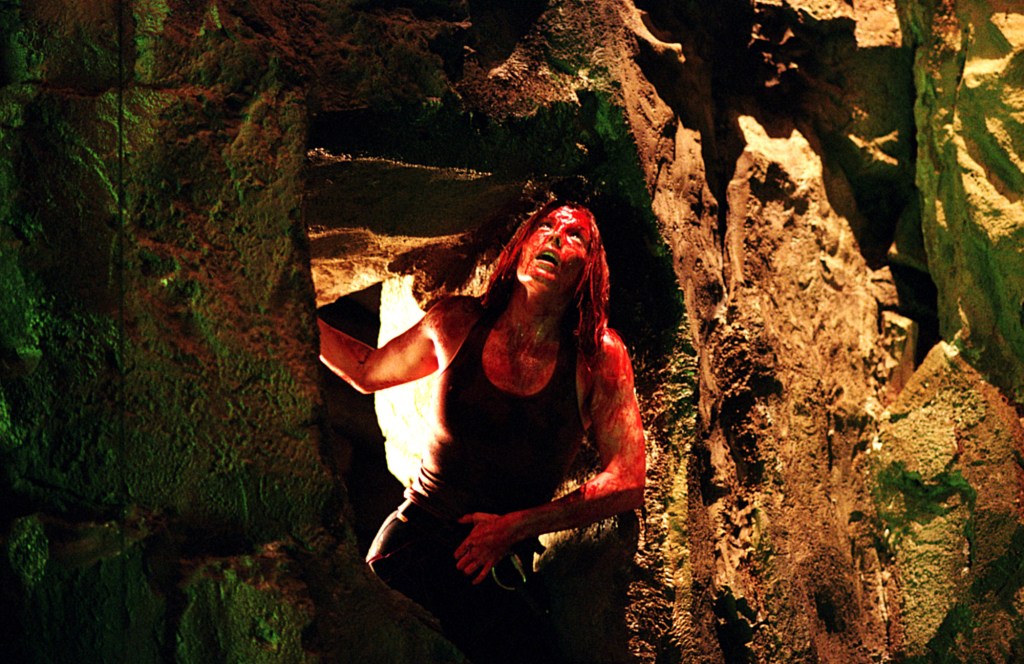
Overall, regardless of your preferred areas and subgenres, I would give this great example of British horror a go. With a group of friends, especially. While it is not transgressive, overtly too intellectual or artsy, The Descent is too well made and entertaining to be reduced to 00’s horror shlock. 20 years later it still stands up and packs a punch. The screening in the nearly 800-seater Odeon was fantastic, and if any repertory cinemas are showing it I would recommend seeing it there. Or, at home in the dark and played loud.
Issy Cocozza (instagram: issycharliedennis) is the Founder & EIC of Culture Film Publication, a film production student and photographer. She is based in Bristol and Bedford, with areas of interest in horror, cult/genre, and psychosexual filmmaking.


