
By Ros Tibbs

One thing I have noticed after being a film lover since childhood is that American cinema, which unarguably controls Western ideals of moviemaking, is conventionally defined by everything and anything grand, expensive and intense. Features from the medium’s biggest studio powerhouses are designed to captivate audiences and their pockets by exploding, quite literally, onto the big screen. Their, by today’s scope cliched, visual and narrative composition is dependant on extreme components such as intense car chases, graphic fight sequences and other forms of non-stop action, performed by top-billing movie stars who transform into the faces of cinema and define what it means to be a Hollywood icon. The 1970s to 1990s oversaw the birth of the Hollywood action blockbuster, with the cinematic God Steven Spielberg’s 1975 adaptation of Peter Benchley’s 1974 novel of the same title, Jaws, creating the term when it had ticket buyers queuing around the block to see its thrilling blend of action and suspense. This iconic release would kickstart a mode of film creation and marketing exposition that would dictate American cinema for decades to come. By the ’90s, Hollywood refused to let up on these action-packed hits, throwing heroes such as Tom Cruise into fast-paced stories constructed under some major budgets, all in hopes of turning an even bigger profit at the box office and subsequently tipping cinema into a business endeavour and away from artistic expression.
However, some hidden gems orchestrated something closer to home, something more sentiment-driven as
expressed by emotional character studies presented in creative visuals. Defined by all that is emotional in tone and surreal in imagery, the art film captures these features as it works as the alternative to the Hollywood action blockbuster, diverting from the latter’s manifesto of far-fetched yet somewhat entertaining exploding buildings and action heroes throwing punches with villains to delve into realistic and raw tales. This type of film utilises lower budgets in its execution of character-driven dissections,
calling to the film buffs who search for artworks amongst the commodities, which, by American standards, becomes a smaller and niche audience category.
If there is one contribution I feel represents the art film in all its creativity and tonal power its Gus Van Sant’s My Own Private Idaho, the cult classic New Queer cinema trailblazer released in the spring of 1991, featuring ’90s heartthrob River Phoenix and Keanu Reeves. The picture is loosely inspired by various pieces of prose, from William’s Shakespeare’s classic ‘Henry’ trilogy to John Rechy’s 1963 novel City of Night, focusing on a gay street hustler called Mike Waters (Phoenix) searching for his family as he battles his unrequited love for his co-worker and best friend Scott Favor (Reeves) as well as narcolepsy.
I stumbled upon what would soon become one of my favourite and most treasured pieces of (visual) art when I was 15 as a major River Phoenix fan. Thanks to Van Sant’s beautiful direction and the captivating performances by all involved, I immediately fell in love with the film, having been seduced by its dreamy visual composition, the enthralling performances and the tragically heartfelt narrative. Looking back, it’s safe to say My Own Private Idaho was my introduction to the art film, which is something about the feature that fuels my passion for it as I have grown emotionally attached to the film style. Van Sant’s work displays a distinct set of simple yet stunning cinematography which captivates me every annual watch.
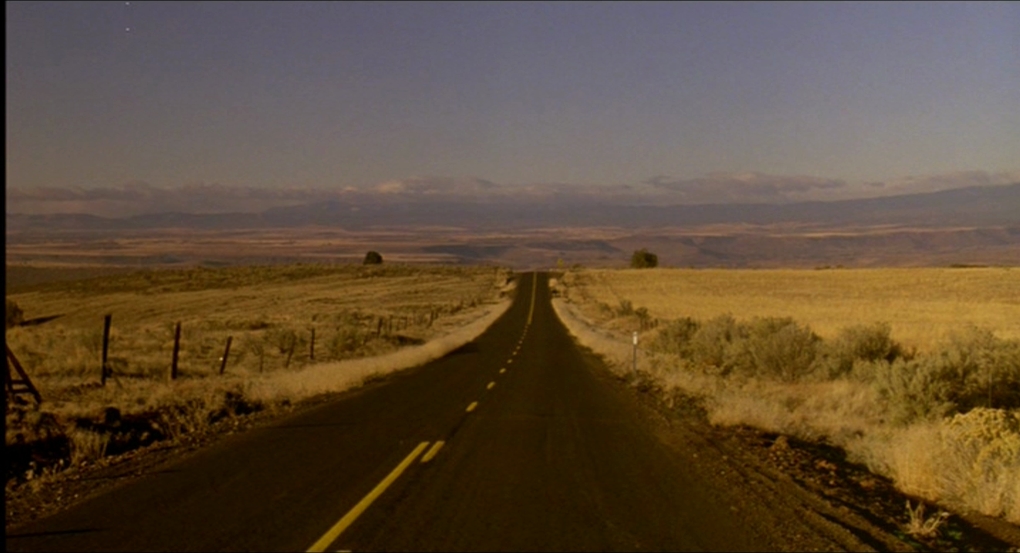
The film conveys an attentive composition that is both landscape and individual-driven. The former stems from the still images of open country roads and farmhouses, which are then juxtaposed with active shots of busy cities and yet it manages to maintain a consistent tone, one that evokes a collective sense of nostalgia blended with an isolated invitation to travel down a new road. Van Sant somehow manages to trademark specific colours and tones in his exterior imagery. Skies above the long roads are painted with a dreamy blue that represents the bleak tonal meaning of sadness and sorrow, which come to combat the more hopeful synonyms of openness and imagination. The cities are mostly masked by the stark grey of cold bitter rain, with the occasional burst of colours of painted buildings breaking through. Sunsets also feature in Van Sant’s work, bleeding onto the screen in a trademark orange burst that echoes a fire that can be both comforting and destructive.
The mentioned shots of people are designed to help translate the emotional core of the film, with Phoenix and Reeves’s eccentric, energetic roles dominating the screen as they interact with other hustlers and figures they meet on their journey to track down Mike’s roots. The use of costume stands out as another feature that makes me love My Own Private Idaho, as it captures the grungey side of the ’90s that I adore. Phoenix’s character graces the screen in a signature orange jacket, that now sits in actor James Franco’s house, elevating the vital use of colour in the film as it aligns swiftly with the exterior shots of skies and roads. Meanwhile, Reeves’s Scott opts for black leather and large boots, contrasting Mike’s warm softness with a more striking edge and calling to the punkier scene that matches the unconventional lifestyle the hustlers immerse themselves in unapologetically. The contrasting costumes worn by the two main roles showcase the individualism that holds a collective group or friendship together, signalling diverse personalities and outlooks to life that can still find crossovers to ignite a lifelong bond, as the two spend most of their time on screen together in emotionally charged sequences.
For me, Van Sant’s cinematography, camerawork and costume design class My Own Private Idaho as a visual art masterpiece in my eyes, with colour and settings balancing out in symbolism and aesthetic pleasure to appease both the intellect and artistic mode.
Furthermore, the cult film captures my everlasting interest through its unorthodox narrative exposition that stands out against other 1990s features. As an art film, the story promises to be raw yet surreal, searching to communicate experimental and diverse modes of visual storytelling by balancing real emotion with artistic representations. My Own Private Idaho successfully presents an emotionally powerful story that speaks to the sentimental individual through an unconventional structure, splicing in still images of seemingly unrelated landscape shots within the driving sequences involving Mike’s story as the main narrative. This is shown to us immediately in the film’s opening, as a brief shot of a farmhouse which suddenly disappears and crashes down onto the ground interrupts Mike’s time with a client, with the crash coinciding with Mike’s climax to present outside of the box ideas to show his lifestyle. Only the art film can allow for such experimentation with narrative codes and boundaries, offering some refreshments in American cinema.
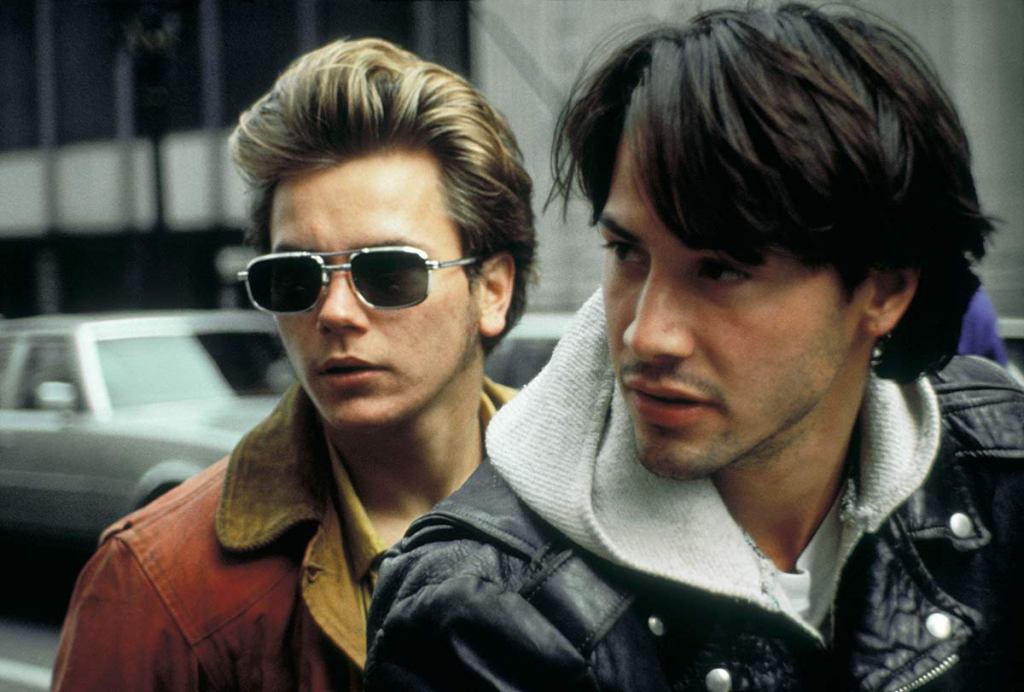
When it comes to the nitty and gritty of it all, My Own Private Idaho displays a story that is relentlessly tender yet tragic, something that strays away from the traditional Hollywood blockbuster which concerns itself little with humanistic sentiment. It provides an emphasis on the sense of self, splintering with isolation and belonging which contrast yet construct what it means to find who you are and where you are placed in the world. Mike represents this dreary loneliness within his search for family and self effortlessly, as a quest is always a strong component in an emotionally charged story about the individual experience in this collective landscape. As a viewer, we are immediately connected to Mike in his feelings of loneliness as he is estranged from the person who brought him into his world yet longs for her, threading the narrative with ideas of connection. To match this thematic concept of connection, Van Sant ensures that we do not only passively witness his search for his mother from an outsider’s perspective, but instead that we are actively involved with it as though we are Mike’s companions or even an extension of Mike himself. He sections off Mike’s journey using vibrant title cards displaying each state the character finds himself in, with each proceeding stage accentuating the emotional investment we have with Mike and structured in an ambiguous way that echoes a dream since Mike mostly falls asleep in one place and we see him awake in another.
Many would agree that the cherry on top of Van Sant’s film that just makes it all the more perfect is Phoenix’s breathtaking performance as a street hustler searching for his family and battling his love for his “straight” best friend. After a string of teeny comedies and dramas the previous decade, working under many beloved directors such as Sidney Lumet and Steven Spielberg, Phoenix took a career and artistic risk by accepting the role of Mike Waters, using it as a chance to showcase some variation in his craft by playing an “edgier” role with some intense emotional issues. The risk was an immense payoff as Phoenix delivered an immersive and heart-wrenching performance in the film, balancing occasional beyond its time humour with the intense psychological dramas of heartbreak and a sense of loss. The actor’s presence is charming yet tragic, serving as the anchor for the film’s overall melancholic and touching tonal appeal through his captivating style and one of a king star appeal. The sequence in which Mike confesses his love to Scott, only to be rejected, is a simple yet beautifully put together plot development that was written by Phoenix himself. The writing and performance showcases a spectacle of intimacy, delicacy and vulnerability and demonstrates a refusal to have queer love and attraction be only a subtext or undertone in a body of work which was the norm of filmmaking for too long. Instead, Phoenix’s work behind and in front of the camera presents a bold and fearless declaration of queerness and a strive for love. This beautiful vulnerability is accentuated through the family issues Mike struggles with, such as never being able to track down his mother and his brother is actually his father.
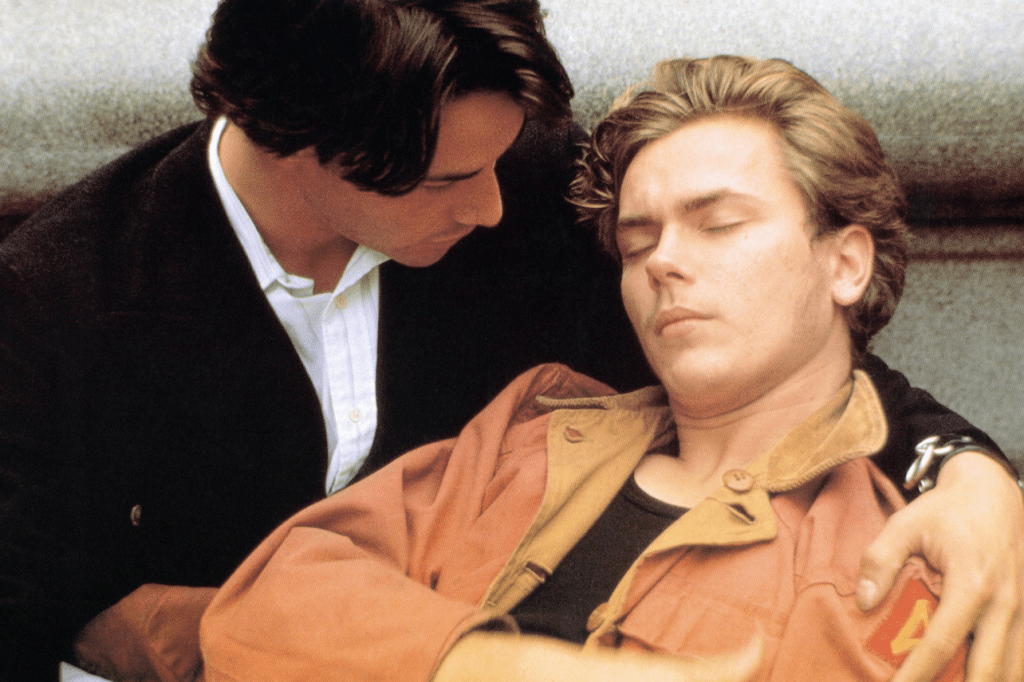
Furthermore, Phoenix drives home the element of heartbreak that comes with queer love as combating with heteronormative prejudice and pressures after Scott deserts him for a new female lover, communicating a submission to heteronormativity. To see artistic shots of Mike standing alone against an empty wide landscape after being abandoned once again strikes a nerve many can relate to. Here, Van Sant, with the help of Phoenix’s sorely missed and needed talent, expresses the trials and tribulations of the queer individual in an artistic and emotional manner. The trope of a gay person falling for their straight best friend only to see them love and have sex with someone of the opposite sex may appear tired and predictable by today’s standards, but My Own Private Idaho threads something raw and brilliant in its depiction of this queer story staple.
An additional aspect that endlessly draws me to My Own Private Idaho is its innovative design as a Shakespeare adaptation. As a companion to the dreamlike scene art and dynamic character performances, the screenplay is so beautifully written and performed to echo a Shakespearean piece with the ghost of Iambic Pentameter. This is defined in literature studies as verse consisting of ten syllables arranged in five metrical feet (iambs), with each foot comprising an unstressed syllable followed by a stressed syllable as an expression of poetry and drama. Thus, the dialogue writing and performance elevates My Own Private Idaho further as a work of art, one that blends with expressive poetry and other artistic mediums of storytelling. Despite its callback to 14th century prose, the film still presents something expressive of its time in the ‘90s when it comes to comedy and character, showcasing a harmony between the past and present of art. Van Sant’s feature is one of the more unique, personal and engaging interpretations of Shakespearean text, incorporating the director’s innovative approach to visual style when it comes to colour and imagery while maintaining its original source material.
Overall, My Own Private Idaho exists to me as one the utmost important and poignant cinematic expressions of the queer experience, one that undoubtedly shaped and defined queer and art filmmaking for years to come. It’s a film I wish I could watch again for the first time, not necessarily as a young queer teen who had yet to be open with their queerness but just as a lover of unconventional art and passionate storytelling.


Leave a comment