
by Tyler Gaucheron-Land
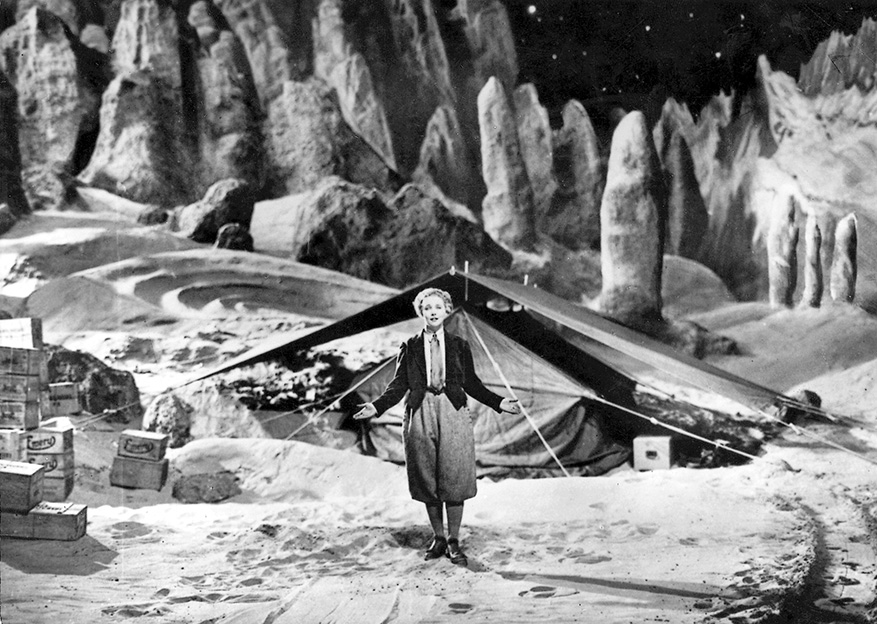
Despite being the director behind one of cinema’s earliest science-fiction classics, 1927’s Metropolis, Fritz Lang hardly otherwise touched the genre throughout the many decades of his career. Crime films was where Lang spent most of his time establishing his position as an early master of cinema, with the likes of the gargantuan Dr. Mabuse, the Gambler (1922), the kinetic Spies/ Spione (1928) or his first talkie, the trailblazing M (1931). Yet genre was never a means of expression in and of itself for Fritz Lang, it was only ever a mould to work within and around, evident through how many times he evolved each genre he worked within. After a string of epics throughout the 1920s, Lang ended his silent era career with another long and visionary piece of science-fiction, Woman in the Moon (1929). It’s a work that has seemingly fallen into obscurity over the decades for obvious reasons; the first being that it stands in the shadow of Metropolis, and the second is that it was released at the end of the silent era, and the appeal of the old art form was dying out in the public eye. Yet the wonders of having the internet and various companies dedicated to preserving film history means that we are able to reevaluate the overlooked and maligned works of yesteryear, which is exactly what I am doing here, and Lang’s swan-song for the silent era ought to be more widely known. I’d go as far as saying it is one of his best films in a filmography of many gamechanging opuses.
Working from a novel written and adapted by Lang’s wife Thea von Harbou, the film is considered by many to be one of the first works of “serious science fiction”, which becomes apparent with how much attention is given to the theoretical science behind space travel in the film’s second half. Many ideas presented in Woman in the Moon would become a part of science fact decades later, such as the use of a multistage rocket and using a countdown to prepare for launch. There are some ideas which have inevitably aged poorly, such as the belief that the moon would have a breathable atmosphere, but this feels like a nitpick in the grand scheme of the narrative, especially as the lingering question of if the atmosphere is breathable or not becomes one of Lang’s many tidbits of suspense that adds to the excitement and grandiosity of this space adventure. Such is the nature of early science fiction films, and also part of the appeal. Cinema has the capabilities of transporting us to an older era that is more immediate than literature, especially considering films before Space Age optimism.
Lang, one not for wasting a frame of film stock in his best work, throws us straight into the action with one man walking up a flight of stairs at the same time another man is thrown down them, the two strangers bumping into one another in the first few seconds of screen time. The man ascending the stairs is our protagonist, Wolf Helius, who we find out is a young entrepreneur interested in space travel. He’s on his way to visit a disheveled Professor Manfeldt, living in a bare apartment with parts of his work and obsession with astronomy spread across his walls. What’s immediately impressive about Lang’s eye for detail and his attention to interiors is how he is capable of introducing a scenario media res without causing confusion. There’s still plenty of intrigue, but these initial questions are presented with a clarity perfected by the great directors of the silent era. Even though an intertitle or two provides us exposition through dialogue, the extent of Manfeldt’s obsession with space travel and his destitution are depicted through the exposed wooden floorboards, a chair with a missing leg propped up by a stack of books, the sorry excuse for a bed lying next to a moon-globe and a telescope. These are all visuals which are cut to as this interaction between friends plays out, adding depth beyond merely photographing the conversation as an interplay of faces.
After a flashback showing Manfeldt’s humiliation when presenting his hypothesis for gold in the moon’s mountains decades prior, Helius announces his plans to travel to the moon. The excited professor asks whether or not Windegger, Helius’ best friend and collaborator, will join him. Helius reveals that Windegger has announced his engagement to Friede, his other assistant and one who he secretly loves, and cannot bring himself to appear at their engagement party nor tell them of his plans. However, Manfeldt reveals to Helius that his ambitions are not so secret, as someone tried to steal the professor’s work while he was sleeping only a few nights before. Helius is entrusted with the manuscript, and catches a taxi back to his flat. All of this happens within the first twenty minutes of the runtime, and while it is a lot of setup, it’s also a lot of setup that begins to payoff almost immediately in an ergonomic fashion similar to Lang’s other great films from the same decade. The manuscript gets stolen moments later, Helius’ flat is invaded and its moon research stolen, and the man thrown down the stairs at the film’s opening is revealed to be a spy who goes by the name of “Walter Turner”, who is working for a group of evil businessmen who fear the idea of moon gold being discovered and brought back to Earth, as it would devalue the price of their own gold. That is, until they realise how it can make them richer, at which point they become obsessed with funding a trip to the moon to keep moon gold out of the hands of “visionaries and idealists”. It’s this chain of events that make Woman in the Moon seem far more prescient than the simplistic idealism of Metropolis, wherein the dream of space travel is compromised by the politics in opposition to change that might not benefit those who already have wealth and power.
Further adding to this episode of espionage, Walter Turner claims to be sent by Windegger to trick Helius’ housemaid into letting him in. This lays the groundwork for Helius to call Windegger and Friede to his apartment, effectively setting up the team that will travel to the moon in the film’s last hour, as Turner threatens to destroy Helius’ research if the scientists refuse to let a representative of the industrialists onto the voyage with them. Moments like these reveal a strong fatalistic character to Lang’s films that can often go overlooked due to his immaculate pacing that makes his best films fly by, irrelevant of the duration. However, it is this high quality of story control that creates this exact fatalistic atmosphere, as the links in the chain of causality are constructed with such lucidity, that one can clearly see how every development of the film’s major plot points grow by tying them all into a trajectory propelled by their relationship to one another. As the espionage thread pulls Helius’ collaborators into Turner’s web of tricks, the tensions between the three heroes grows, as does the romantic tension between Helius and Friede.
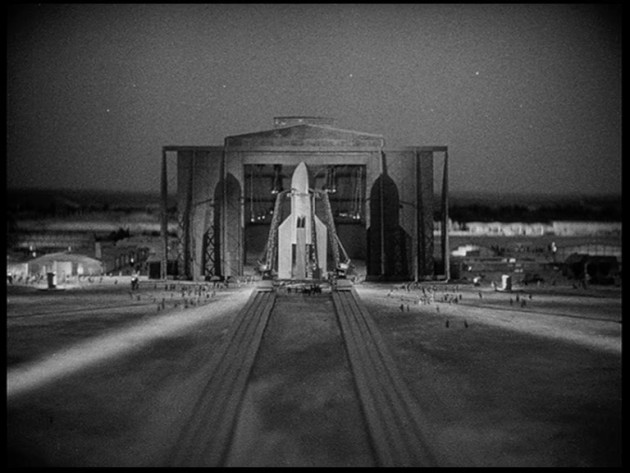
Once the scientists realise there’s no way to travel to the moon with odds in their favour, they reluctantly agree to Turner’s terms and the narrative jumps forward to the rocket launch, with our team of astronauts now accompanied by Professor Manfeldt and his pet mouse. This stretch of Woman in the Moon is simply incredible, from its visionary depictions of space travel that would become reality decades later to the escalating stakes that won’t be resolved any time soon. Admittedly it is a section a little bit bogged down with exposition, but it is a necessity for establishing how serious the matter at hand is (especially for an audience at the time, given this was one of the first accurate depictions of space travel). Yet once the essentials are communicated, this whole stretch is such kinetic filmmaking that wouldn’t be seen in cinema for the next few decades, bouncing between each member of the voyage and closeups of the ship in riveting fashion. After the whole team has regained consciousness from fainting due to g-force, and another brief moment where Helius expresses his feelings for Friede, they discover a little boy has stowed away on the ship! We’ve seen this boy before, sliding down Helius’ banister backwards and joining the chauffeur in chasing after his stolen vehicle earlier in the narrative. This boy is called Gustav, and he is obsessed with “moon issues” as well as bringing his collection of pulp magazines with him, showing them off to the adults in a manner that lightly undoes the tension of reaching the required speed for the ship to be pulled into the moon’s orbit.
It’s at this point in the narrative where Friede is slowly revealed as the most well adjusted member of the crew, highlighted when everyone else is indulging in the boy’s comics when she wonders what their home planet must look like from so far away. It’s with this tender moment that the spy thrills drift away and a more emotional narrative starts to take its place. We’re treated to a gorgeous shot of the Earth with the Sun peeking out from behind, something that never fails to stir the emotions even a little bit, and nothing is said for a moment as everyone is stunned into silence by the awe of this celestial site. For a director so well known for understanding the mechanical skeleton of cinema, Lang proved many times that he was more than capable of understanding emotions and humanity – something a little underdeveloped in the sweeping statements of Metropolis yet perfectly executed in his two-part Nibelungen saga.
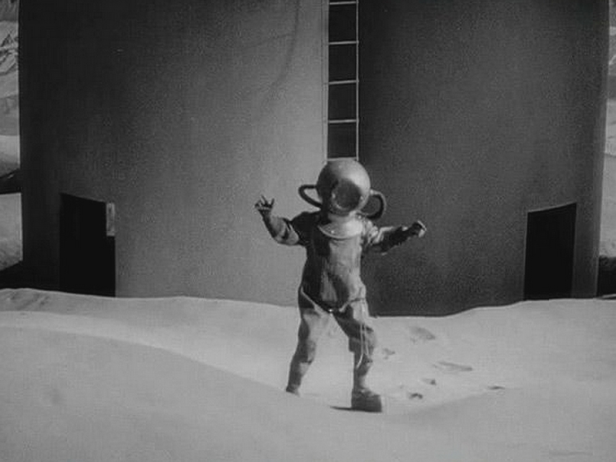
We’re then treated to a few entertaining scenes that convey zero gravity in space, which while nothing significant for a contemporary audience, is noteworthy for being a sci-fi picture made before the invention of velcro. The script’s workaround is to have various handles to grab or insert your feet into while navigating the ship, and it seems feasibly brought to life in the film. Gustav gets another small comedic moment where he floats up to the floor above and gets stuck on the ceiling, requiring Helius to pause his journaling in order to save the boy. Friede and Windegger have a lighthearted interaction, showcasing how liquids would float in space before capturing it in a cup. It’s clear from these moments how the minutiae of space was just as important as the grand journey to Lang and Harbou, as the long runtime gives enough space for both ends on this spectrum to be shown without rushing or underplaying the full extent of the expedition.
Something many viewers I’ve seen mention over the years is how Woman in the Moon feels like a film of two distinct parts that struggle to blend, with the espionage escapades and moon exploration being bridged by space travel. It’s a stance I held upon initially watching this years ago, but revisiting and dissecting it makes me realise how all this setup and accumulation of details creates throughlines for every single character on the ship that contribute to the cynicism Lang uses to cause the group to unravel almost immediately. It’s a fascinating juxtaposition, to portray the grandeur and beauty of the moon with some of the most majestic sets of the silent era with characters so obsessed with themselves that they cannot perceive what they’re doing as “one giant leap for mankind”. It’s a juxtaposition that is able to say a lot about humanity’s vices and how the greatest obstacle to our own idealism is our inability to embrace a shared vision, no matter how extraordinary.
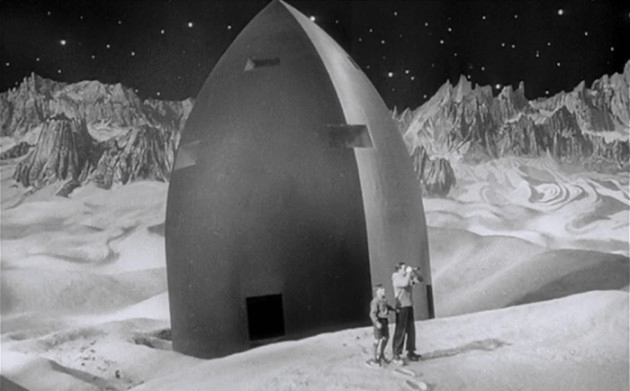
Everything starts to fall apart almost immediately upon crashing into the moon’s sandy landscape, as the professor heads off on his own, driven mad by the prospect of discovering moon gold after so many years of being ridiculed. This fixation will be his demise, as Turner – who volunteered to follow Manfeldt’s trail – scares the professor into accidentally falling through a hole in the moon cave and plummeting to his doom. Turner is also arrogantly single-minded about his lunar ambitions, stealing a pocketful of gold for himself with the intent to leave the other members of the team stranded on the moon. Windegger is as neurotic as the professor, with his sole focus being to repair the ship in order to leave as soon as possible. He is also frustrated at Friede for having clear feelings for Helius, which builds up over time during the moon expedition, most notably in a sustained wide shot where the engaged couple look at each other as they are involved in their separate activities before moving on with their respective work. It’s in small moments like these where the emotions of the expedition get to come to the forefront of the picture. We’re reminded of the feelings between the characters driving the spectacle of the story, a balancing act Lang had managed previous times before. But what gives Woman in the Moon a sombreness that hasn’t been present in the epics before this is that no matter how far from Earth we travel, the same conflicts, love triangles and selfishness will follow us all throughout the cosmos. We are unable to escape the pitfalls that come from inside of us, and revolving around a few characters in such a manner highlights Lang’s usual cynicism in a way that feels natural and avoids coming across as cruel or jaded.
Upon Turner’s arrival at the ship, he ambushes and ties up Windegger, who warns Friede not to let Turner onto the ship. We get a classic bit of Griffithian cross-cutting between Friede using every bit of strength to keep the ship’s door shut, Windegger trying to free himself, while Helius and Gustav arrive back at the ship upon following Turner and not finding him nor the professor in the caves. It’s a traditional melodramatic scuffle, but in space! Shots are fired, Friede runs out and she sees Turner bleeding out in Helius’ arms. Though he dies moments later, the bigger issue is in trying to shoot Helius, Turner’s bullets have damaged the ship’s oxygen containers, meaning one person has to stay behind. What follows is a slow but nerve wracking game of the two men drawing matches to decide who has to stay on the moon, best of three, whoever picks the shortest one loses.
Lang stretches this scene as far as he can, and that is a compliment in every which way I can mean it. Logically, the only way you can increase the stakes from a life or death fistfight on the moon is a game of chance involving the core love triangle (did I mention Friede is the one who has to hold the matches, doing so with her eyes closed?). Moments like these make you realise Lang could quite easily claim the title ‘Master of Suspense’ from Alfred Hitchcock, because Lang not only excelled at kinetic action, but in gradually building smaller moments up until their breaking point. It’s one of my favourite moments in Lang’s career due to its sheer simplicity, and how the director stretches shots as long as he feasibly can to extract every ounce of tension from each and every moment. Many scenes throughout Woman in the Moon do feel long, yet they’re not long in an amateurish way. Instead, it’s a length acquired through sheer attention to detail in the Erich von Stroheim sense, by which I mean the accumulation of as many details and gestures to create as thorough an understanding of the scene which the viewer needs to understand the director’s intent.
The matches are drawn, Windegger is to stay on the moon, and a camp is set up using all of the ship’s resources for him. While Windegger is lamenting about wanting to return home, Helius offers drinks he’s drugged to Windegger and Friede. Once he’s instructed Gustav how to navigate the ship back home to Earth and Windegger is unconscious, Helius exits the ship and is left behind on the moon… or so he thinks. He turns around and sees Friede has decided to stay with him, Helius was too focused on making sure that Windegger drank his cup to realise that Friede had only pretended to drink hers, clearly sensing that something wasn’t quite right. In one of the most moving conclusions to any silent era film, the two embrace, overwhelmed by emotion as Friede comforts Helius by whispering words into his ear. It was this ending and all the excellent steps taken towards it that Woman in the Moon left such a deep impression on me so many years ago, and why I’ve never been able to forget it having watched hundreds more films since then. It’s poignant, beautiful, and a moment rare for Lang’s body of work: sublime and romantic.
What’s amusing about writing out the events of the film is that it made me realise it’s more laborious to describe this film in prose as it is a deeply visual work. So many shots are wonderfully blocked with a fluidity that’s easy to take for granted in many of Lang’s expressionist or noir films, when so much dynamic editing is at work keeping everything rolling along at a confident and steady pace. It’s a film that, while not as overtly ambitious as Metropolis, is a film that has more to say about being human with its smaller cast. What a cast too, with Willy Fritsch (Helius) and Gerda Maurus (Friede) returning to work with Lang after appearing in Spies to deliver nuanced and layered performances one would need more than a single viewing to truly appreciate. The broad perception of silent era performances has forever been skewered by comedies, Griffith, and Soviets like Eisenstein and Pudovkin, which is a shame because so many silent films have much more nuanced performances that are more akin to what we’d expect from sound films much later. Maurus’ work as Friede is gentle and by comparison to the men she works with, almost has a slow-motion type of effect, where her mannerisms and gazes seem to hang in the air a moment longer. It’s a style that matches her character, generally being the most pragmatic and calm member of the team.
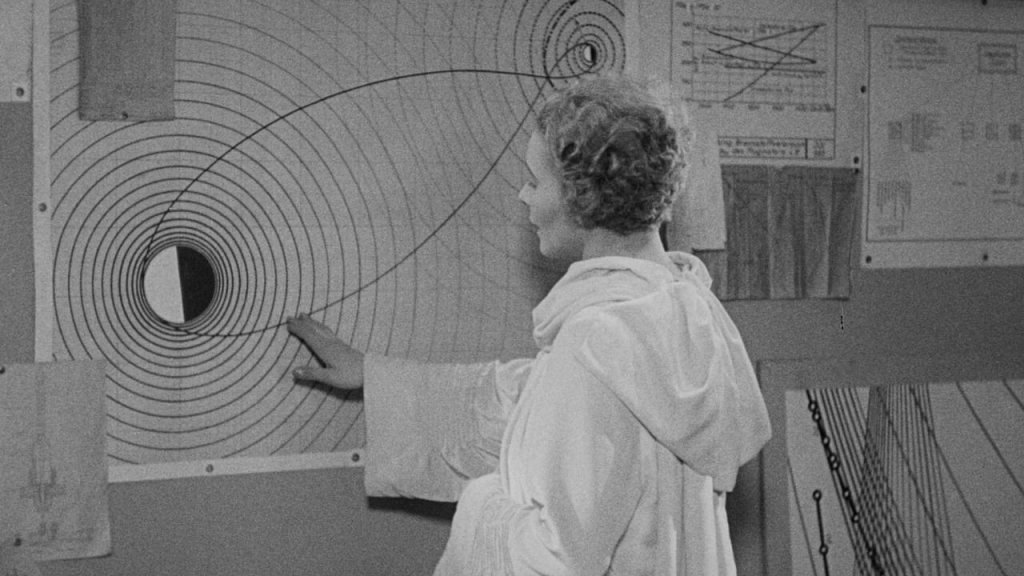
Fritz Lang had an incredible run of films throughout his time in the German film industry, and it manages to remain the most impressive run of films I’ve ever comes across. With Woman in the Moon being sandwiched between Spies and M, it would be all too inevitable that Woman would seem the least impressive among this collection of great films, though it’s on a similar level to them; it would be disingenuous to claim that it’s of the same quality as Lang’s first talkie, few films are. But in moving from pulpy thrills into an outer space melodrama with elegant gear shifts, Lang’s swan-song to the silent era ought to have its due some day. One can find the blueprint for many types of filmmaking in Lang’s work from 1920–‘33, and Woman in the Moon is no different. Though Lang would never approach the science-fiction genre again, his final effort within the genre is grandiose, breathtaking and close to all encompassing.
Tyler Gaucheron-Land is a writer, filmmaker, and musician based in West Sussex. Known for his eclectic taste in cinema and music, he is fascinated by exploring and uncovering obscure and forgotten films that are waiting to be reevaluated.


Leave a comment