By Adam Page
I have spent enough time in dark places, both literal and metaphorical, to know that monsters have always been queer. I don’t mean in the reductive sense, or the cheap metaphorical way that is always trotted out at film school seminars. I mean queer in the original sense of the word: unsettling, strange, other. That thing which doesn’t belong at the dinner table. The odd uncle nobody wants to talk about. The desire that dares not speak its name. Except it’s been screaming at full volume in horror cinema since we first saw Nosferatu’s shadow climbing those stairs. What they don’t tell you about horror is, it has always been our genre. Lesbian, gay, bisexual, trans and all the other beautiful versions of not-quite-fitting in. We have been the secret ingredient of horror. It’s unspoken truth and dark heart. The vampire creeping into women’s bedrooms at night. The creatures that lurk in the closet. The mad scientist with his obsession with creating the perfect man. This was not exactly subtle. It never was. But for decades and generations it lived in the margins. In the subtext and coded language that only some knew how to read. That is now changing. And like any other real transformation, one that can’t be undone and leaves marks, it is complicated, messy and absolutely necessary.
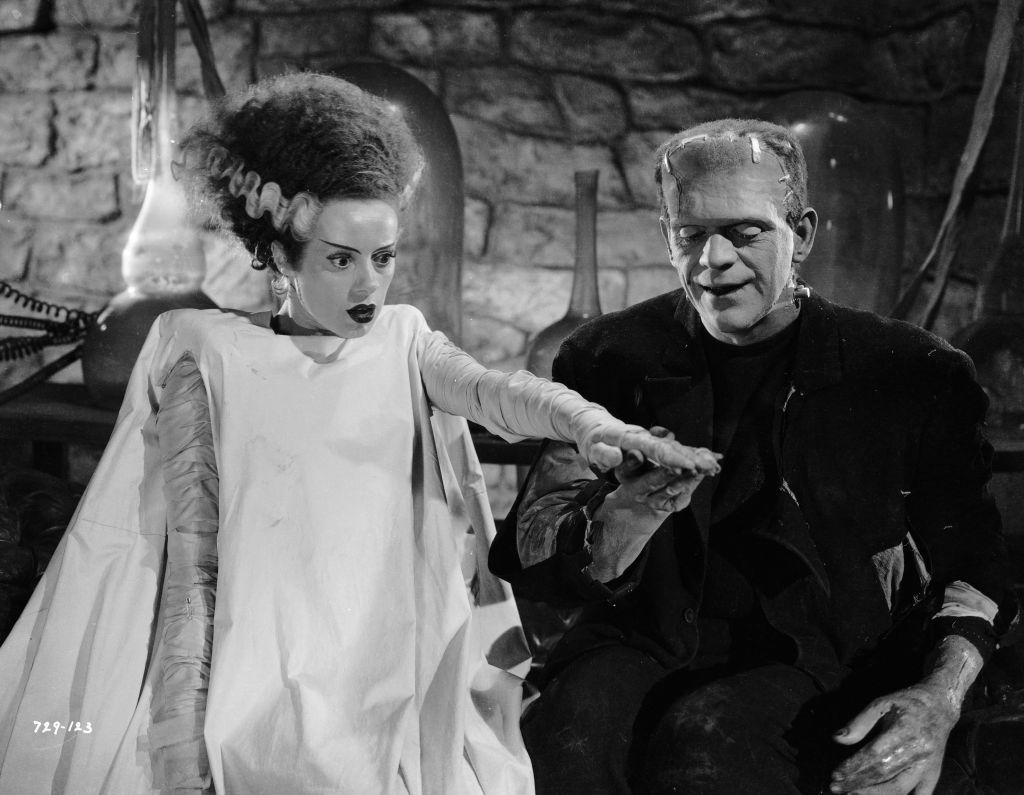
Let’s go back. Memory Lane. Back to when it was only monsters that were allowed to love differently, to want differently, even to exist differently. The Hays Code, a delightful piece of legislation that put a stranglehold on American Cinema from 1934 to 1968 didn’t only police what you could show. It also policed what you could be. No homosexuality. No “sex perversion”. No acknowledgment that people like us existed except, and here is the loophole big enough to drive a hearse through, as a cautionary tale. As monsters. And so, that’s what we became. Or rather, what we were turned into, whether we liked it or not. The monsters of Universal were queer before queer was a word that we could reclaim. James Whale, himself as gay as a picnic basket, directed Frankenstein and Bride of Frankenstein and filled them with sensibilities that were unmistakable if you knew what you were looking for. Dr. Frankenstein, obsessed with building the perfect male form, rejects the bride waiting patiently for him to spend his nights locked in a lab with another man doing God knows what. And the Monster, ah, that Monster. The creation that doesn’t fit. Rejected by society, he only learns violence after being taught by the world that he is unlovable as he is. With a straight face, tell me that’s not a queer narrative.
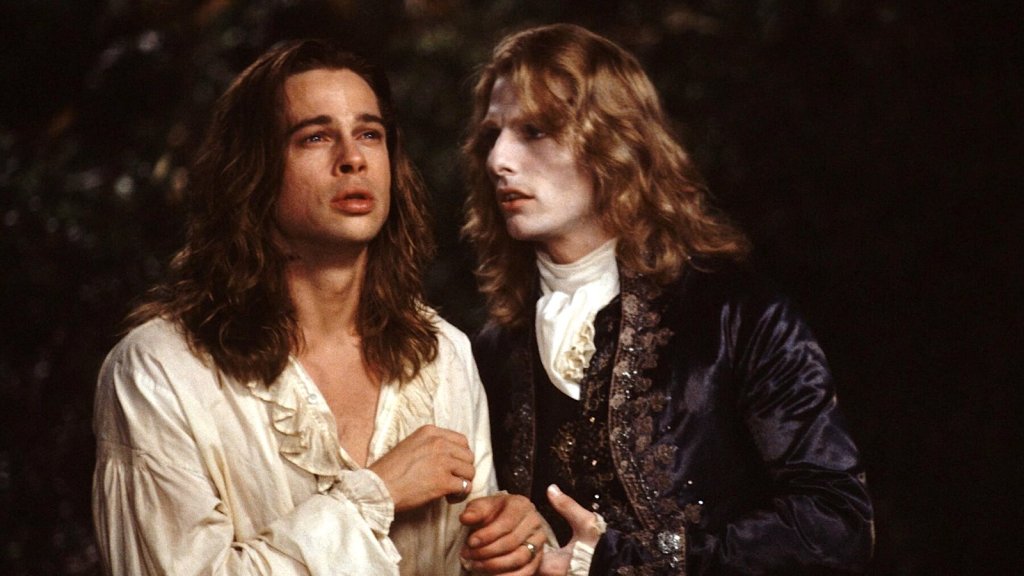
Then we have the vampires. Dear Lord, the vampires. Dracula slips into women’s bedrooms while the husbands sleep, yes. But also, Dracula and Renfield. Dracula creates a whole family of the undead all bound by bite and blood. Fluid exchange and transformation. The vampire, living eternally outside societies rules, moving through the night and has to hide who they are or face a stake to the heart. The vampires bite could doom you to become like they are; that monstrous metaphor for queerness as contagion that homophobes feared and we, in dark moments, fantasised about. Anne Rice understood this. Interview with the Vampire made it text, rather than subtext. She gave us the centuries-long, toxic romance between Louis and Lestat. Claudia, their shared child creating a family that looked nothing like families were supposed to look. But even Rice danced around this for years, with no confirmation or denial. One foot was always kept in the land of metaphor as that’s what the markets demanded.
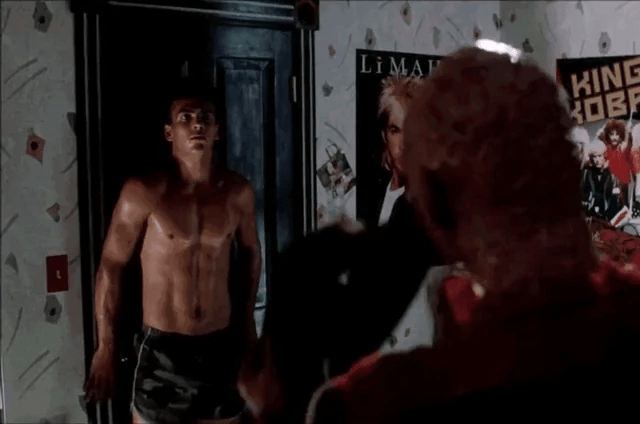
The `80s and `90s gave us a particular kind of horror-queerness. It was one that was flavoured with AIDS panic, moral panic and the Reagan-era certainty that difference meant death. The subtext was suddenly meaner and sharper. The Lost Boys had a vampire gang that was one leather jacket away from a circuit party. In A Nightmare on Elm Street 2, we got one of the most accidentally-but-not-really queer horror movies ever made. Poor Mark Patton was fighting not only Freddy Krueger, but also his own sexuality. It’s a movie that climaxes at a leather bar, for crying out loud. Patton’s career never recovered from it. The homophobia was the real horror. This is the inheritance. It’s this that modern LGBTQ+ creators are both exploding and embracing. In the last decade or two, something shifted. The subtext was tired of being subtext. A generation of queer creators, who had grown up with these coded narratives and leaning to read between the frames, decided they were finished with whispering. They wanted to scream. And scream they did.
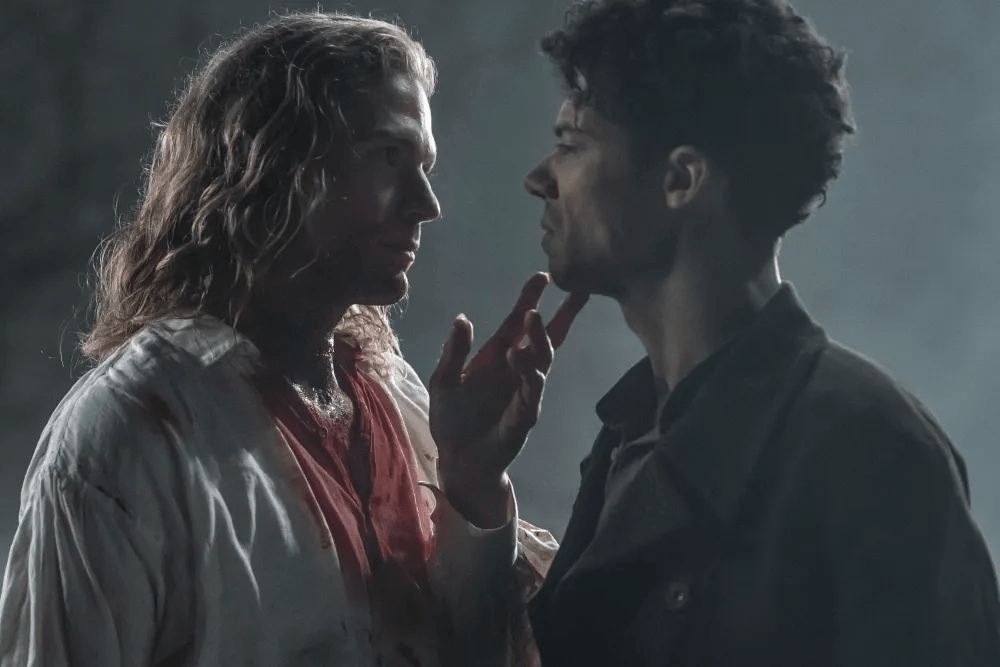
We’ll start with the vampires, as we always come back to vampires. AMC adapted Interview with the Vampire for television, and did something radical. Casting Jacob Anderson and Sam Reid as Louis and Lestat, they said out loud and with their whole chest, they were lovers. It wasn’t coded or metaphorical. Lovers. There was no dancing around it or winking to the camera. We got queer desire, messy, complicated, sometimes toxic but always passionate, right in the centre of the frame. The horror doesn’t come from the queerness, but from the immortality and power imbalances. Love that rots into obsession. The queerness just is. That’s the move. That is the reclamation. Taking the queer-by-implication monsters and making them unapologetically and explicitly queer. Not as metaphors, as people. Monsters who happen to be queer, or queer being that happen to be monstrous, while understanding that the two things don’t have to be casually connected.
Or look at My Heart is a Chainsaw, by Stephen Graham Jones. It’s a slasher novel featuring a half-Native, queer-ish protagonist obsessed with horror movies, using them to make sense of a world that’s never made sense to her. Here, Jade’s queerness isn’t the source of horror, it’s just a part of who she is, like her “Final Girl” obsession or deeply complicated relationship with her father. The horror comes from colonisation and trauma, from the violence that was in her life long before any killer showed up. There is also the work of Hailey Piper. Prolific and pulpy in the best way, she is not afraid of making queerness central while also bringing the existential dread and gore that horror requires. Her characters are lesbian, bisexual, trans, and dealing body horror, cults, cosmic horror and apocalypses. The queerness isn’t window dressing here, it shapes how the characters deal with the situations. But it’s not why the situation is horrific.
If TV and movies are where queer horror make the big statements, then short fiction is where the experiments are created. And the experiments are getting weird. Smaller presses like Undertow Publishing, Tenebrous Press and Neon Hemlock have become hotbeds for queer horror that pushes the boundary in ways that mainstream publishing still finds too uncomfortable. Here, we have stories about trans body horror that isn’t “wrong body” narrative, but rather transformation as power. Stories of ace and aro characters facing down threats in a genre that’s always equated sex with vulnerability. Queer love as the thing that defeats the monsters, instead of creating it.
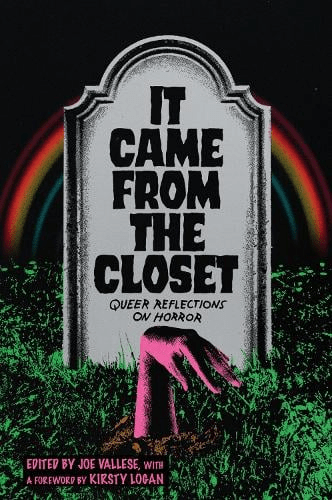
There are also anthologies popping up. It Came From the Closet features queer writers examining classic horror movies through their own experiences. His Hideous Heart is a collection of Edgar Allen Poe re-tellings centring on queer and trans protagonists. They aren’t merely a queer reading of an existing text. They’re reclamations, new myths built on the bones of the old ones. What’s interesting is how these stories are not just reclaiming the old, queer-coded monsters, but the whole apparatus of horror. The haunted house is a closet you can’t escape from. Or maybe a chosen family’s complicated history. The story of possession is about dysphoria or code-switching, or the masks we wear in order to survive. The slasher movie is a meditation on who gets to be the “Final Girl”, when the “Final Girl” was never written for somebody like you.
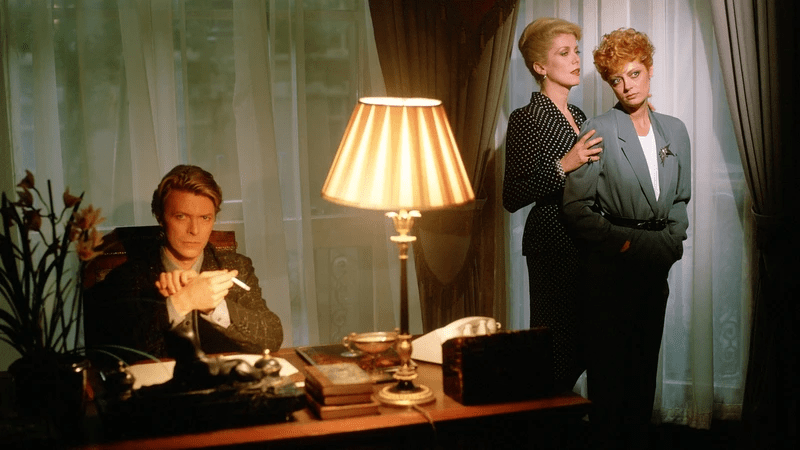
It’s here where the real evolution is happening. More than just making existing monsters queerer, but asking what the specifically queer horrors are. What nightmares come from our lived experiences? Where it gets complicated, and where my thoughts become a little tangled, is that the very thing which made the horror genre queer, the metaphor of the monster, is the thing we’re now dismantling. Yes that’s necessary. But it’s also loss. There was something powerful in the subtext and the code. If you knew, you knew. Watching The Hunger, with Susan Sarandon, David Bowie and Catherine Denevue, the opening scene in the gothic nightclub needed no explanation. You got it. When the text is made explicit instead of subtext, something changes. It has to. It becomes available to everyone, and that is good. Representation and visibility matter, that is necessary and true. But something is lost in translation. The code was ours. The metaphor allowed contradiction and complexity. The uncomfortable truth that sometimes being the monster felt good. It felt powerful in a way the victim could never be. I think of this when I watch something like Bit, a 2019 vampire movie about a trans girl who joins an all-female vampire gang in Los Angeles. It’s explicitly queer and about finding your chosen family, and how transformation isn’t tragedy. And also it’s good. But a part of me mourns slightly for the days when we found ourselves in the shadows. In the implications, where we couldn’t say the vampires were queer, but we always knew.
I know this makes me sound like a nostalgic old fool. And maybe I am. But there is something to be said for acknowledging what we lost while we celebrate what we gained. The most interesting thing in queer horror at the moment isn’t the reclamation of the old monsters. It’s the creation of new ones from specifically queer trauma. The horror of conversion therapy. Not as a metaphor, but as reality, rendered in the genre terms. The horror of transphobia, of violence and legislative assault of your existence. What does cosmic horror look like when you are told on a daily basis your reality is unacceptable and your truth is up for debate?
There are some creators going there. Manhunt by Gretchen Felker-Martin gives us a post-apocalyptic world in which a plague has turned the most testosterone-dominant people into feral monsters, and we follow two trans women if their fight for survival. It’s a brutal and unflinching read, using survival and body horror to examine what it means to fight for your identity and body, for your right to exist in a world that says you shouldn’t. That’s specific queer horror. No codes or metaphors, but direct. A nightmare born from the real horrors queer and trans people face. Or something like Scream, Queen!, a documentary about Mark Patton and his experience on A Nightmare on Elm Street 2. It isn’t fiction, but it’s still horror. The horror that involves having your career destroyed, your identity weaponised and life derailed all because you dared to star in a movie that was just a little queerer than the market could bear. That’s real horror. That leaves scars. The question then becomes: how do you make horror from trauma, but without re-traumatising? How do you make it cathartic instead of exploitative? The best queer horror does this by making their queer characters the protagonists of their own stories, and not just victims. They centre the agency. They make survival, of chosen family, community, love, just as important as the threat.
So what, then, comes next? We are in a moment of transition, apt word, where text and subtext sometimes uneasily coexist. Studios are trying to have it both ways, with characters coded as just queer enough for people who want to read it that way, but still deniable enough that they won’t lose conservative audiences or overseas markets. Authentic queer creators are making uncompromising work that will never see the inside of a multiplex, and everything in between. What I hope, and what I think we’re building towards, is a horror landscape that has queerness as just one of the factors that make up a story, a character or monster. Somewhere we can have explicitly queer slasher movies and vampires and ghosts, but also queer characters who can exist in horror stories that aren’t about queerness at all. With a trans woman being the “Final Girl” without the story being about her transness. A gay couple fighting a demon without it having to be A Statement. The normalisation of representation, in other words. That’s the dream. But also, I hope we don’t lost that razors edge. The weirdness and willingness to make people uncomfortable. Horror has always been transgressive, and queer horror should be double so. It’s supposed to unsettle us, to challenge and disturb us. It has to show us as we actually are: contradictory and complicated. Monstrous and heroic.
The monsters were always queer, and now they’re deliberately so. With intent and meaning beyond metaphor. They’re ours; we made them. And we’re still making them. That’s worth being afraid of, in the best possible way. Because, in the end, horror has always been about what we desire and fear. Often, they are both the same. For queer people, desire and fear are tangled up with visibility, identity, with the right to exist. It’s no wonder we always saw ourselves in the monsters. And no wonder that finally we are making the monsters explicitly in our image. The subtext is text. The whispers are screams. And the monsters? They’re coming out of the closet. It’s about damn time.
Adam Page is a freelance writer focusing mainly on film and literature with a special interest in all things horror related. He is in his final year studying for a BA in English Literature and Language and is somewhat obsessed with Bruce Springsteen. He plays terrible guitar and is definitely a cat person. His favourite film changes depending on what his mood is.


Leave a comment