by Ashley B Red
‘Uncanny Valley’ is a term first coined in 1970 by Japanese roboticist Masahiro Mori. It refers to a robot or a doll which isn’t quite ‘fully human’.
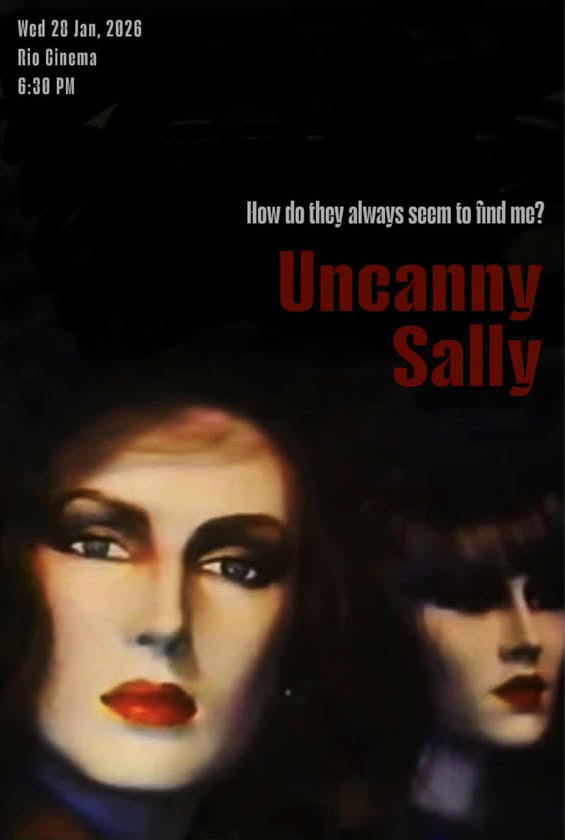
Late Wednesday evening I found myself seated within the rich rouge red chairs in the front row of The Rio Cinema in Dalston, East London, patiently awaiting a viewing of ‘Uncanny Sally’. The event was part of LSFF (London Short Film Festival). The cinema was covered in mannequins and the films were introduced by a wonderful young team who had curated these films together as part of the Femgore genre project.
Here I would find myself ready to observe a collection of predominately female directed short films from the 1970s to the 1990s, exploring themes of the body, femininity and the unsettling strangeness of threat that many women feel in their everyday lives.
In the total running time of 70 minutes, surrounded by mannequins, violence and disturbing surrealism – needless to say, I felt uneasy.
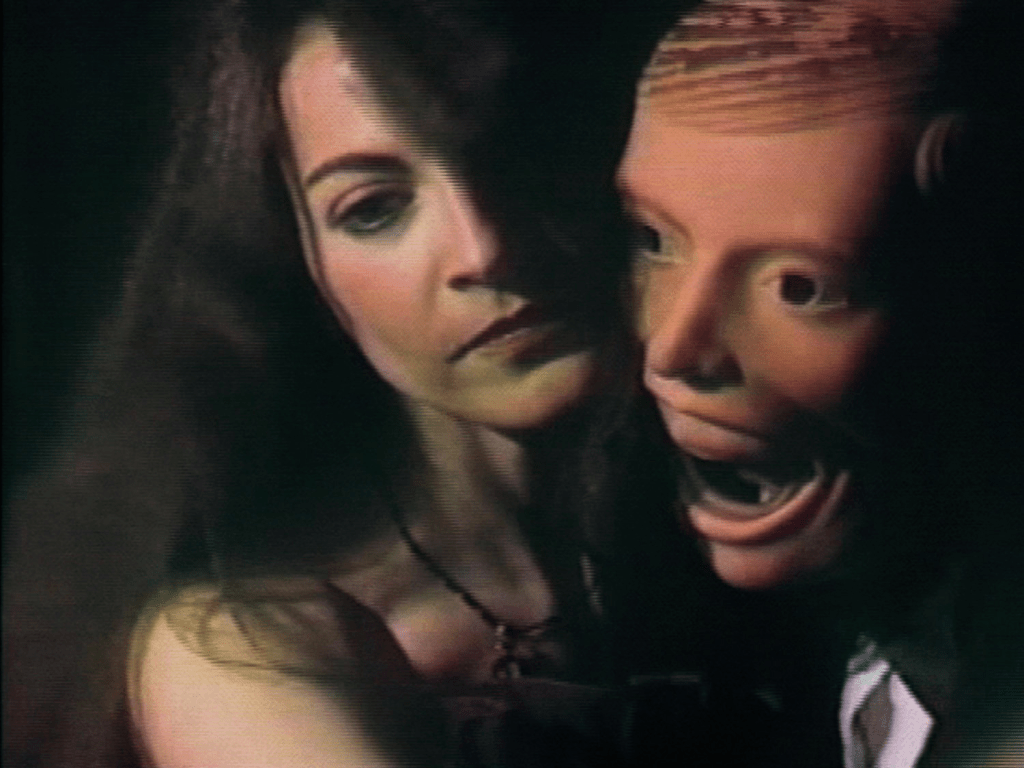
Possibly In Michigan (1983) written and directed by Cecelia Condit was the first and the most memorable of the evening. Our story begins where Sharon and Janice are being stalked by a mysterious man named Arthur, wearing a variation of obscure animal masks whilst they’re browsing the perfume counter at a department store.
The aesthetic is very pleasing with vivid colors and an incredibly appealing musical score. Very quickly, however, we are brought back to the realization that this film is about the dangers of stalking and cannibalism. The juxtaposition between shots of flowers mixed with physical violence makes the film even more terrifying. From a personal perspective, this could be showing two separate sides of Sharon, how she feels around women and how she feels around men. Once Arthur is unmasked, his character becomes incredibly fascinating. Having the male character appear physically attractive, paints the question, ‘Is the audience scared of the animal mask, or is the audience scared of the man underneath?’. Flipping the narrative on the female characters where ultimately, they get their revenge against this man by becoming cannibals themselves, is something I believe that no one in that audience would have ever expected. Something to be noted here is that although there is animal cruelty and very heavy themes, the entire story is told in a way that is overall, not very graphic at all.
Known as a cult classic and often considered as one of the first true analog horror films ever created, 40 years on, this hits the viewer hard. Cecelia Condit has created a series of films alongside ‘Possibly in Michigan’ which are all entirely told from a feminist perspective and are worth a watch.
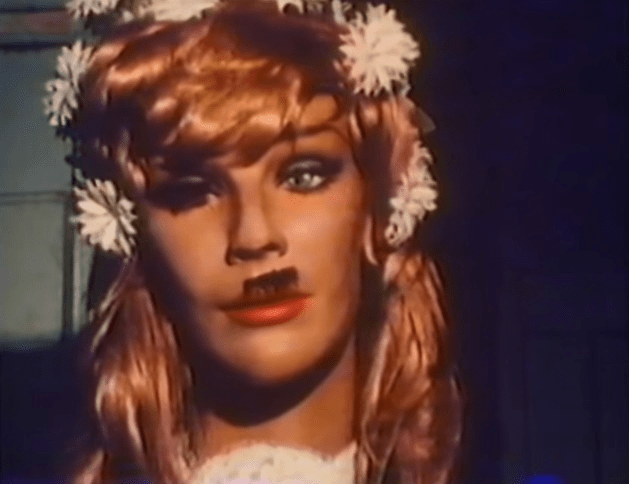
The only entry to be directed by a man. ‘Living Dolls’ (1980) created by Todd Coleman is a 10-minute short film focusing on mannequins and the male psyche. The faces on the mannequins attack the nervous system of the man after he is trapped in a storage room of a bridal shop. From the opening credits it sets the tone of what we are about to watch. We are introduced to the story through flute and piano melodies that are filled with dread. This is the kind of film that portrays the annoyance between the sexes and how there can be a lot of psychological fear between men and women. The metaphor of control is in the faces of the mannequins, and this comes across intensely when terror hits in the last few minutes. The electronic sounds used in the film are extremely harsh and you cannot help but feel a horrible feeling of anxiety through the shaky camera work which has a very telling effect of the Uncanny Valley genre.
Coleman himself has stated that a lot of this short was created with dominant female character examples that he knew in his personal life and how they affected him throughout childhood, describing the project as something he subconsciously created without knowing at the time to be about himself.
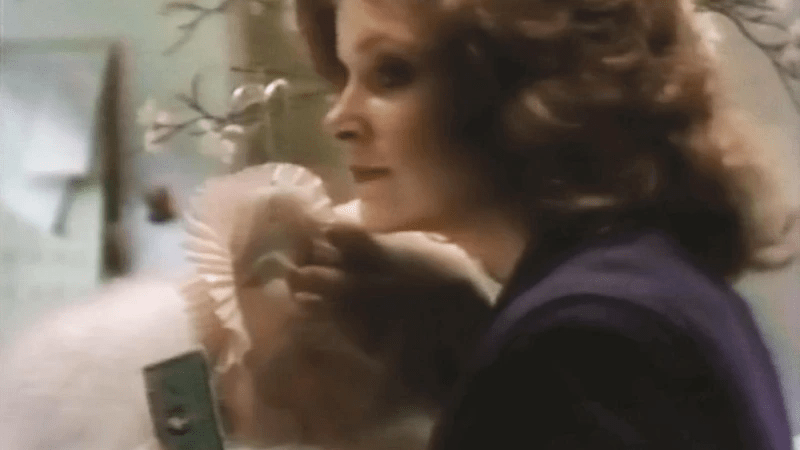
A serene video haze filled experience set in a shopping mall, felt hypnotic yet somehow unsettling. ‘Casual Shopper'(1981) directed by Judith Barry was the longest of the films shown during the evening. At a running time of 28 minutes, there was a lot to unpack, yet not a lot happening on screen.
It is easy to see why a lot of women would find this one appealing. A female protagonist is found wandering through an endless display of beauty products and extravagant displays. Here she is being observed by a strange man who is staring at her through the corner of his eyes. Elevator music is used heavily throughout and what we as the viewer are expected to understand, begs the question,’ Is this man in the shopping mall real?’. The audience is taken on a journey with the couple as they become enthralled in each other’s lives. Borderline themes of stalking and obsession, where we meet dimensions between fantasy and reality.
This short gave me essence of limerence, where it wasn’t always clear who was in love and infatuated with whom. Parts of it being obvious romance and parts of it told directly from the female gaze, Judith Barry has been known to call this film ‘a love story that never advances beyond that which can be imagined, which is never consummated, but which returns to a prosaic scene where demands are exchanged and desire circulates endlessly’. This short unfortunately felt too long for me and was my least favorite of the evening.
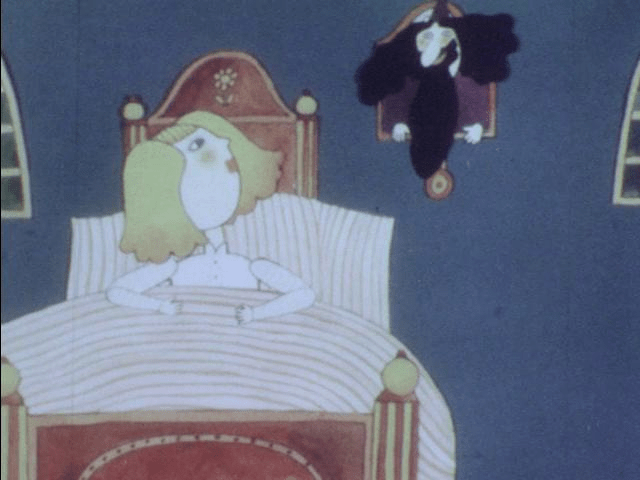
The shortest running time of the evening and one of the more fascinating. Through animated visuals and bright green colors About Dressy Sally (1976) created by Dagmar Doubkova was a hit with the audience. The film was produced in Communist Czechoslovakia, and an English dub was created in the US two years later.
In 7 minutes, a young girl named Sally receives a lesson from a sorcerer about lying and happiness when she loses her gloves. As the film goes on, it does have an incredibly eerie tone to it, almost feeling Lovecraftian. When the wizard forces the young girl to make a bundle of stars we cannot help as the audience wonder what he is going to ask her to do next. Interestingly as tonally dark as the narrative is, we don’t see anything happening to Sally that we should be afraid of. For me personally the lesson here is a family struggling with values and honesty in their relationships. Whilst there is danger in lying, the punishment does not need to be given if the girl is honest at the end of the story. As creepy as this may be, I do not believe that it was made with bad intentions.
Different versions of this tale have been known in pop culture history, with the character of Mr. Kadabra taking on new forms in modern day stories, now known as, ‘Pinwheel Clock Man’.
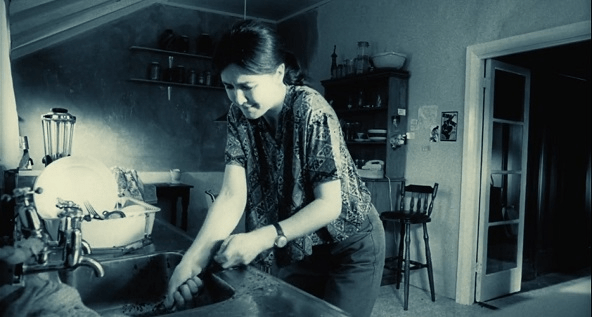
In association with the Short Film Fund of the New Zealand Film Commission, I introduce to you my favorite short of the evening, Kitchen Sink (1989) from the brilliant mind of Alison Maclean. Told entirely in black and white, the fear was brought to the audience immediately. With little narrative except small pieces of telephone conversation, the film is told entirely through a silent script. We are met with a lady without a name who pulls what can only be described as a Lynchian-style Eraserhead object from her sink in her kitchen. You as the viewer find yourself being drawn to the object she has found in her home. We watch as the female becomes attached to what originally was an object, now transforming into a man. Her care for this man is almost motherly. Over a beautifully haunting score, we watch her almost ‘create’ him. I found this short extremely interesting with a fascinating look into the female mind towards the care of looking after a partner. There were points where our character was almost scared of him, yet she still wanted to nurture and protect him. From something that originally was scary to her, it became something she could fall in love with.
The film ending with her pulling a string from his neck, gave the impression of a relationship being like puppetry and not being real at all. This short received the best applause of the night. This was a very interesting and surreal experience. As a woman watching this myself, I was thrown into a world visually on screen which almost felt ironically a little ‘too real’.
In conclusion the Uncanny Valley genre, although psychologically, can have a negative effect on our brains, it goes to show that sometimes we need to be met with these fears and feelings to understand them in full.
Ashley B Red (Instagram: @ashleybredmusicofficial) is a freelance entertainment host and horror film content creator based in London. She focuses on psychological horror and literature where she also finds inspiration for her songwriting.


Leave a comment