
by Isabelle Cocozza
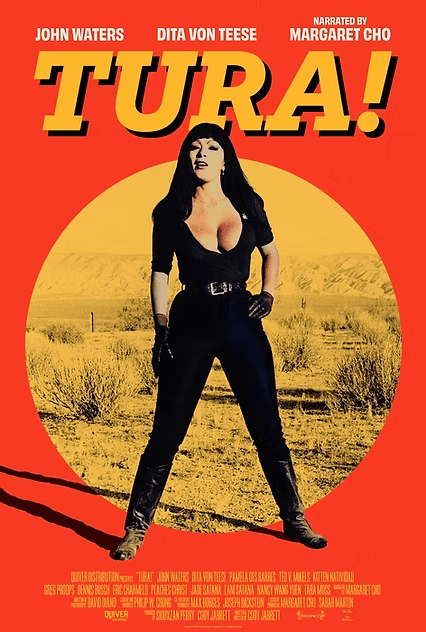
“If Tura’s story doesn’t inspire you, I don’t know what will. If you love Charlie’s Angels, you can trace that back to Tura. If you love Quentin Tarantino films, you can trace that back to Tura – all roads lead back to Tura. Her impact was enormous.” – Cody Jarrett
Cody Jarrett’s feature documentary TURA! (2024) centres the career of cult film icon and feminist Japanese-American trailblazer Tura Satana, from the burlesque stage to the silver screen of B-movie drive-ins. She remains best known for her ever-referenced, stereotype-shattering role as Varla in Russ Meyer’s FASTER, PUSSYCAT! KILL! KILL! (1965). This dazzling new documentary pulls no punches in exploring the many ups and downs of Tura’s professional and personal life, including interviews with old colleagues and those inspired by Tura alike – including Burlesque icon Dita Von Teese and Pussycat superfan and cult film legend, writer-director John Waters. The film is narrated by actress Margaret Cho. Long in the works, Director Cody Jarrett told us that the idea for the film came while Tura was still alive. “It didn’t happen then, unfortunately. When it did come together, you could just feel the planets align, it was so, so strong.“
A cult icon, this film is here to finally explore in depth and celebrate the bold, elusive, and complicated life of Tura Satana.“Tura has a huge fan base that know everything about her. But for the people that didn’t know about Tura, we wanted to make this film accessible and show everyone that while you don’t know who Tura is, if you’re consuming any form of modern entertainment, she has impacted that in some way.” – Cody Jarrett
Director Cody Jarrett became attached to the project after being friendly with Tura in her life, meeting when making Jarrett’s women-in-prison feature SUGAR BOXX (2011). After having written the role of the warden for Erica Gavin who wasn’t available, producer Siouxzan Perry, manager of the Russ Meyer women, suggested including Tura Satana and Kitten Natividad. When asked about his personal experiences with Tura, Cody said “There’s no one like Tura, as you could guess. Tura was beautiful. She was really interesting to be around because she was, first of all, very gracious and very, very generous. She was a good listener and thoughtful, funny, witty, engaging, and she would also do hilariously unpredictable things. It was the Sugar Boxx premiere, the climax scene of the film, and Tura gets up on the chair and starts screaming out the dialogue before the actor says it on screen. The audience is dying! Kitten is next to her, punching her in the leg, like ‘Tura, sit down! You’re ruining it for everybody!’”
Who was Tura Satana?
Tura was born in Hokkaido, Japan in 1938 before her family moved to Chicago after staying in the Manzanar internment camp. The film is deeply grounded in Tura’s origins and echoes them throughout. Tura’s tough upbringing as the only Japanese-American girl in town after the strains between the American and Japanese post-Pearl Harbour impacted her life greatly, and this struggle contributed to the defining moment that would shape her life therafter. Aged 9 years old, Tura was kidnapped and brutally gang raped by men who made racist comments towards her throughout, before dumping her miles from home. The judge was paid off, and Tura was blamed and sent to reform school. This event caused her mother to shame and turn her back on Tura, while her father remained the only supportive parent. Tura said in 2008 that she then created a girl gang to protect the neighbourhood “Usually we went looking to prevent trouble, especially to other girls.” The film uses this trauma to frame Tura’s story – while many people might think that framing a woman’s story around such an event might seem belittling as there of course is much more to a woman’s life, the film very much understands this, and links it to her vindictive actions while showing how she took this pain as a seed to fuel a legacy for herself. “What happened to Tura sort of set the tone for her life. That’s what motivated her to become the person that she became and make the choices that she made. If you didn’t have that as context right away, you wouldn’t necessarily understand that.” -Cody Jarrett
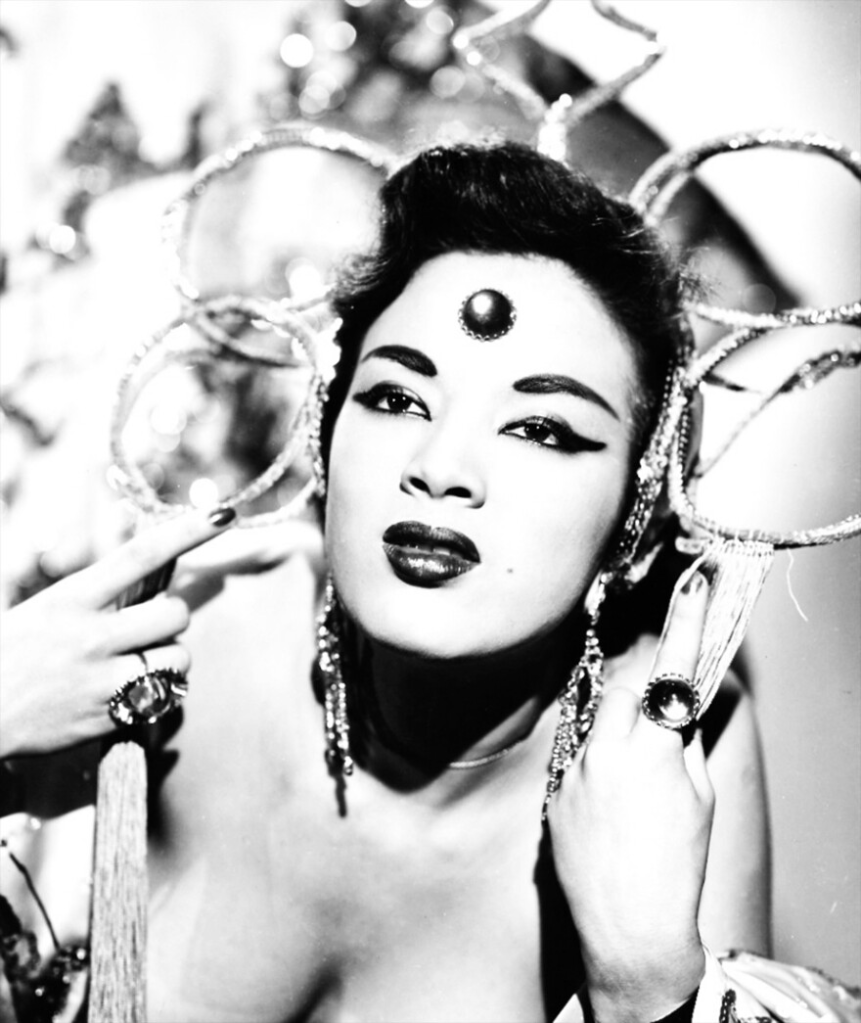
Tura’s family arranged a marriage for her, before she ran away. Lying about her age and becoming a successful burlesque performer utilising her ethnicity as ‘Miss Japan Beautiful’ as a teenager, she would pull the hair of patrons who talked over her dance. She also practiced martial arts. As she grew older, she eventually ran into each man who was involved in her rape and served them justice, herself. The documentary follows her dancing and film career, and also details her sprawling romantic life including her rejected proposal from Elvis Presley and sexual encounters with various creatives. Tura did not shirk from sex, having a sexual partner on every film project. When she settled down, it was at odds with her wants of a life of performing and ended tumultuously in an ambiguous shooting incident – and this documentary tells all.
Tura’s fierce personality led her to be famously cast in Faster, Pussycat! Kill! Kill! (1965) directed by Russ Meyer. The film follows three go-go girls who embark on a journey of drag racing, murder and kidnapping in the Californian desert while in search of some hidden cash. Her role in this film was one of the first lead roles for Asian women, as each film at the time casted them as prostitutes or insignificant beauties. Varla was a powerful, sexy, and quite a scary woman with more fervour than you could shake a stick at. Tura’s performance consisted of classic one liners and an iconic loud and irreverent tone of delivery. Due to the film’s small budget, Tura herself ended up choreographing the stunts and fights. Faster, Pussycat remains 377th place on Sight & Sound‘s ‘Greatest Films’ poll and is often included in rankings of the best cult movies ever made. In the doc, John Waters details going to the drive-ins with Divine sometimes nights in a row, and he states in his book Shock Value that Faster, Pussycat is ‘beyond a doubt, the best movie ever made.’ Tura and Waters were friends, and he often showed the film at parties or even at Christmas. “I knew someone who, as a girl, lived in Baltimore. Her parents were friends with John Waters. She remembers him coming to their house with a projector, setting it up and making them watch Faster Pussycat.” – Cody Jarrett
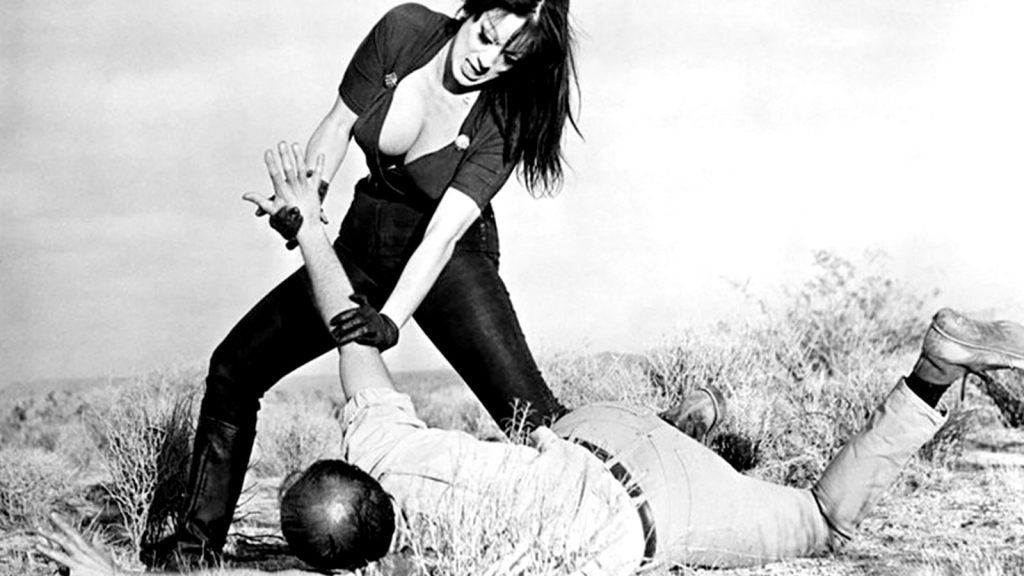
The film was a commercial flop after release, unlike Russ Meyer’s previous big breasted nudie-cutie filmography – likely due to the lack of sexploitation that audiences expected from Meyer. When the film was re-released on VHS as home video was invented, the film began a new life with a new wave of superfans. Tura was suddenly in massive demand for screenings and conventions – one man even refusing to leave the line while having a heart attack until he saw her.
This new breath of life for Tura’s career lit the spark for what would become this documentary. Tura’s attitude, image, and her character of Varla had reached so many cult film fans around the world whom became her driving force. “Tura loved and lived for her fans.” Her legacy spoke to them in a way that shaped their lives. Cody explains “Tura and Siouxzan would go to shows and there was a constant stream of people telling Tura how much of an inspiration she’d been to them, how Tura had given them the motivation to change their lives or get out of a crappy relationship. That happened so much that they thought that if we can find a vehicle to get this story to more people, it could probably help more people.” Her strength and commanding presence which led to her casting in Faster Pussycat became a guiding light for many young female fans – especially Asian-American fans. Tura Satana Taught Me to Find Power in My Asian Identity by Miyako Pleines is a notable piece I would like to suggest here.

“Tura’s deathbed wish was that she wanted this film to be her way of giving everything back. Like, ‘you have all have given me so much. I want to give it all back to you.’”
I asked Cody Jarrett why Pussycat is such an enduring film. “It would be easy to judge that film on the surface. Like Peaches (Christ) says in the film, there’s so much more there than just an actress playing a role. That true, genuine authenticity is irresistible. And on top of that, the film is technically excellent. The photography and the editing are so hyper sharp. As you learn in the film, Russ Meyer was a photographer in World War II.” When I mentioned the aspects of race and of queerness in the film, we discussed that the film’s precociousness with these subjects would remain relevant, “especially with kind of the way the political tide of the United States and the world has shifted lately. I think anything where women or marginalised groups can stand up and say, ‘Hey, screw you. We’re not going to take it. We can kick your ass and we’re going to.’ is good.” Tura has been instrumental in influencing the media of today, and is beloved by many filmmakers such as the aforementioned John Waters, Quentin Tarantino, and more.
The documentary itself is an immensely detailed, sprawling, and a startlingly intimate look into Tura’s life. The dedication to the project can be felt through the screen, the meticulous collecting of the (many still unused) newspaper clippings, footage clips and recording of material automatically garners respect. The range of interview guests from filmmakers, burlesque dancers, critics and authors to friends and family each relate to and reveal insightful anecdotes on different aspects of Tura’s life, and the film doesn’t feel overcrowded. The film eloquently balances Tura’s personal and professional lives, and creates a nuanced portrait of a complicated woman with an energetic story – it is never dull. It truly feels like a labour of love for her made by those who knew her, and it includes the good and the bad while celebrating her – without feeling confused. The soul of the film shines through the at times shoddy interview framing, or the somewhat tiresome overuse of a repeated segment formula. These technical hitches can even give the film a bit of charm like that of the shortcomings of many cult films.
The documentary is feminist in that it does not sugar coat Tura’s shortcomings as a mother or her hot headed nature. Women are allowed to be presented how they really were in this documentary, where in cinema and life, women are often expected to have everything together, always be level headed, in moderation, and wise. When I mentioned this aspect of the film to Cody, he responded “If she were still alive, she would not be happy with some Entertainment Tonight style documentary. She’d be kicking my ass. The right thing to do was to get into the depths. We had the ability to get to the real story, based on our personal experience with her and the access to the materials that we had. If we had painted Tura as, I don’t want to say the word shallow, but the outsider’s perspective would have been that, it would not be what this film ever should be. We needed to get to the core of who Tura was and the choices that she made and how it influenced the people in her life. The goal was for the audience to experience Tura’s life firsthand or as close to it as possible.”
An immense thank you to Siouxzan Perry and Cody Jarrett for having me watch their film. As a fan, I was eager to see it, and as a British Gen-Z cinephile, I wanted to use this platform to help Tura’s incredible life story reach more people here and in my age group, whom Tura’s legacy may have eluded. It has been a privilege to see this feature and I would recommend it to anyone. In Cody’s words,“Go for that ride with Tura in the Porsche, right in the front seat with her and just experience all of this.”
TURA! (2024) is now available to rent on demand in the US. UK distribution is anticipated in 2026. You can find more information here, and follow @officialturasatana on Instagram and @turasatana on Tiktok to stay updated.
Isabelle Cocozza (Instagram: issycharliedennis) is the Founder & Editor in Chief of Culture Film Publication, a film production student and photographer. She is based in Bristol and Bedford, with areas of interest in horror, cult/genre, and psychosexual filmmaking.


Leave a comment