
by Jesse Williams
This year, one of cinema’s greatest cult classics turned 30. Brighton based pop-up White Wall Cinema projects the new 4K release, prompting fascinating reflections on the film’s legacy, and enduring appeal.
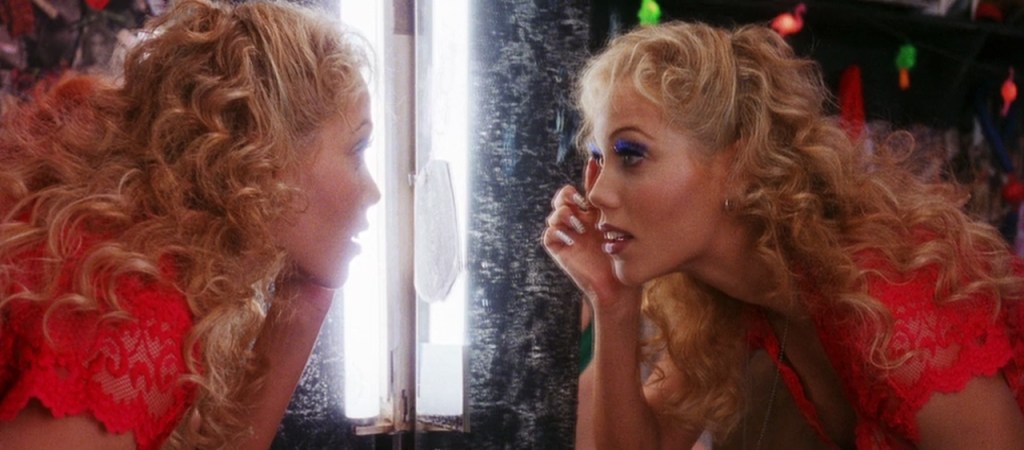
The tale of Showgirls’ catastrophic reception has reached near mythic status in the history of film. Despite director Paul Verhoeven’s cemented position as a populist auteur, fresh off a run of back to back hits with Robocop, Total Recall & Basic Instinct, this more sultry affair debuted to critical slaughter, disastrous box office returns, and seven razzie nominations. Such an astonishing reception sets it up as a prime example of a picture ripe for cult status, and yet, that description implies an unintentional vapid hedonism that could not be further from the truth. Watching Verhoeven’s brutally immersive depiction of America in 2025, a year dominated by the effects of late-stage capitalism, villainous politicians and a slow decline into fascism, Showgirls becomes a tragedy, and it has never felt so relevant.
I suspect the reason audiences didn’t catch onto the satirical brilliance at play is simply due to how manipulative it is. Verhoeven is well versed in using the trappings of blockbuster cinema to influence an audience, hiding anti-American messaging in mainstream genre cinema. You need look no further than his breakout hit Robocop, which is some of the most fun you can have with action cinema, but simultaneously a scathing takedown of the corporate militarisation in post-Reagan America. The difference is, in Showgirls, Verhoeven’s satire is frighteningly grounded. This is not an operatic sci-fi, nor a dystopia, this is an uncompromising depiction of 90s America.
I can’t blame them. Even now we debate the ethics of such satire, particularly the use of nudity and Jost Vocano’s cinematography. Showgirls is clearly motivated by progressive intention, but equally contains extended sequences of nudity shot with exploitational glamour. It’s difficult to deny the spectacle of the luscious widescreen cinematography and the intensity of choreography is irresistible. Just how much intention lasts under the layers of blockbuster camouflage will depend on the audience member or critic, but I find the uncomfortable juxtaposition of exploitation and glamour sharing the same frame compelling. This is the basic smoke and mirrors of America. Manipulation and trauma hidden behind shimmer curtains, dazzling colours and a thick coat of rhinestones.
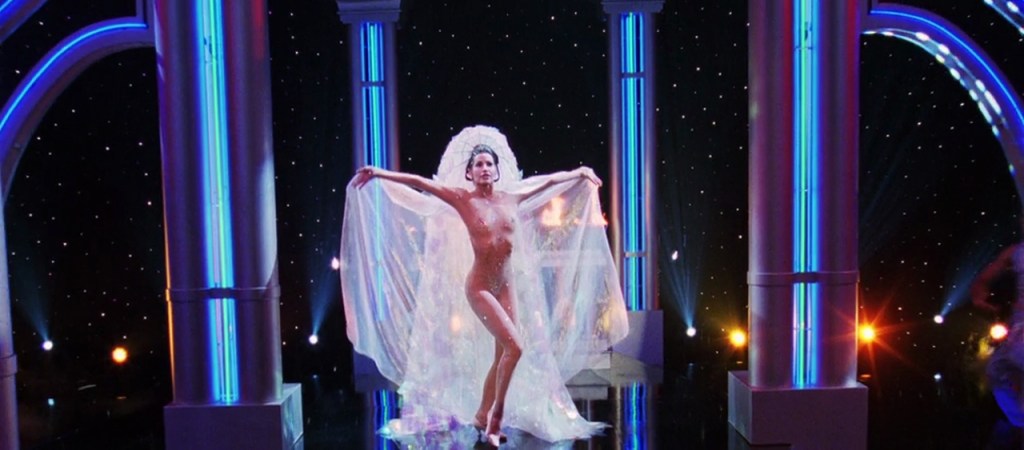
It’s a double-standard central to the narrative too, if you substitute the lurid lights of Hollywood for the wealthy glamour of Vegas. Nomi begins dancing at the low-end gentleman’s club ‘Cheetah’s’, where sleazy boss “Big” Al Tores demands oral sex from performers in exchange for employment. As she rises through the ranks in a pseudo take on A Star Is Born, she reaches her peak as the star of ‘Goddess’, a large-scale, topless revue. The show is treated by the film as more respectable, safer employment, but is it?
Nomi only secures an audition at the Stardust Casino for giving a private dance (that breaches her workplace safety conditions) to Casino Manager Zack Carey and his girlfriend Crystal, the lead of ‘Goddess’. Later, in the film’s only sex scene, Nomi weaponises her sexuality through a ludicrously insincere display of gymnastics to secure her ascent to stardom. The difference is, the latter takes place in a dreamy pool, drenched in champaign lit by neon palm trees, rather than a run-down manager’s office. Early in the film, Crystal describes dancing at ‘Cheetah’s’ as prostitution, but what difference is there between the two venues? The implication that the dripping wealth of Vegas, with the greed-fuelled sabotage that runs rampant in the ‘Goddess’ dressing rooms, is any safer than the jolly working class solidarity backstage at ‘Cheetah’s’ is preposterous.
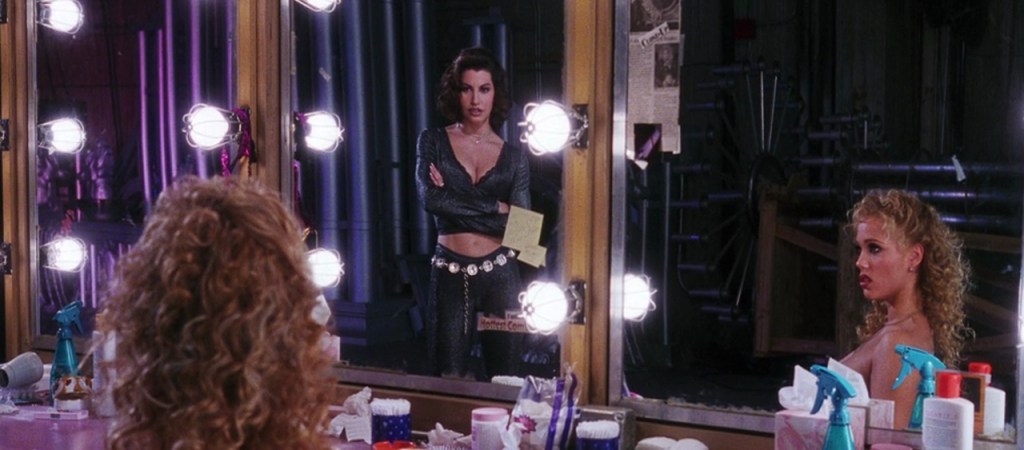
If Showgirls is a tragedy, then this naivety is the hamartia of Nomi Malone. A textbook runaway with a past to hide, she buys into the American lie that stardom is any different to the cutthroat world of sex work and drug use she leaves behind. In a compelling piece, cult legend Vera Drew (The People’s Joker) claims ‘it’s why she rises to the top of Vegas’s showbiz pyramid so fast… Nomi is so good at playing the game that she doesn’t realise it… she thinks she’s running away from her past but really, she’s just playing it out in a new locale’. This is what is so heartbreaking about Showgirls. It’s camp, at times it’s hilarious, but it’s also an unflinching look at the slaughterhouse of stardom. It’s about an America that exploits those it disenfranchises, luring the marginalised into a gross machine that turns the forgotten into profit, before quickly chucking them to the curb.
Even more upsetting, is the fact this machine’s existence is proven in the real world reception of Showgirls. Director Paul Verhoeven’s career, although slightly dented, continued far past this colossal box office disaster. Instead, the industry seemed to place the blame on its lead, star-to-be Elizabeth Berkley. The role of Nomi Malone, a Clint Eastwood-esque drifter with no-name, should be a starmaker, especially given the intensity and commitment Berkley lends the film. Her performance is nothing short of powerful, applying the frantic motions of a woman who has seen rock-bottom to the archetypal Americana dreamer. And yet the world mocked her for such a ludicrous performance. It’s not the fault of Verhoeven himself, who has since taken the blame for both Berkley’s career collapse and the tone of the performance, but the sick machine that will always scapegoat the marginalised. As he put it himself in a 2015 interview with Digital Spy… ‘Hollywood turned their backs on her.’
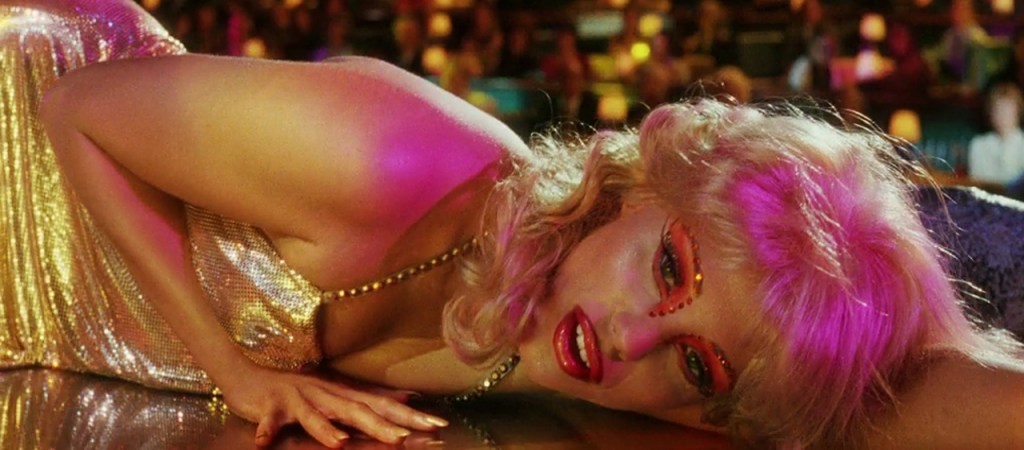
Being born in 2004, I do not remember a time where Showgirls wasn’t considered biting satire too smart for its audience. Obsessed with the film as a teenager, to me it was always a masterpiece. Yet watching it in 2025, it’s taken on new relevance. I see the tragedy of Nomi Malone in the economic oppression of the marginalised, being forced into survival work while being scapegoated for the inevitable collapse of capitalist society. But the film’s critique of American power structures snaps into place during Showgirls‘ most shocking scene, as Molly Abrams, the only black woman in the film, becomes the victim of a brutal sexual assault by a wealthy pop idol. It’s difficult not to see parallels with the present, as the quintessential figure of American Wealth, the President of the United States, faces a tide of credible accusations of sexual violence. It’s a bleak thought, but at thirty years old, as America descends into a flaming hellscape, Showgirls feels less like satire, and more like prophecy.
Jesse Williams (instagram: @jessee_williams) is a film journalist and filmmaker. When she’s not writing articles, she can often be found delving into the depths of queer cinema, or creating films of her own. Her recent short film Chaser is set to be released in 2026.


Leave a comment