
by Isabelle Cocozza
On Friday the 24th of October, Bristol’s own genre film festival held at the Bristol Megascreen IMAX Cinema, Forbidden Worlds Film Festival, returned with THE BIG SCREAM! This time, a two night festival of Ozploitation (Australian Exploitation) triple bills!
Friday night consisted of LONG WEEKEND (1978), NEXT OF KIN (1982) and BODY MELT (1993). The venue was packed, and had various vendors such as Bristol’s own The Haunted Bookshop. The theatre served hot dogs and vegan chilli for dinner, and morale was high!
First off, LONG WEEKEND (1978). A 70’s Man VS Nature tale, husband Peter and wife Marcia’s relationship is very much on the rocks as they go for a camping trip, much to Marcia’s dismay. Peter, however, is in his element and simply wants to surf and be outdoorsy with his dog Cricket. Marcia begins hearing haunting baby-cry noises and believing there to be sharks in the water. As natural aspects prove to be the answers for many strange happenings, they nonetheless prompt the disintegration of the couple’s peace and drive them to want a divorce.
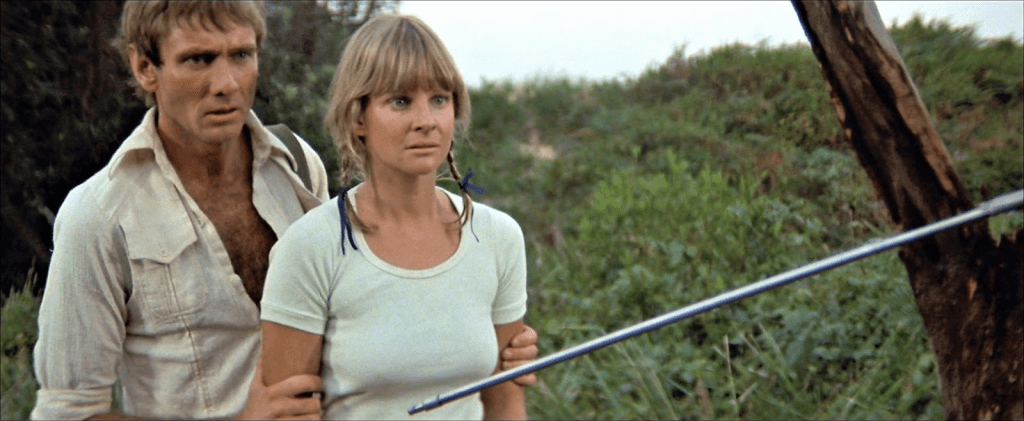
The characterisation is great, because it is interesting that we sympathise with both characters while also becoming frustrated watching their more negative qualities – Marcia does need a chill pill and even tries to abandon Cricket in order to just get out of there, which is of course not cool. Peter just wants to be in nature and enjoy his time but cannot without infuriating Marcia, however he is also overtly selfish. If he is having a good time, then everything is fine. Instead of panicking about his wife being upset and wanting to sort the issue and compromise to make her feel listened to, she is treated as a nuisance to his fun and is shouted at in a way that feels distinctly misogynistic – even going as far to disbelieve that she would divorce him as Peter suggests he is all she has and wouldn’t dare, to which she does dare. This makes for an interesting watch, but perhaps too much of the film consists of this.
The conflict in the film outside of the couple is nature – the sea animals, the birds attacking Peter, large spider webs wrapping the car, and possums on their food. This broader antagonist is interesting, but overall does serve the plot a lot less than having a centered singular antagonist. The much more famous DELIVERANCE (1972) is similarly a film that explores Man’s dominance over nature and the ‘raping of the land’ in the conflict between the tough environment and the struggle of (distinctly male) ego and the human’s assumed dominance. However, a film like that which tackles more clear cut antagonists with significant moments of this conflict, such as the hillbilly rapist, work better plot wise for me. The way nature attacked in various ways was scattered too few and far between. I also found it difficult to feel it was an ‘exploitation’ film, as the film contains little exploitative imagery, outside of the exploitation in that we are gaining entertainment from a couple’s misfortune. However, I must praise it’s very well thought out and clear establishing of warranting nature’s attacks onto the couple. Marcia placing food outside and then killing the insects when they are on it, in their natural habitat as if she is shocked. There is a lot of littering of their belongings and blatant disregard towards the environment – even on the drive there we understand this, as Peter flicks his cigarette onto the side of the road which starts lighting the ground around it as they drive on. They do not treat themselves as visitors, but colonisers, as they put themselves into a place which is not accustomed to them and must adapt it to fit. This of course could also echo the colonial history of Australia.

With good ideas and some underwhelming execution, LONG WEEKEND (1978) was my least favourite film of the night – but worth checking out of you are interested in a more wandering form and like seeing nature clap back! With some really interesting commentary within it and clearly very intelligent, the plot nevertheless can sometimes feel dull. Justice for Cricket the dog!
NEXT OF KIN (1982) was the second film. The screening was prefaced with an introduction by lead actress Jackie Kerin in which she showed us some memorabilia from her memory boxes including continuity Polaroids and divulged information about her on set experiences, which felt very special. It’s not so much of a traditional exploitation film, but a brooding, gothic tale of Linda, who has inherited her mother’s estate including Montclair, the large house used as a nursing home. Strange things begin happening, including flickering lights and overflowing bathrooms and drowning residents.
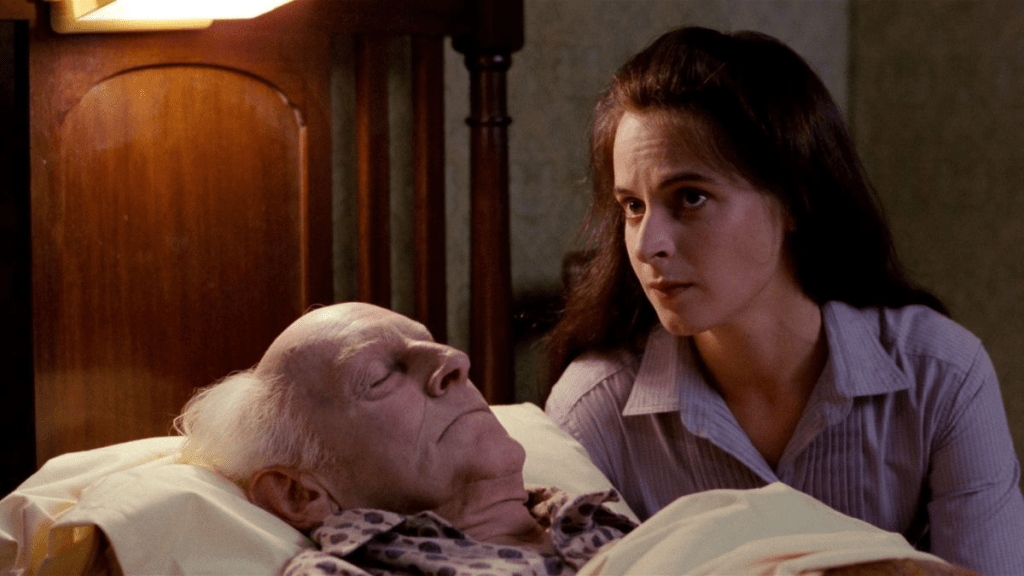
The revealed antagonist is satisfying, but for me felt a little quick despite the slow burn, since we hadn’t quite learnt enough about this character to really find it plausible enough. Or maybe I wasn’t paying quite enough attention as I thought I was… The acting was solid, and there was the occasional laugh from the audience in small moments of comedy in the heavy atmosphere. The eruption of action at the end was some great pay off, but I wish that conflict had lasted longer. There were some great bloody moments though. What sets this one apart from the others is such a disinct visual style, smooth and eerie twisting movement from some steadicam and the magical feeling of a softly glowing and sparkling film!

Next of Kin was an intriguing slow burn but I wish we found out even more about the characters. I would have liked to have learnt more about Barney, Linda’s partner, and Linda’s mother though her death seems to merely frame the story and add distrust in the staff of Montclair who will not divulge the true reasoning to Linda. I think that the film opens more mysteries than it effectively and satisfyingly solves, but the ride is fun nonetheless. The full circle moment from the film’s structure at it’s opening and close works very well, and the use of the last location feels well established beforehand and feels logical. It was a very visually and story-wise enjoyable film, and as a fan of gothic cinema and vibes, I think that this may be my favourite film of the night!
Lastly, BODY MELT (1993)! Introduced by director Phillip Brody, the film had a distinct feeling that was entirely different from our other features. The film is silly, ballsy, and takes some creative risks which create a very fun viewing experience. It is very much like if Gregg Araki did David Cronenberg, just a bit funnier. The Nowhere vibes are strong with this film, painting a neon yet soulless image of suburban fantasy Australia and the clutch that commercialisation has on it. The film follows various residents of the area ‘Pebbles Court, Homesville’ who take free vitamin supplement samples after being targeted by Vimuville, a health and wellness company to test out experimental new drugs illegally on these unknowing residents. This causes dire health consequences for them of course, as we see their bodies, well, melt.
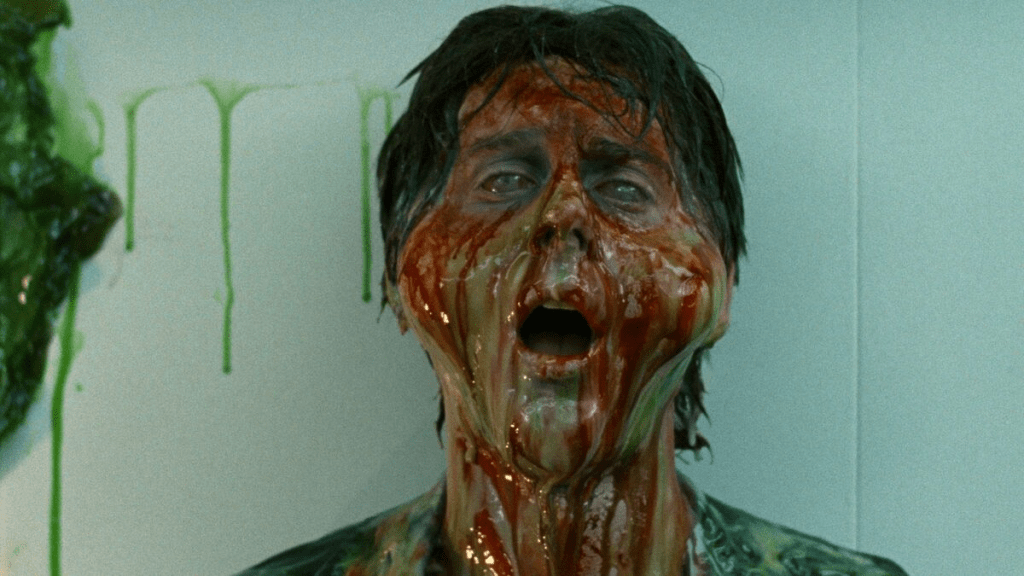
The practical effects in the film are commendable. The makeup and set design for the incestuous hillbilly family is fantastic – though that segment of the film is extremely bizarre and goes on for a significant chunk of the establishing of the mystery. However, when one of these characters is later revealed to be of relevance despite seeming so far out of the plot’s scope, it feels very satisfying and quite amusing. The actors are great, and Vimuville’s CEO is styled fantastically in this 90’s office siren vibe while using 90’s retro-futuristic tech, so it’s safe to say that the style and vibes in this film are immaculate.
The film is funny, wacky and bizarre, while also balancing some interesting commentary around the health and wellness industry and the bad ethics encouraged by capitalism. However, I feel as if it was too silly to really pack a punch and drive any interesting points home – they act more as a backdrop. The humour does work, but the film gets carried away with it to the point where scenes which could have had a significant tonal shift, such as the deaths of the newly moved couple and loss of their unborn child, could have been played differently to create more tonal dynamism and emotional audience involvement. But that’s just what I like to see as a body horror fan – films containing humour and unapologetic splatter while also exploring the loss of autonomy and the questioning of the point at which flesh ceases to be human. I’m sure many audience members appreciated the kookiness and just having a good time, and there’s nothing wrong with that – horror would be especially boring without films tonally akin to Body Melt. But it is important to note that the body horror is very much rooted in ‘Ew.’ rather than ‘AAH!’, a ‘splatstick’ style departed from bloody disturbing body horror. A huge mutated tongue, an exploding erection and endless snot and green goos are the source of body horror here rather than the guts and gore in more traditional western body horror or the later cinema du corps of Europe. Star Burst wrote that Body Melt “Packs more mucous, phlegm, puke, snot, slime & spit than you’d ever think possible.”, which is certainly true, yet in terms of blood, I think before and since it’s release, many titles have topped Body Melt in this regard, perhaps New Zealand feature, Peter Jackson’s BRAINDEAD (or DEAD ALIVE) (1992) is an apt contender.
Body Melt was very enjoyable, very comedic, and contained great visuals, effects and a great soundtrack with some cool (and very 90’s) editing – and thus would be recommended, but I doubt that I would see myself revisiting this one in the future.

Due to unforseen circumstances we were unable to attend and cover night 2, but we can imagine that it was just as fantastic when showing FAIR GAME (1986), THIRST (1979) and RAZORBACK (1984)! Many thanks to FORBIDDEN WORLDS FILM FESTIVAL for having us! You can visit their site here. Their next event takes place in April 2026.
Issy Cocozza (instagram: issycharliedennis) is the Founder & EIC of Culture Film Publication, a film production student and photographer. She is based in Bristol and Bedford, with areas of interest in horror, cult/genre, and psychosexual filmmaking.


Leave a comment