
by Megan Hilborne

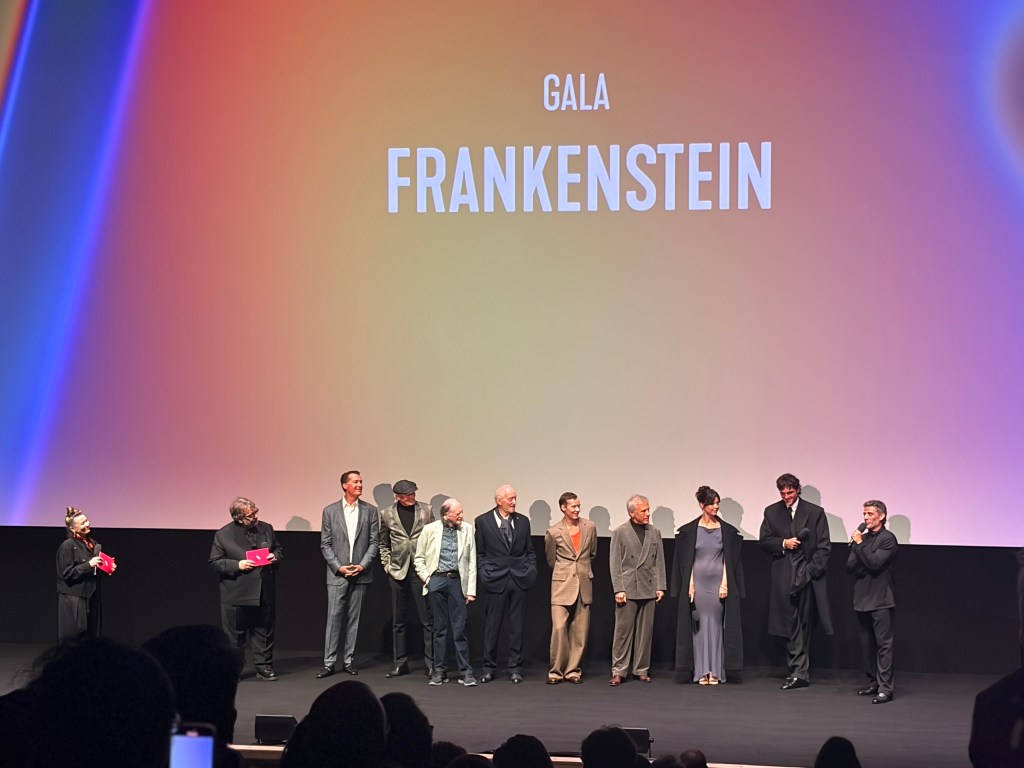
On October 13th, I had the opportunity to attend the Frankenstein gala at the BFI London Film Festival, where director Guillermo del Toro introduced the star-studded cast of his latest film: Oscar Isaac, Jacob Elordi, Mia Goth, Christoph Waltz, David Bradley, Charles Dance, Lars Mikkelsen, and Felix Kammerer. As del Toro stepped onto the stage, the audience of nearly 3,000 erupted into applause and synchronised whoops, creating a palpable sense of admiration for the acclaimed director and building an atmosphere of eager anticipation for the screening ahead.
During the opening Q&A, the cast expressed their deep appreciation for the chance to work with del Toro. Mia Goth spoke about the creative freedom he offered, noting how thoroughly prepared he is as a director. “He allows his actors to explore,” she said, “and he really trusts you- it felt great.”
Frankenstein has long been a passion project for Guillermo del Toro, whose fascination with the story began in childhood after watching the 1931 adaptation of Mary Shelley’s novel. He’s expressed a desire to bring his own version to life for over 30 years. Given his deep admiration for The Spirit of the Beehive (1973), one of his favourite films, and his well-known affection for monsters and misunderstood creatures, it’s no surprise this project has been on his creative horizon for decades.
Guillermo del Toro’s Frankenstein, much like Mary Shelley’s original, follows a brilliant yet hubristic scientist who defies the natural order by creating life through a grotesque experiment- an act that ultimately leads to the tragic downfall of both creator and creation. The film unfolds in two parts, told from the perspectives of both Victor and the Monster with British accents – the monster’s being very reminiscent of John Hurt in David Lynch’s The Elephant Man (1980). The film is framed by the story of a ship trapped in ice, where a captain contends with a mutinous crew eager to abandon their dangerous expedition. This framing device closely mirrors Shelley’s original narrative structure. One of del Toro’s key departures from the source material is the setting: the film takes place in 1857 rather than the 1790s. This shift allows for the inclusion of more advanced technology, such as electrical batteries and industrial piping, enhancing the visual and thematic scope of the story.
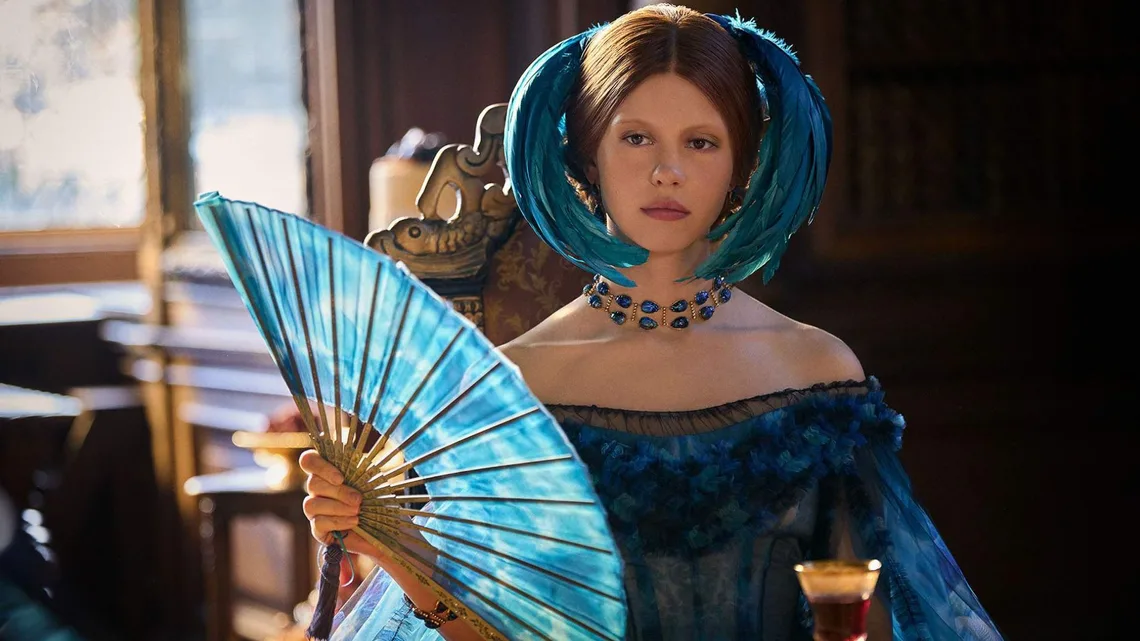
What truly stands out in the film is the sumptuous set design and lavish costumes, which perfectly capture a sense of gothic opulence. As always, del Toro delivers a visually rich and atmospheric world—this film is no exception. The costumes, designed by Kate Hawley (Crimson Peak), are particularly striking: bold, intricate, and extravagant, they elevate the film to the level of a grand cinematic event. Paired with Alexandre Desplat’s stunning score (The Shape of Water, The Grand Budapest Hotel), the film is enveloped in a rich fantasy atmosphere, both visually and aurally.
However, while most of the costume design is exquisite, the Monster’s appearance felt somewhat less successful. Though the character looks impressive when cloaked in his full outfit, his look without it feels oddly out of step with traditional portrayals of this iconic character. The makeup, in particular, seemed to work against Jacob Elordi’s transformation. Despite the character’s scarred skin and deathly pallor, Elordi still appears distractingly handsome- something that feels at odds with the unsettling presence typically associated with Frankenstein’s Monster.
I find myself questioning whether this choice was intentional, perhaps reflecting del Toro’s longstanding sympathy for monsters, often portrayed in his work as misunderstood rather than terrifying.
Another standout aspect of the film is the strength of its performances, particularly from the three leads: Oscar Isaac, Jacob Elordi, and Mia Goth. Isaac delivers a chilling portrayal of Victor Frankenstein, a man consumed by his god complex—obsessed not only with creating life, but with wielding the power to take it away. His performance powerfully reflects a recurring theme in del Toro’s work, that all monsters are human.
Mia Goth, meanwhile, commands every scene she appears in—not only due to her striking costumes but also through the quiet innocence and compassion she brings to her character, serving as a poignant counterpoint to Victor’s malice.
Jacob Elordi continues to take bold steps away from his earlier work in teen dramas and Euphoria, with Frankenstein marking a significant shift. Playing a character meant to be physically grotesque is a stark contrast to his previous roles. While the makeup design arguably softens the intended impact, leaving Elordi still distractingly beautiful, it’s worth noting his deep appreciation for the craft behind it. During the gala, Elordi praised makeup artist Mike Hill as a “true artist,” underscoring the collaborative spirit that defined the production. It was heartening to witness the cast and crew celebrate one another’s contributions, revealing a genuine artistic synergy and shared pride in the film they were about to present.
Frankenstein releases on the 17th October in select cinemas and the 7th November 2025 on Netflix.
Megan Hilborne (Instagram: meghillbilly) is a freelance writer and film critic based in Portsmouth. She graduated with a degree in Film in 2020 and has continued her study of the medium in her day-to-day life. She takes particular interest in indie, horror, feminist and queer cinema.


Leave a comment