
by Megan Hilborne
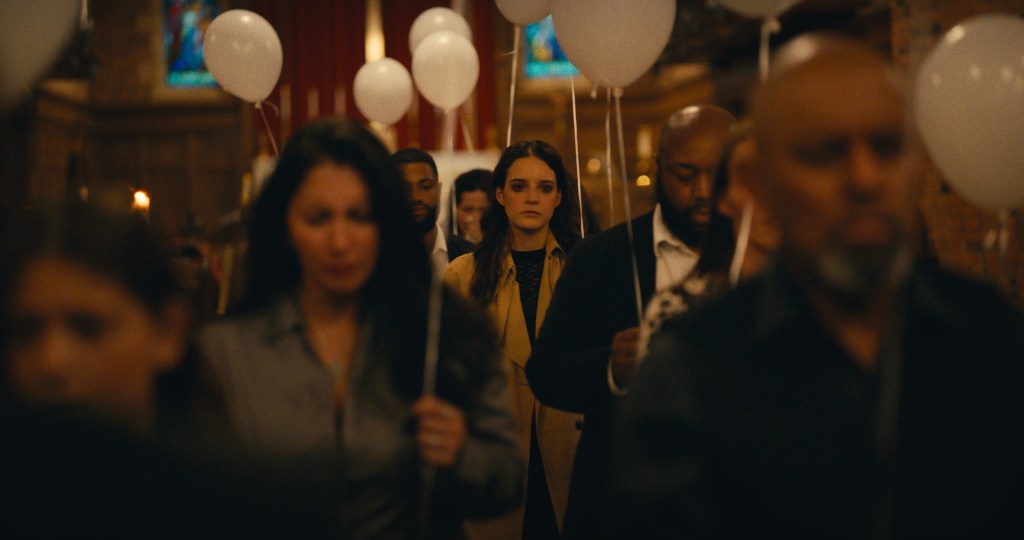
Last week, I had the pleasure of speaking with Merced Elizondo, an Oscar-qualifying filmmaker, about his latest short film, THE MOURNING OF (2025). The story centres on Maribel (played by Natalia Villegas), a young woman who navigates the loss of her mother by attending the funerals of strangers. The film offers a strikingly original portrayal of grief, with cinematography that evokes a rich, weighty atmosphere. It was a privilege to explore both the film and Merced’s wider body of work. He’s undoubtedly a director to keep an eye on as his career continues to grow.
The representation of grief in your film is something I found incredibly unique. Where did this idea come from?
“I have been making movies for about seven, eight years now and this idea was actually my first idea for a movie that I had back when I started back in December of 2016. I was driving my grandmother down from Mexico to Texas. She was telling me a story about women who are called mujeres planideras in Spanish. They are these women that would dress in all black back in the old days in Mexico and they would go to the funerals of strangers to cry. I thought that is fascinating and I’d never heard of this before. So I got back home to Texas and I just started Googling this and quickly I came across a a website called rentamourner.uk where for $62 an hour, you could rent a fake actor to sit down with the family and mourn at the funeral. I thought this is fascinating that people do this for money but I thought it would be much more interesting to see someone doing this, not for money, but because they felt they had to. Like they have to put themselves in this constant perpetual state of grief as a way to remember their loved one. And in this case, for The Mourning Of it’s Maribel losing her mum.”
You said that this film was one that came to you quite early on in your career. Why did it take so long to make it?
“I knew that this movie would be personal for a number of reasons. Death is my biggest fear, but it isn’t so much death in terms of the physical pain, but more of the existential crisis that comes after death. Where you only exist as a memory in the minds of your loved ones. And the idea that you wake up one day and you’re no longer here and people start to forget what your voice sounds like. That is wild to me. In a couple of years, you’ll just be nothing but a memory outside of what you leave behind. I took a while to make this film because I had this idea when I was 21 or 22 and I knew that where I didn’t go to film school and taught myself everything I know that this idea was too personal and too sacred to me to fuck up as a baby filmmaker. I never made anything before and I wanted to learn what it means to actually be a filmmaker before I jump into this story. It might not feel it to a degree, but the film is massive in scale. I had to direct over 175 extras. There’s caskets, floor arrangements, obituaries, funeral programs, balloons. I would say it’s one of the biggest if not the biggest short film that’s shot in Texas in the last 20 years. I knew I had to wait because I couldn’t have pulled that off as a first-time filmmaker. I made two films, one in 2017, one in 2018 that did not do much for me in the way of my career and they taught me how to be a filmmaker. Then I made a film called Manos De Oro. That movie changed my life. You know, like that movie just, it opened up the world to me. And I knew after that, the Mourning Of would be right after because I felt ready. The Mourning Of was six times the budget of Manos De Oro. It was a huge step up for me, but it felt right to do it then.“
Short films, for example Whiplash and Shiva Baby, then progressed into being made as future feature films. Is it The Mourning Of that you’d like to make into a feature?
“Absolutely, that was always the plan. I made it as a proof of concept for a feature. I was always going to make four shorts, The Mourning Of being the fourth one, and then jumping into a feature version at some point. I love this idea of a stranger invading the lives of others. There’s just so much drama and comedy that can be like divulged there. I want to push the feature further to the level of drama and thriller. I don’t know if you’ve seen the show Breaking Bad. – Yes. – Right, so the way I describe the feature film to people, it’s like the arc of Walter White, where at first it sort of starts as like an innocent thing where she stumbles into a funeral. In the short film that you saw, we’re catching her midway through her journey of attending these funerals. The feature film is going to begin on the day of her mom’s funeral. And she stumbles into another funeral that morning or that afternoon. And people think that she’s someone that’s supposed to be there and she pretends to play along. She then kind of gets a little taste of the drug. The same thing with Walter White, where, it starts as a innocent thing to make a little money for his cancer treatment but very quickly he becomes obsessed with it to the point where he’s so neck deep in it that like even if he wanted to get out of it he couldn’t and that’s the same case for Maribel. I was working on the feature last year, but I realized it would cost me a lot. There is just no way I’m going to get this done as a first time feature filmmaker. So I put it to the side and I’m writing something much smaller right now. I would love to make The Mourning Of film as my second or third feature.”
Where did you discover your actors and what was the process like working with them on this film, especially with it being quite a depressing subject matter?
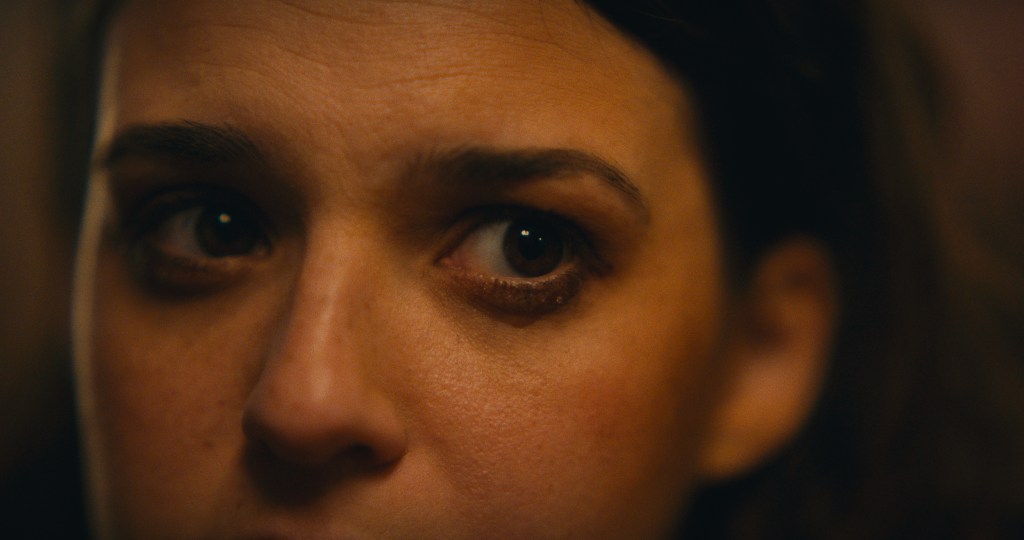
“I find that like the saddest movies often are the funnest ones. You try to keep it lighthearted on set. So it wasn’t too heavy to shoot. I think there are certain moments, obviously, that like you’re sort of dreading on the call sheet or dreading on the schedule, like the ending scene. Julio Cesar Cedillo was the lead in Manos de Oro and he plays Father Tomás, the priest in The Mourning Of. He and I struck up a friendship and I wrote the part of Father Thomas with him in mind. He’s a brilliant actor and has starred in some of the biggest projects of the last couple years, like Narcos Mexico and Sicario. But he lives in Fort Worth, right next to Dallas, where I live. And I knew I needed an actor that could speak English and Spanish perfectly, and that was Julio Cesar Cedillo. But with Natalia, who plays Maribel in The Mourning Of, that was tough. We found her like, two and a half maybe three weeks before production and that’s very much out of my comfort zone. I found her on Instagram when her agency’s page posted a commercial of her headshot. I sent her a message asking if she would be interested in auditioning and she said yes and sent me her audition. I think she was rushed because she just wanted to get it to me right away to try to get out the competition because I was auditioning other people. She would tell you this too but her first auditions were awful. You just couldn’t see the love for the character. Her mind was just somewhere else, is really what I’m trying to say. But I said, but there’s something here with this girl. She has an interesting look. I know she’s good. I’ve seen some of her work. So I called her and asked her to try again. She knew she fucked up and wanted to try again and we did a zoom reading and she just became Maribel in front of my eyes.”
Did you take any inspiration from other films? So the theme of this film, the overall look of this film?
“Yeah, for sure. I’m a cinephile. Jackie was a big one for me, the Pablo Larraín movie with Natalie Portman. That very gritty color texture to the image. But also just thematically, watching a woman grieving on screen and not being able to let go and not moving on from Jack Kennedy. I would also say Krzysztof Kieslowski’s Three Colors Blue, again, watching a woman just throw frozen in grief. I would also say the 1967 movie Le Samourai directed by Jean-Pierre Melville it’s a French New Wave movie where this hittman just lives an isolated life in a flat in Paris with a canary. His whole identity is around this and I thought my character doesn’t really have a life outside of these funerals so she’s very stoic he’s very stoic so I drew a lot of parallels to that. In Le Samourai the guy’s in a trench coat I don’t think I’ve ever said this to anybody, but that’s why Maribel is wearing a trench coat in the film. I would say Manchester by the Sea is another great film. Again, just movies about grief. There’s a movie that came out called Corpus Christi. It’s about this young criminal who pretends to be a priest and he lies to this village. So he’s in this village lying to people about who he is. And that’s Maribel. Maribel’s lying to people about who she is. So again, I’m just looking at movies that like are not doing the exact thing that I’m doing, but we’re getting close and I’m borrowing from a lot of them to try to tell something that feels original.”
I found the lighting in the film to be quite striking. It felt very heavy but also provided this aura of comfort. What were you trying to portray with the usage of lighting?
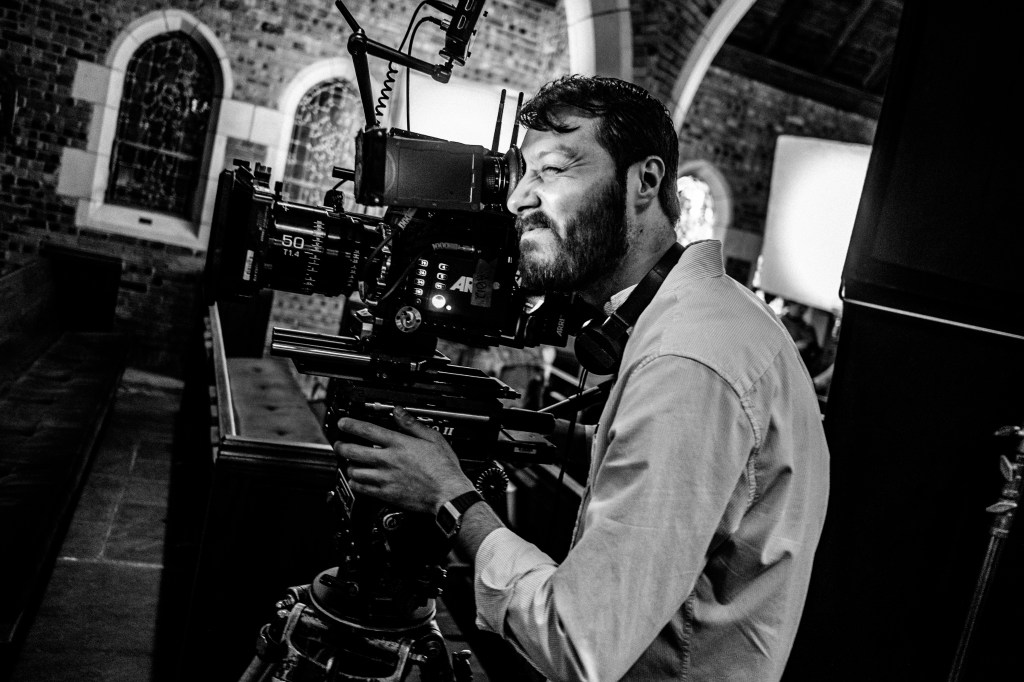
“I have to give my cinematographer, Matheus Bastos, all the credit. I think he did an excellent job lighting and shooting the heck out of this movie. We talked a lot about the mood of this film. I think you got the sense that it is heavy and we’re really trying to say something. We wanted a very texture-dense image. But what Matt and I talked about a lot, Matty, my DP… was perspective, like who was seeing who in this story because Maribel is constantly around hundreds of people and she’s surrounding herself with strangers but at the same time she’s the loneliest person in that room. So we were very intentional about how we lens this. So we shot on the same lenses that Oppenheimer were shot on, Panavision Panaspeed lenses. And we shot wide open to make her feel very isolated in the image. There’s a lot of close up shots of her face and just her around a bunch of people and trying to be a part of it. We could have played that in a wide shot to see her try to blend in. But no, we were like showing that like we are in your face and yet you are still alone. That was very important to us. Like who is seeing who? Also Maribel, how is she perceiving herself in this space? She knows that she’s not supposed to be there. So is she aware of that? Is she aware of the lie? How well is she selling it? Is she anxious? Those were a lot of conversations that we were having, and it bled into the way we lit it and the way we shot it. It was very intentional, all the way down to the color grade. This could have been a very clean, pristine image, but we made it dirtier in the color grade. Colourist, Sam Daley, added two layers of film emulsion, to make it look like a very textured image. This is the colorist who colored seasons one through four of Succession, The Florida Project, Black Swan. A lot of people think we shot on film, but we didn’t. It was a digital shot on digital. But it just goes to show you the power of what you’re capable of in post.”
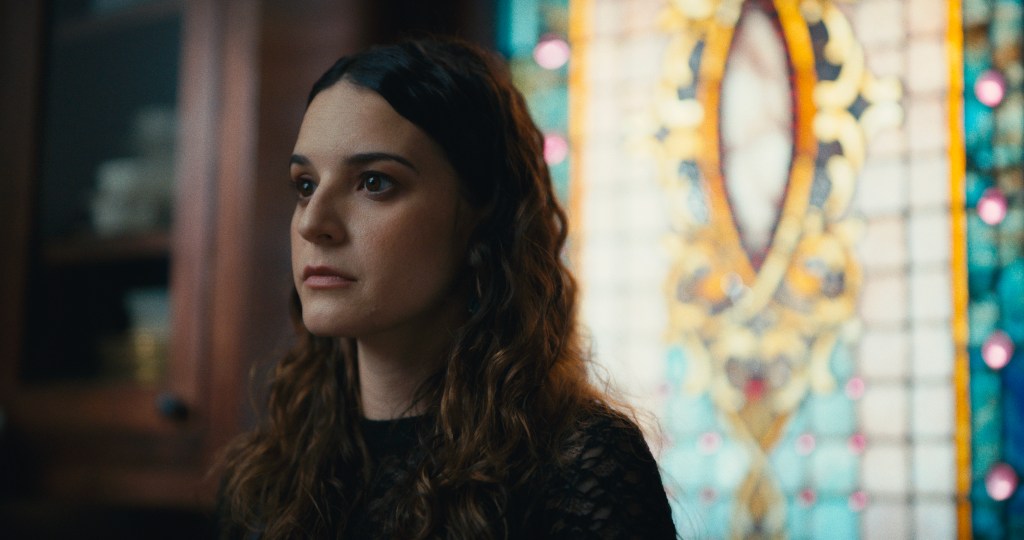
Loss is a theme that comes up quite frequently in your work. I’ve not seen Right Where You Left Me, but my understanding is it’s a loss of a relationship. And then Manos de Oro lost his identity through the arthritis in his hands. And then The Mourning Of with the loss of her mother. What draws you to this theme of loss in your work?
“That’s a great question. No One’s ever asked me that. I would say it’s twofold. I think it’s, and I recently maybe stumbled on its realization, but loss is something I never really considered, but I was more maybe in my cinema searching for truth, because I think all these characters, yeah, they have experienced loss and I haven’t really put that together just until now, but they’re also at the same time, experiencing either a journey with the truth, running away from the truth in the case of Manos de Oro, he’s not owning up to the fact and to the truth that he’s not the man he once was anymore and he’s just rebelling against that constantly. In The Mourning Of Maribel won’t just accept the fact that her mom is gone she’s staying frozen in this state of mind that is just so heavy but it’s denying the truth. Right where you left me, my first film, it’s this character who’s just so lost about the truth that his lover left him for no good reason so I think to put it all together I would say it’s truth and loss but I think you find out a lot about someone when you take away what they love the most. That sort of really reveals a lot about a character and something that I’m maybe realizing now that I do, but I think that’s to me what’s most interesting to put on screen. A character wants something, a character had something, they got rid of it, they lost it. What happens after? That circumstance to me is fascinating for cinema and it proves to be time and time again, but I think it’s funny that a lot of my stories that I have coming up that I’m working on, it is about loss, about things being lost. So you put something together in me that I haven’t really realized before. So that’s a nice observation. It is. It’s good to know that. I don’t sit down and go, okay, I’m going to make another thing about loss. It just happens. That’s what’s interesting to me. So that’s a great thought to consider.”
I read that you went to university but you didn’t go to film school? What did you study?
“I studied advertising at Texas University. My parents are from Mexico, and I’m Latino. So, here in Texas, especially in Dallas there’s really no one that like does film. There’s no one that’s an artist in my family. So I just thought, why would I dare to be an artist? That’s stupid. At the time, I didn’t really recognize that there were, and there still aren’t many, unfortunately, Latino heroes to look up to. People that look like me and spoke like me were Mexican -American that were making cinema and working as filmmakers. So that just did not even seem like a real possibility. So I didn’t go to film school. I thought, you know what, I’ll just do advertising. But it wasn’t until I did an internship at NBC Universal the summer of 2015. I got to move to New York for three months and work at 30 Rock, like the legendary building where SNL is and everything. That was life-changing because, being in New York City is so inspiring. All these people who are passionate from all over the world who are chasing their dreams, chasing their passions. Very quickly, I realized I ought to be doing the same. I loved movies growing up and always wanted to make them. I was my senior year of university right before I graduated. So that was that summer after or that semester after I went back and I signed up for one film class and joined a film club. I also knocked on doors to several production companies in Austin, California asking to be an intern. I’d never been on set and didn’t know anything about cameras, lighting, lenses. I knew fucking nothing. And I didn’t have an opportunity to do it. I did a couple more internships. I moved back to Dallas from Austin after graduating university. And then I joined several production companies to work as a full-time job and I still have a full-time job. I produce like commercials and digital content as a production coordinator, corporate videos. Like that’s my day job. And then by night I go work on my scripts and on the weekends I work on my stuff and that’s really the only time I have. That’s how I did it. Just YouTube university, just watching YouTube videos of how to make movies. It’s Scorsese on set directing The Departed. And a lot of those behind the scenes footage things, or you’re just watching it. Like, here’s how they talk to their actors. Here’s what they do with their hands. You just suck all that up and read a lot of books too, about screenwriting and directing and just joined, I mean, got on other sets really. That’s the best film school. Just learning on the job, like trial by fire.
You said that you moved back to Texas from New York, what’s kind of kept you in Texas?
“I think there’s something inherently very punk rock about not doing LA or New York. Because you look at the cats, like Richard Linklater and David Lowry, they’re there in Texas, you know, Noah Hawley, who directed Legion and he did Alien Earth too- he just moved his production company to Austin. So like something’s happening in Austin. Paul Thomas Anderson’s new film, One Battle After Another in the new Paul Thomas Anderson movie a lot of that shot in El Paso, Texas. I have a lot of friends that worked on that film. There’s a lot of interesting things happening in Texas. And there weren’t as much interesting things happening at the time when I started. The Texas film scene is built on the backs of commercials and corporate videos. That’s how a lot of the filmmakers here make their money. Every now and again, you’ll get a narrative TV show or network TV show come to town. And it’ll keep people working for a couple weeks, couple months. But narrative films, few and far between but,I’ve seen a lot of more of that coming in in the last couple years. I’ve stayed because, it was just easy for me to save money, living with my family, to put that into my movies. It was really a logistical decision. Believe me, like I flirted with the idea of moving to LA many times. And I’m there all the time for films and programs and fellowships but I’ve chosen not to because I think there’s something special happening here. Maybe in a year or two from now, that’ll be different. Maybe I’m here until I don’t have to anymore. But right now there’s no need. You know, I think that with COVID, one of the few good things that came out of it is that it homogenized the playing field for a lot of us to where I can still compete with a lot of the LA and New York filmmakers. I’m in Texas, all the meetings I take with managers and studios and producers, I take them through zoom. It’s become much easier and much more common to do it that way. It used to be such that a lot of fellowships and grants and stuff, they had to be LA or New York. We said, I mean, it would literally say it in the application, but we got a grant from Warner Brothers to make The Mourning Of and I’m in Texas not in LA , I’m not in New York. That’s a lot more common now. And it’s cool that I can be close to my friends and my family and be a part of this community that has raised me. Texas is home, and I don’t see why I would leave.”
What is coming next for you? I did a bit of a deep dive on you in preparation for this, obviously. And I saw there was two films listed on your website as in development. It was The Thing About Elephants and Burn Everything.
“Burn Everything is an Idea. So I’ll talk about the ones that are actually more fleshed out, which is The Thing About Elephants. That’s my feature. I hope to do my debut feature that I’m writing right now. It’s the project that I started writing after I realized The Mourning Of would cost me way too much money as a first-time feature filmmaker. So my one-two punch, I hope, is The Thing About Elephants and then The Mourning Of. The Thing About Elephants is a story about a couple named Oscar and Nancy who have been together since they were children. They’re childhood sweethearts. They met when they were six years old and all they’ve ever known is each other. They’ve only ever dated each other, shared a bed with one another, slept with each other. That’s it. They’re each other’s world. They’ve never seen or dated anybody else outside of that. The film starts with them in their mid-30s, with two kids and a house and they’re at this point where they’re like is this it. The central question of the film is how do you know the one is really the one especially when you met them so early. How do you know that at such an early age that you want to be with this person forever? I think if you’re in a relationship with someone and if you’re in service to someone else for so long, you yourself start to disintegrate as a person. It’s like the question is, how do I still be, how do I still remain me within we, because at some point, you’re not just Oscar or Nancy. You’re Oscar and Nancy. Your whole identity is wrapped up into that marriage, into being a partner, into being a dad, a mother, a father, a husband, a wife. This is where this couple finds themselves and as a result, they attend this week long experimental marriage retreat in West Texas to basically take out the soil of their marriage and plant new soil to see if something grows. But the reason it’s called the thing about elephants is because the elephant in the room is they’re way past the point of return. That’s the story that I’m writing right now and hope I get to make it in the next two, three years. I am also on the Oscar campaign for The Mourning Of, of course.”
Megan Hilborne (Instagram: meghillbilly) is a freelance writer and film critic based in Portsmouth. She graduated with a degree in Film in 2020 and has continued her study of the medium in her day-to-day life. She takes particular interest in indie, horror, feminist and queer cinema.


Leave a comment