
by Megan Hilborne
“Exposure. That’s the only thing that works. Everything else is just talk. You have to have to courage to stay in the situation that frightens. And then you’ll learn that fear isn’t dangerous.”
(von Trier, Antichrist, 2009)
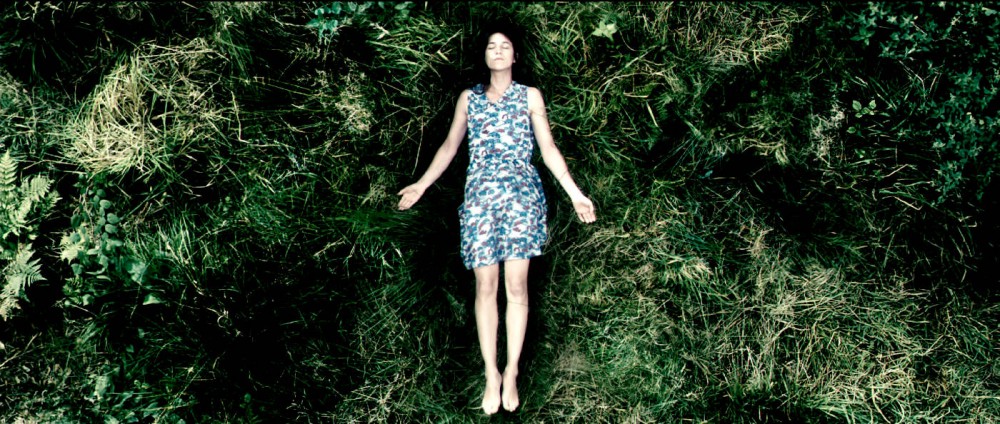
European extreme cinema has been described as the “cinéma du corps” (Palmer, 2011, p. 57) translating to “cinema of the body.” This is due to it’s graphic and extreme imagery surrounding the human body. This movement began in France but has now spanned across Europe with directors such as Claire Denis, Michael Haneke and Gaspar Noé using this style. This movement can be divided into three categories. The first being taste slippage; when low brow cinema, such as porn, is mediated to make it high art. The second is genre hybridity, where different genres are brought together. The third is industrial fluidity which makes these films hard to categorise (S. Hobbs). This movement “focuses…on cinema as a key sensor of modernity’s vicissitudes” (Beugnet & Ezra, 2010, p.13). These films use extreme visuals such the nine minute rape scene in Irréversible (Noé, 2002) but the use of aesthetics make the audience question whether this is art or exploitation.
This question can be applied to Antichrist (von Trier, 2009) which was “celebrated (and vilified) as an ungodly hybridization of European art cinema with American and Asian ‘torture-porn’” (Badley, 2013, p.16). The film follows a psychiatrist, Willem Dafoe, who treats his own wife, Charlotte Gainsbourg, in a woodland cabin after her mental state deteriorates due to the death of her son.

“We live in a sensation-seeking society” or in a “trauma-culture” (Gammelgaard, 2013, p.1217) and Antichrist (von Trier, 2009) demonstrates this perfectly in it’s visuals. The film is extremely sadomasochistic with the female character “her” castrating herself and crushing her husband’s genitalia. Although this could be seen as exploitation, Walter Benjamin states that “the shock effect implies a blocking of thinking and reflection: the images supersede the activity of thinking, leaving the spectators unable to deploy their habitual powers of thought” (Gammelgaard, 2013, p.1217) suggesting that although this film revolves around trauma, anxiety, “pain and panic [the] audio-visual aesthetic…control(s) it” (Grodal, 2012, p.52). An example of this in the film is when “him” comes across a fox consuming itself. Although this image is shocking, it is in slowmotion and the naturalistic and aesthetic surroundings contain the shock and take the horror iconography such as blood and organs into high art. This also shows genre hybridity (S. Hobbs) as it shows horror aspects along with the drama of the film which is further supported by the iconography of their cabin in the woods and the witch imagery.

”This aesthetics of ostranenie, of defamiliarization, is a great device to create salience by novelty”
(Grodal, 2012, p.51)
Some may argue that this film exploits women as even the title uses the female symbol instead of the ‘T’ “Antichris♀”. This is extremely misogynistic as the title relates to Nietzsche’s book of the same name which refers to the Antichrist as a female who rids a man of his gender which can be shown when she emasculates “him” (Bodil, 2009, p.1). Taste slippage (S. Hobbs) can also be seen throughout the film due to the pornography aspect. In the film’s equilibrium we are shown an unsimulated sex scene. Although this is low brow cinema (pornography) the fact it is in monochrome, is in slow-motion and uses Laschia Ch’io Pianga as it’s soundtrack, makes the whole sequence high art. This presents how the aesthetic choices made within the editing process can determine whether something is art or low-brow cinema.

”Antichrist is poised on a similar threshold between exploitation and psychological/philosophical art”
(Badley, 2013, p. 19)
In conclusion, I believe that although the imagery in Antichrist (von Trier, 2009) is shocking, it leans more to art over exploitation because the images have a purpose as Von Trier “sought out to sustain his own jouissance and to evoke the effect he desires on the audience” (Gammelgaard, 2013, p.1221). Also the references to Tarkovsky’s films such as The Mirror (Tarkovsky, 1975) and The Sacrifice (Tarkovsky, 1986) give the film an art house- film aesthetic, further supported by the dedication to him at the end of Antichrist (von Trier, 2009). Also the film uses a lot of religious references and symbolism which is usually found in art cinema. An example of this is the fact their staying in a place called ‘Eden.’ William Brown states that “we watch films to learn not just voyeuristically about others, but also about what ourselves could become” (Brown, 2013, p.1) and that “one of the traits of extreme cinema, is to blur the boundaries between art, entertainment, documentary and pornography” (Brown, 2013, p.27) presenting that although it could be seen as exploitation, the aesthetics give it an art house quality.

Bibliography
Badley, L. (March 2013). Antichrist, Misogyny and Witchburning: the Nordic Cultural Contexts. Journal of Scandinavian Cinema, 3(1), 15-33.
Beugnet, M. & Ezra, E. (2010). Traces of the Modern : an Alternative History of French Cinema. Studies in French Cinema, 10(1) 11-38.
Bodil, T. (2009). Antichrist- Chaos Reigns: the Event of Violence and the Haptic Image in Lars von Treir’s Film. Journal of Aesthetics and Culture, 1, 1-10.
Brown, W. (Summer 2013). Violence in Extreme Cinema and the Ethics of Spectatorship. The Journal for Movies and Mind, 7(1) 25-42.
Gammelgaard, J. (December 2013). Like a Pebble in Your Shoe: A Psychoanalytical Reading of Lars von Trier’s Breaking the Waves and Antichrist. International Journal of Psychoanalysis, 94(6) 1215-1230.
Grodal, T. (March 2012). Frozen in Style and Strong Emotions of Panic and Separation: Trier’s prologues to Antichrist and Melancholia. Journal of Scandinavian Cinema, 2(1), 47-57.
Noé, G. (Director). (2002). Irréversible [Motion Picture]. France: Les Cinémas de la Zone & Studio Canal.
Palmer, T. (2011) Brutal Intimacy: Analysing Contemporary French Cinema. Middle town: Wesleyan University Press.
Tarkovsky, A. (Director). (1975). The Mirror [Motion Picture]. Russia: Mosfilm.
Tarkovsky, A. (Director). (1986). The Sacrifice [Motion Picture]. Sweden: Sandrew
Von Trier, L. (Director). (2009). Antichrist [Motion Picture]. Denmark: Zentropa.
Megan Hilborne (Instagram: meghillbilly) is a freelance writer and film critic based in Portsmouth. She graduated with a degree in Film in 2020 and has continued her study of the medium in her day-to-day life. She takes particular interest in indie, horror, feminist and queer cinema.


Leave a comment