by Megan Hilborne
“You must close your eyes otherwise you won’t see anything.”
The term ‘surrealist’ first appeared in 1917 with the burlesque play, Les Mamelles de Tirésias, and was described as a “surrealist drama” (Waldberg, 1965, p.11). Surrealism was born in Paris with young poets, André Breton being the most known, directing the review Littérature between 1919 and 1924. In this, they summarised the work of avant-garde artists such as Picasso. In these reviews, it came to light that these poets believed in nonconformity, distrusted rationalism and formal conventions which prompted these poets to explore the “realm of the unconscious and the dream”. They were seeking to find the “language of the soul” (Waldberg, 1965, p.13).
From this, automatic writing began. This led to the first surrealist work that was authenticated called The Magnetic Fields (1922) by André Breton and Philippe Soupault. Automatic writing meant that the text was written when the poets were unconscious and in the “dream period” (Waldberg, 1965, p.14). In 1924 Breton’s Manifeste du Surréalisme was published. He defined surrealism as a “pure psychic automatism by which it is intended to express, either verbally or in writing, the true function of thought. Thought dictated in the absence of all control” (Waldberg, 1965, p.11).
“Surrealism as a complete state of distraction”
Briony Fer is a British art historian and is known for her work on surrealism. In Fer’s chapter in Realism, Rationalism, Surrealism (1993) she gives a vast overview of her conception of surrealist art practices. She states that the desired effect of surrealism was to reveal the unconscious and to “undo prevalent conceptions of order and reality” (Fer, 1993, p.172). She quotes Breton’s work heavily including his idea of fragments of something becoming a whole image and how “surrealism as a complete state of distraction”, linking again to a dream-like state. Fer separates her chapter into many sections, one of which focuses on the conflict of images meaning two or more images that “contradict” each other. An example she uses is Meret Oppenheim’s Déjjeuner en fourrure (translating to fur breakfast) in 1936 where she covered everyday items such as a cup and saucer in the fur of a gazelle making the ensemble deliberately absurd, linking to the subconscious. She also discusses the idea of found objects which are then “assembled” to be “deliberately absurd” (Fer, 1993, p.174).
She also discusses that surrealist artists’ refusal to be dictated by the given meaning and not to be swayed by “social forces”, wanting to have full control over their mind to access its full potential (Fer, 1993, p.180). She heavily discusses the representation of the conscious while being unconscious linking to the binary opposition of dreams vs reality and how you can document your dreams linking to automatic writing which I discussed above.
She writes about Freud and the unconscious and the Uncanny/Unheimlich. “The surrealist image arrests the viewer with a pervasive sense of the uncanny” (Rabinovitch, 2004, p. 3). The unheimlich was framed “as a psychological state, one stemming from the unconscious mind and largely beyond our own control – the unknown, unremembered self is beyond our waking mind – where our feeling of personal security is gone, and even the known becomes unfamiliar.” (Bacon, 2018, p. 2). The Unheimlich is what “arouses dread and horror” and the Heimlich means “domesticity and security”. (Smith, 2007, p.13). Finally, one of the main points she discusses is that women are used frequently in surrealist texts as women were seen to be close to “that place of madness” in comparison to men (Fer, 1993, p.176).

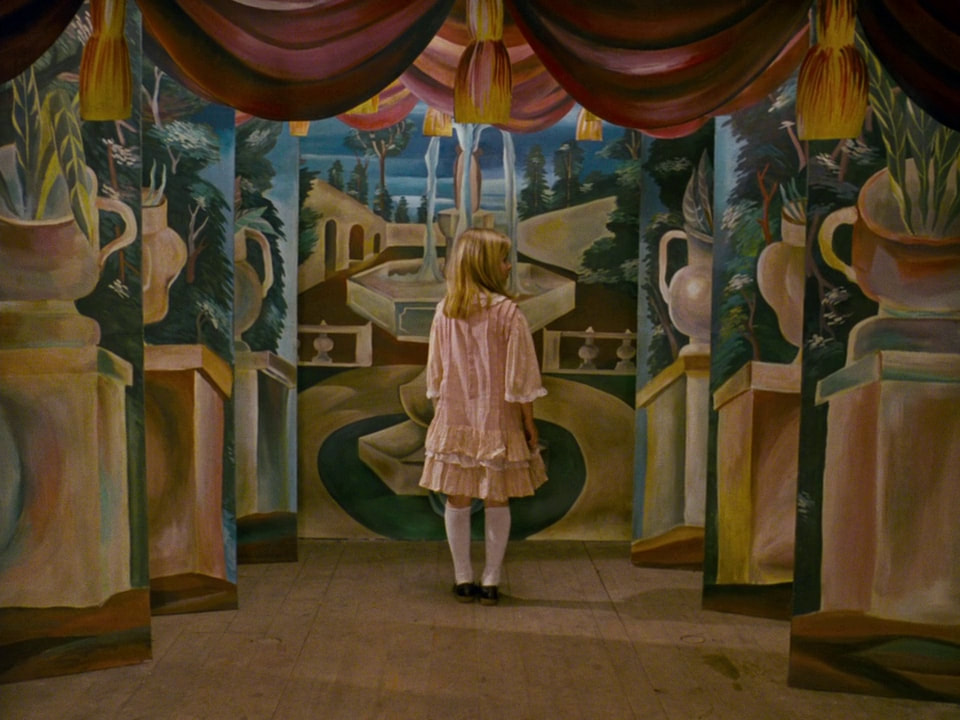
Fer states that the surrealism began with “writers, painters, poets and photographers” and then towards the end of the 1920s it progressed to film. The aim of this essay is to use Fer’s conception of Surrealist art practices within Jan Švankmajer’s adaptation of Alice’s Adventures in Wonderland (Carroll, 1865) Alice (Švankmajer, 1988). This is a surrealist telling in comparison to the other adaptations of Carroll’s iconic book. “Švankmajer is a long-standing member of the Czech Surrealists and explicitly takes inspiration from Dali and Luis Bunuel; […] unsurprisingly, his Alice, recalls the psychoanalytic readings of Carroll’s books.” (Brooker, 2004, p.216). Švankmajer is known for his use of found objects which Roger Cardinal comments that this links to “to the fantastical procedures of dream-work, codified by Freud” (Brooker, 2004, p. 216).
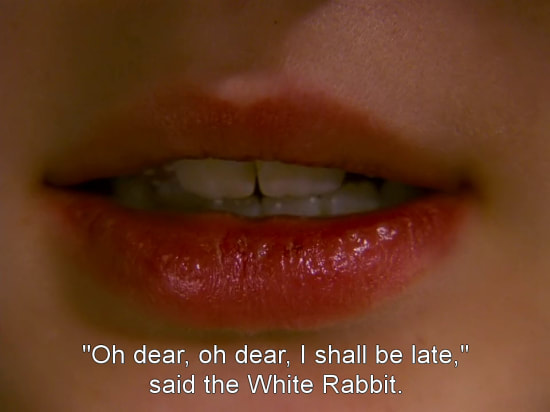
The film’s equilibrium begins with Alice throwing stones into a river presented with a two-shot of her and her teacher. The audience has a full view of Alice, but the teacher’s head isn’t in the frame. This film has no adult characters, and this immediately opens the film to be from the mind of a child. In Breton’s work, one of the founders of surrealism, he implies that “unconscious and the dream and […] the search for a state of grace which belongs to childhood (Waldberg, 1965, p.17). The fact surrealists, themselves, wanted to achieve a state of that of a child and here we have a child protagonist fits this surrealist trope perfectly because as the audience we are seeing the film and the surrealist wonderland through the eyes of a child. The intercuts of Alice’s narration which is constant throughout the film then commences. These are all extreme close-ups of Alice’s mouth narrating the film. It starts by saying “Alice thought to herself, now you will see a film, made for children…perhaps.” This is questioning whether it is a film for children or not. Although Wonderland itself has stereotypical connotations of being filled with wonderment, as its name suggests, Svankmajer’s telling is much unlike the other adaptations. His version shows Wonderland as a “dreamscape always teetering on the brink of nightmare” which goes against what is made for children (Bye, 2018, p. 34). She then ends this section of narration by saying “you must close your eyes otherwise you won’t see anything” being a direct link to surrealism. When you close your eyes it usually is to sleep and by saying you need to close your eyes to see, this is exactly what surrealism was about as they wanted to document the unconscious. We also know that the whole time Alice is in Wonderland, this is her unconscious as she wakes up at the end of the film showing that this was all a dream. As Fer mentions in her Freud and the unconscious section of her chapter- “the dream as a whole is a distorted substitute for something else, something unconscious and… the task of interpreting a dream is to discover this unconscious material.” (Fer, 1993, p.180). As Alice is dreaming, she is discovering unconscious material which is what surrealists attempted to do through automatic writing where they document what occurs while they are subconscious.
In the subsequent scene the camera is in Alice’s bedroom. “The camera moves unhurriedly around the girl’s bedroom, sliding across apple cores, a mousetrap, jars of pickled fruit, dead flies, and faded drawings; among the props it picks out are skulls, beetles, and dolls that will later appear in her dreamworld.” (Brooker, 2004, p.215). It also shows a close up of Punch and Judy puppets which is a homage to one of Švankmajer’s earlier short films, Punch and Judy (Švankmajer, 1966). All of these objects are part of what Fer discusses about Surrealist art practices as she discusses how “everyday items” such as a teacup can be “assembled” to be “absurd.” Fer also discusses how altered objects become an “incongruous motif […] by surrealists to defy the logic of the rational mind and to express […] the subconscious” (Fer,1993, p.174). The skulls in Alice’s room becomes part of the white rabbit’s team, the sewing kit features heavily in the blue caterpillar scene and the china doll becomes Alice’s body double when she shrinks down to the rabbit’s height. Švankmajer likes to use a collection of different objects to create something strange (uncanny). “Since the early 1960s, Švankmajer has created a panoply of imaginary beings in collages and assemblages, splicing elements from natural history illustrations together into new species and piecing together animal bones and taxidermy to form a wildly unusual bestiary.” (Noheden, 2017, p. 68).
When Alice is taken prisoner by the white rabbit, we see multiple uses of objects. For example, when Alice is about to eat a bread roll, it suddenly sprouts nails, showing that something that should be recognisable and safe (heimlich) becomes unsafe (unheimlich). Also the eggs in a carton hatch and instead of a live bird, they hatch skulls. What should come out of the egg is something that is alive, not that of the dead. This is a direct metaphor of what Švankmajer does all throughout his oeuvre, which is bringing life to the lifeless, or “animating the inanimate” (Bye, 2018, p.36).
When discussing the use of objects in surrealist practices, Fer discusses how objects become a “modern fetish” (Fer, 1993, p. 174). “A fetish is an object for which we experience attraction and repulsion that marks it out as different, special or extraordinary” (Rabinovitch, 2004, p.167-168). In archaic religion fetishism is a magico-religious power that exposes objects associations and history (Rabinovitch, 2004, p.169). The objects also are either positive or negative. Represented as a “cherished icon or a fearful taboo” (Rabinovitch, 2004, p.169), therefore making the object a vehicle of symbolic power (p.170). The word fetish can be traced back to the Portuguese word feiticio which means “something made”. For the surrealists the fetish represented the “construction of extraordinary objects from intimate, taboo, or sacrilegious sources, for it implicitly acknowledges the magical quality of such emotionally suggestive objects” (Rabinovitch, 2004, p.170). The idea of magic surrounding an object is very common in surrealist practice, turning that object into a totem. What surrealist artists also do “play with our perception of the object” (p. 168) This is something Svankmajer does customarily. He takes an object and changes its function to something completely different. An example, being the scene with the caterpillar where he uses a blue sock as the caterpillar’s form. This is an example of a fetish as it is marked out as different as a sock is used as a clothing item, not the form of a caterpillar. The caterpillar’s body then moves up and down to mimic breathing. Svankmajer’s “manipulations” use everyday objects such as “fruits, vegetables, flowers and fish” to build faces and other objects, in this example the sock, to create other things (Cardinal, 1995, p. 68) and uses his “curiosities”, which were objects valued for their singularity and eye-catching appearance” (p.69) to create an “optical confusion” for his audience (p.67).
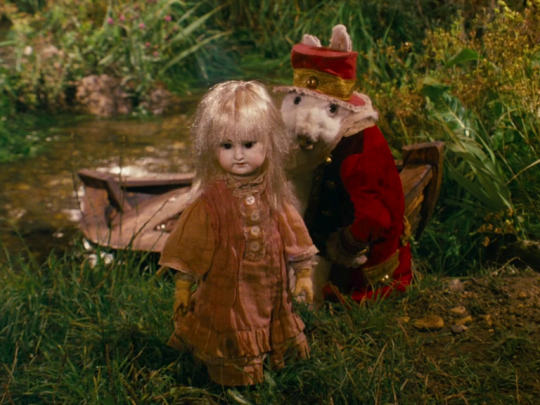
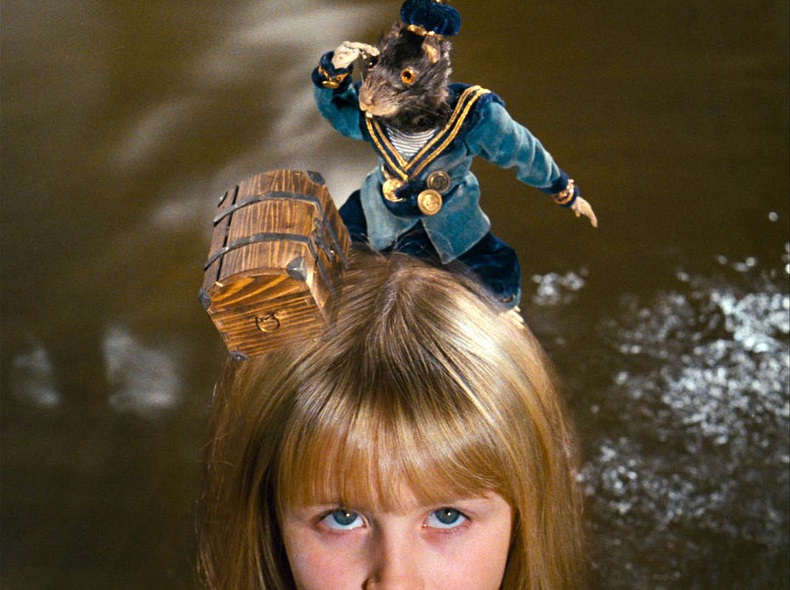
Švankmajer uses animation to bring life to the lifeless- make objects part of the uncanny. “Švankmajer has commented that Animation enables [him] to give magical powers to things […] (using) animation as a means of subversion.” (Bye, 2018, p.35). The inaugural use of this in the film is through the stuffed white rabbit beginning to move. The inanimate white rabbit is presented as coming animate by leaving his “glass coffin”. (Noheden, 2017, p.73). Although this animal was once alive, he is now stuffed with sawdust, ensuring the audience that this animal is dead but, Švankmajer resurrects him. The fact that the rabbit is dead but is still animate can link to Freud’s uncanny as shown in Fer’s chapter as a normal stuffed, inanimate rabbit would link to the Heimlich as we know it is dead and unmoving but, in this case, this rabbit is animate. It is the unheimlich because we are unaware how it is moving. This is one of many examples in the film of anthropomorphism as the animals have human characteristics. For example, the rabbit has human hands, wears gloves, a hat and a waistcoat. The rabbit also ironically uses his pocket watch which is a human characteristic. We see him eating sawdust from a bowl with a spoon and wiping his mouth. We know that the rabbit is stuffed with sawdust so is eating what he is made of. This is almost cannibalistic and nightmarish, linking to the surreal. This is used all throughout the film, another example being a rat that swims through Alice’s sea of tears and he climbs on Alice’s head and uses a spoon to cook himself dinner. This is done through the stop motion animation but the fact it is both live-action and stop motion makes it unhomely as we are seeing things that are unusual take place in our everyday. “This challengers the viewer to both recognise that this is ‘animation’ and therefore different from live-action film-making, and to invest in engaging with animated phenomena as constructs which may relate directly to the terms and conditions of human experience, but equally may offer more complex meditations on sociocultural and aesthetic epistemologies” (Wells, 2002, p.11).
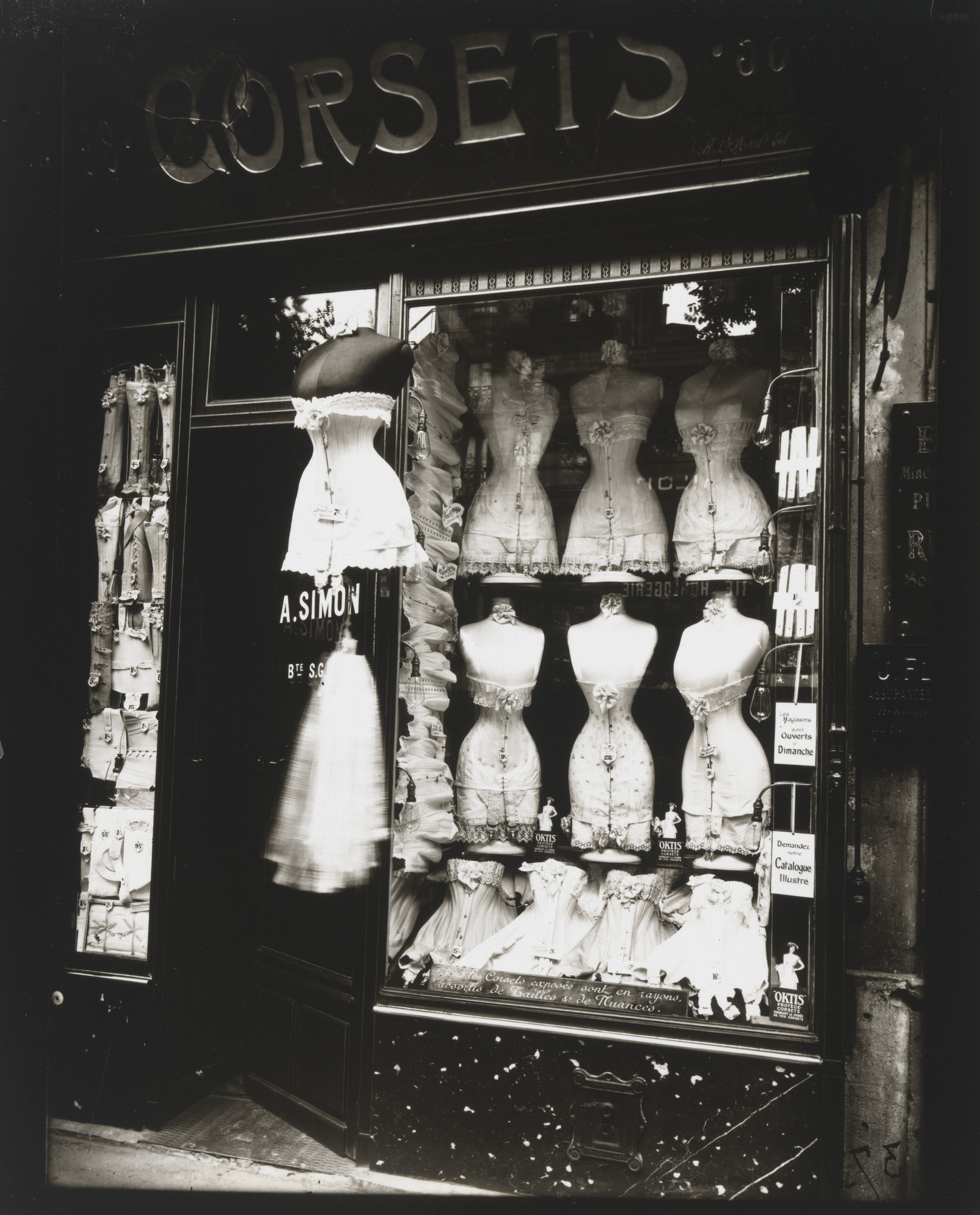
Probably the most surreal object used in the film is the china doll that Alice changes into when shrunk down to the rabbit’s height. Dolls are something that are inanimate and lifeless but through its human features we imbue life to it. It is all about uncertainty as to whether something is conscious or not. We see the doll at the beginning, next to Alice in her bedroom. At this point it is unconscious, having no life but, as soon as we descend into Wonderland the doll becomes conscious presenting the uncanny. In Fer’s chapter, she refers to dolls and mannequins (human-like objects) as being a “simulacrum” as they are an imitation of a human. She uses the example of Eugene Atget’s photograph – Boulevard de Strasbourg, Corsets, 1912 which is a monochrome photograph presenting corsets on mannequins in a shop window. The fact the mannequins are simulacra of the human body, it becomes uncanny due to the fact they are headless, armless and legless, affirming that they are unconscious. Using this example, it can then be presented in Wonderland as we are aware the china doll has no life, but Švankmajer brings it to life.
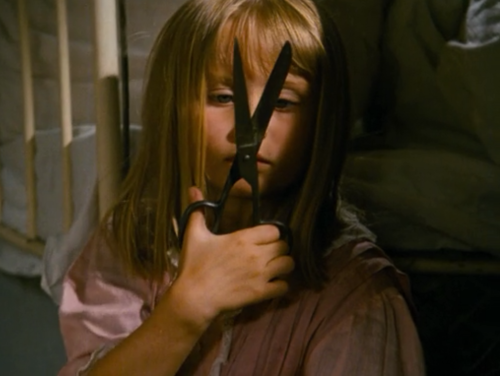
In conclusion, Fer’s definition of surrealist practices is presented all throughout Svankmajer’s Alice (1988) mainly using the uncanny, documenting the unconscious through automatic writing, fetishisation and the use of objects. The uncanny/unheimlich is exhibited using bringing life to the lifeless and changing our conception of what is real and what is not. The unconscious is documented as the whole duration Alice is in Wonderland occurs while she is asleep, which is like what Breton did through his automatic writing where he documented his dreams. Fetishisation is presented using totems and the taboo through the objects Svankmajer uses in his films. Finally, the use of objects is hugely important to this film as Svankmajer assembles everyday items and crockery to deliberately make it absurd for an audience. All these surrealist practices are contextualised and presented in Svankmajer’s film.
Megan Hilborne (Instagram: meghillbilly) is a freelance writer and film critic based in Portsmouth. She graduated with a degree in Film in 2020 and has continued her study of the medium in her day-to-day life. She takes particular interest in indie, horror, feminist and queer cinema.
Bibliography –
Bacon, S. (2018) The gothic : a reader. New York, New York : Peter Lang.
Brooker, W. (2004) ‘Chapter 6: Adapting Alice’, in Alice’s Adventures: Lewis Carroll in Popular Culture. Bloomsbury Publishing Plc, pp. 199–228.
Bye, S. (2018) ‘Imagination and Invention: ALICE IN WONDERLAND ON SCREEN’, Screen Education, (92), pp. 30–37.
Cardinal, R. (1995). Thinking Through Things: The Presence of Objects in the Early Films of Jan Svankmajer. In P. Hames (Ed.) The Cinema of Jan Svankmajer Dark Alchemy. London: Wallflower Press.
Carroll, L. (1865). Alice’s Adventures in Wonderland. London: The Penguin Group.
Dundes, A. (1997) ‘Binary Opposition in Myth: The Propp/Lévi-Strauss Debate in Retrospect’, Western Folklore, 56(1), p. 39-50.
Fer, B. (1993). Surrealism, Myth and Psychoanalysis. In B. Fer, D. Batchelor, & P. Wood (Eds.), Realism, Rationalism, Surrealism. Art Between Wars (pp.170-249) London: Yale University Press and The Open University.
Noheden, K. (2017) ‘Jan Švankmajer, Surrealism and Dark Ecology’, Antennae: The Journal of Nature in Visual Culture, (42), p. 68-79.
Rabinovitch, C. (2004). Surrealism and the Sacred. Power, Occult in Modern Art. Oxford: Westview Press.
Smith, A. (2007) Gothic Literature. Edinburgh: Edinburgh University Press.
Švankmajer, J. (Director). (1966). Punch and Judy [Short Film]. Czech Republic: Krátký Film Praha
Švankmajer, J. (Director). (1988). Alice [Motion Picture]. Czech Republic: Condor Films.
Waldberg, P. (1965). Surrealism. London: Thames and Hudson Ltd.
Wells, P. (2002). Animation Genre and Authorship. London: Wallflower Press.
Whitworth, E. (2008) ‘Patterns of Consumption in Svankmajer’s Alice’, Animatrix: A Journal of the UCLA Animation Workshop, (16), pp. 12–18.
Megan Hilborne (Instagram: meghillbilly) is a freelance writer and film critic based in Portsmouth. She graduated with a degree in Film in 2020 and has continued her study of the medium in her day-to-day life. She takes particular interest in indie, horror, feminist and queer cinema.


Leave a comment