
Interview by Megan Hilborne
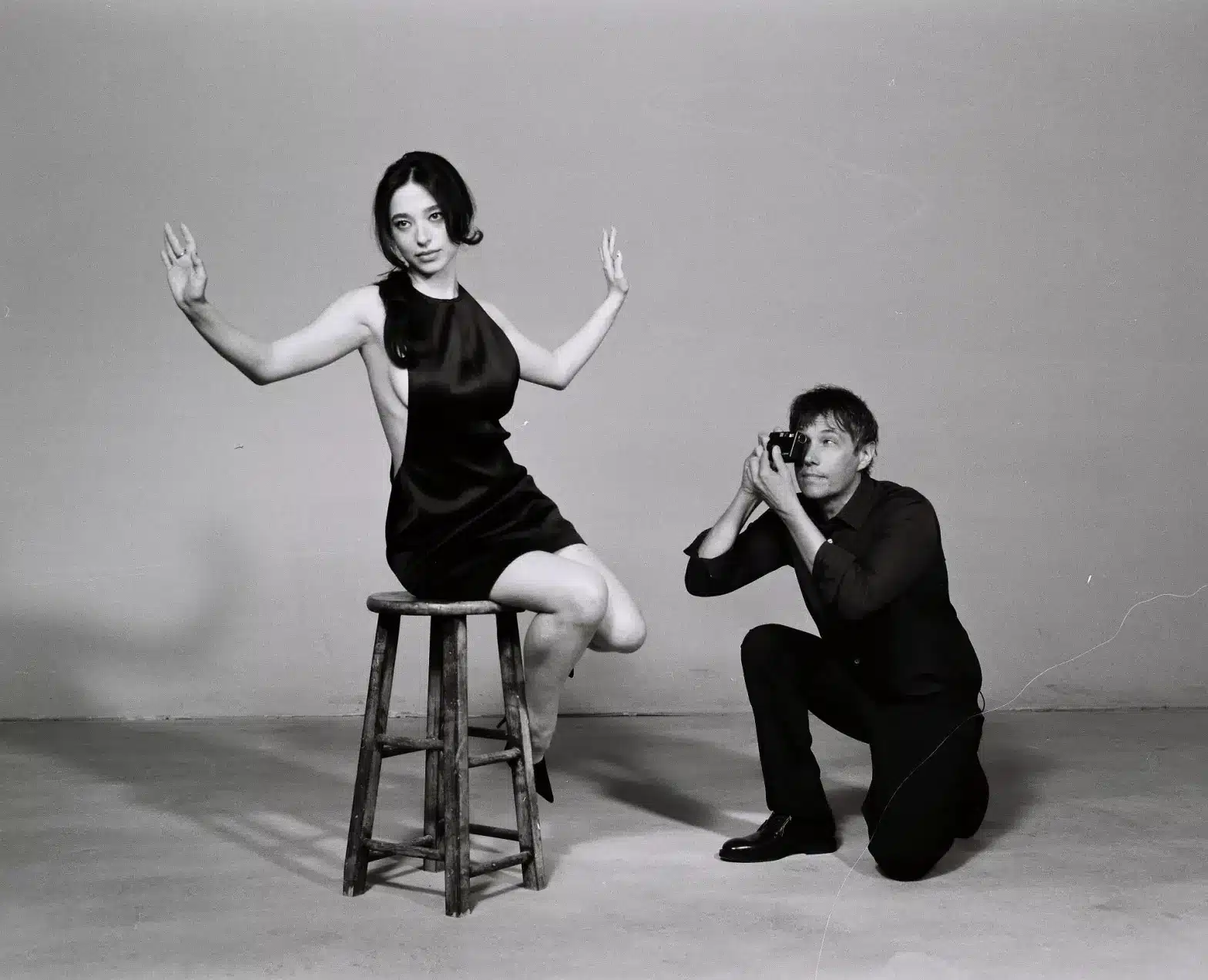
When I was in my last year at university in 2020 studying film, I decided to write my dissertation on Sean Baker’s (then) sex work trilogy. These were Starlet (2012), Tangerine (2015) and The Florida Project (2017). I took a particular interest in how he exhibits the subcultures and hidden communities within his films. I reached out to Baker for an interview and never in a million years thought he would agree. He was kind enough to give me his phone number and underwent the interview. It has been five years since I did this interview with him and his career has skyrocketed. He has released two more films that follow the sex work theme – Red Rocket (2021) and Anora (2024) and is now a Palme D’or and four-time Academy Award winner. Sean continues to be someone I look up to massively, and I think back to this interview and that time in his career often.
Where did your interest in subcultures and smaller / hidden communities come from? For example, that of the hidden homeless in The Florida Project (2017), the transgender community in Tangerine (2015) and the lonely old adult or film worker in Starlet (2012).
“I really feel that all of my films are now a conscious- but at one time, a subconscious reaction to what I’m not seeing enough of in US cinema. This stems from a true interest to see more diversity on screen, meaning more stories told about communities, minorities, subcultures, microcosms that are under-represented or haven’t been represented perhaps fairly. I’m making films that I want to see. I think they are reactions to what I’m not seeing enough of. They’re also educational experiences for me because as a cis-gender, white male who’s usually not from the communities that I’m focusing on, I get to collaborate with people that aren’t in my direct social circles and therefore it expands, I make new friends and I learn more and it’s enriching on an educational level. It’s as simple as that and it sounds a little selfish and it is, but I feel that it teaches me more about the world and the more I know about the world the more that I feel that the stories that I tell will be universally appealing.“
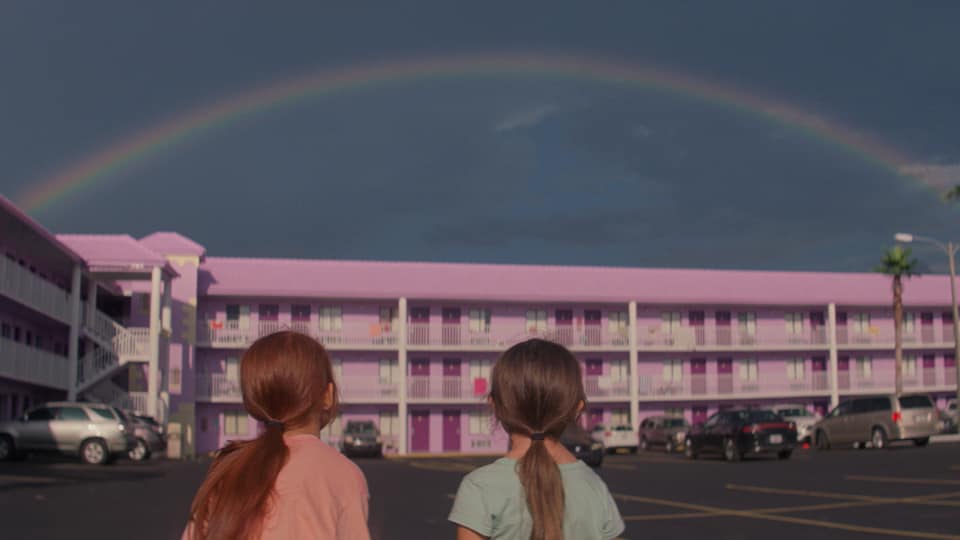
Where did you discover these different communities and why you felt the need to shed light on them? For example bringing awareness to them as they’re not represented or shown in mainstream culture (especially for The Florida Project and Tangerine). Or possibly breaking stereotypes and presenting the characters as “normal” (Jane as an adult film worker in Starlet).
“It’s different with every film. Usually there are locations which I am fascinated by because there is a microcosm there that has been under-represented or not represented at all in film and television, so Prince of Broadway was about the corner of a 27th in Broadway. At the time it was not gentrified and it was a feast for eyes and ears, a bustling area in which there were people from all different walks of life selling counterfeit goods on the streets and I was fascinated by it. Same exact thing happened with Tangerine. I would pass by an infamous intersection every day because I happened to live near it. I usually live in close proximity to these areas. The project I’m currently working on, I came across this by accident. Each one of these I would say microcosms, again, it happened to be that they were very connected to an issue, or at least connected to a group of people who were struggling in some sense. Prince of Broadway – undocumented immigrants. Sex work has been a big part of my films where communities in which I’ve noticed that there and underground economy or an illegal economy and why is it illegal because it’s stigmatised usually. I’m tackling things with stigma attached to it because I feel it’s wrong, It’s as simple as that. And yes, there is a normalisation thing I’m doing. I’m normalising and that is definitely putting my values and beliefs forward with the hope of hopefully saying this is another way of thinking. In a way it’s propaganda if you think about it because my films are normalising sex work, normalising drug use, normalising immigration. These are things that I think nobody should be criminalised for. These things that really have stemmed the stigma attached to these things come from a long rich history of puritanical thought and white supremacy and male supremacy and its stuff that I feel should be thought against.”

Why did you decide to tell The Florida Project from the point of view of children? Was it because you wanted the audience to see this world from a child’s eyes and although they’re living in poverty this world is their playground? I found this made some scenes very shocking. Especially the scene when we see Halley attack Ashley through Scooty’s eyes or when Halley’s “customer” walks in on Moonee in the bath, Halley then drawing the shower curtain almost acting as a barrier between this adult and child world.
“With Florida Project it’s essentially because we’re tackling children living in poverty, and yet we still wanted to tell a story about the innocence and wonderment of children, we decided we’re going to show the audience what the child sees and not much else. To sort of put the audience in the shoes of the child. And it actually helps out in many ways because it simplifies things. Ya’know a child is innocent and still doesn’t understand many things and so they see the world with fresh eyes and in many ways, simple eyes. I don’t have to explain it as much to the audience because they understand that the child doesn’t understand that much. It’s also a stylistic choice, Alexis, my DP, and I talked about how Spielberg was great at this where he would always keep the camera on their level to give them equality, to treat them the same way you would treat an adult. Just because we’re all adults, and when we put a camera on our shoulder, we’re looking at each other at our eye line and then you look down on a child. Well we never wanted to look down on a child, we wanted to be on their eye-line, looking around from their POV, it was a stylistic choice that I think just further helped the audience get into the mind of the kid.”
What films / texts did you take inspiration from for Tangerine, The Florida Project and Starlet? I’ve read somewhere that you take a lot of inspiration from Ken Loach, Mike Leigh, neorealism, etc.
“There are the go-to directors, yes there is the Ken Loach neorealism thing and then there’s also somewhat more genre and directors who work with a poppy aesthetic. For The Florida Project there was just a bunch of films about kids and Little Rascals had a lot to do with that, anything that was comedic that dealt with children. but for the other films, I would just say a combination of Ken Loach and Vicctoria de Sica and Cassavetes and Lars Von Trier. Every film has its different influences, but I always try to make my own film as well.”
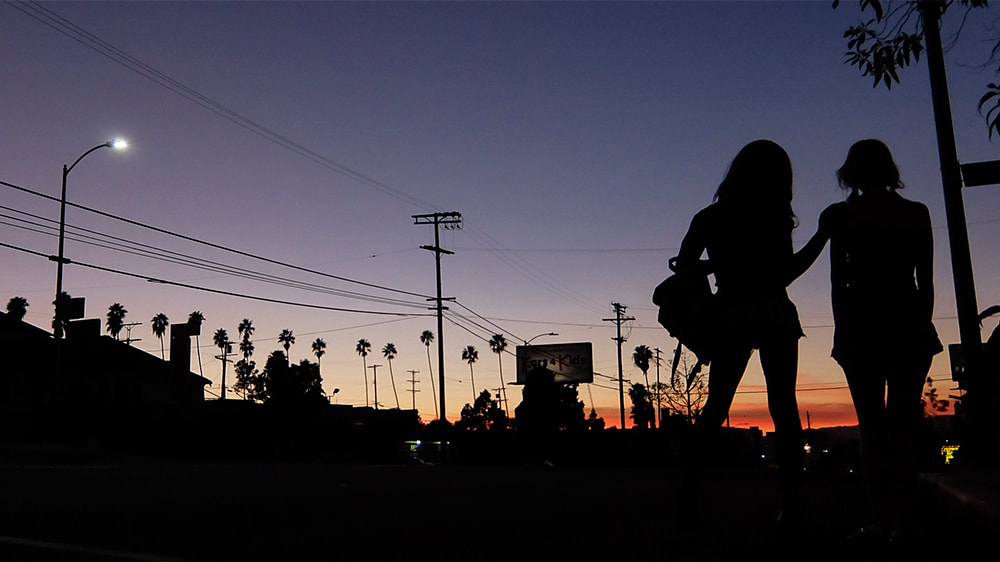
Would you compare your films to being in a genre such as social realism or that of neorealism? I read somewhere about your films being in this “American Neorealist” or “American social realist” genre. What are your thoughts on this.
“Let’s start with social realism, right now it’s like a formula. There’s actually a really funny piece on YouTube, it was like how to make a British social realism film and they have all the beats and the tropes and it’s very funny, it’s a parody. But If you look at modern social realist films like Andrea Arnold, not to slam her but she definitely is following these beats. Like Fish Tank is beat for beat a social realism film and I’ve been trying to battle against that just because I feel we’ve reached a point – well first off we can all shoot reality on our phones now and I don’t think it’s as exciting anymore to audiences, and I also feel as if audiences are dealing with so much these days, and I mean social media, we usually focus on the bad news, it’s just an insane time and I think people want escapism – much like they did during the great depression and very trying times like the Thatcher government run in Britain. So what I’m trying to say is I’ve been trying to find a hybrid between social realism, or neorealism, and poppy cinema and I feel that there was a critic that wrote up something about Tangerine when it first came out and they called it pop-verité and I loved that because it’s a perfect hybrid between pop and cinema verité. I feel that is what’s going to keep an audience engaged in 2019. Now look I love Ken Loach, he’s my favourite, but I don’t think a 19 year old who is used to watching YouTube videos and Instagram stories all day wants to sit through a 90 minute grey, grainy, washed out, depressing social realist film. They want a dose of pop in there. They want excitement. So that is what I’m trying to do.”
Why did you choose the dynamic / juxtaposition between Jane and Sadie in Starlet? The difference in their subcultures (adult film worker and lonely elderly) isn’t something you tend to see on screen. What drew you to this?
“I hadn’t seen it before as much as I should be seeing it. We rarely see stories about relationships between two women friendships and even more rare is the intergenerational thing. There’s also a little bit of comedy in there. It’s not like I exploited it but the comedy is that an elder generation, how would they react if they suddenly knew somebody was doing hardcore porn? So there’s that walking on eggshells, keeping a secret that Jane has to do and I thought that that would be amusing on to itself. And then eventually sort of ruling that out and showing that it truly doesn’t matter in the end. Again, it’s all about removing stigma.”

Is there a theme you think that runs through the three films (The Florida Project, Starlet and Tangerine) despite this idea of subcultures and these hidden communities.
“Those 3 films do touch on different aspects of sex work, again normalising it. Showing that it’s either a choice or it is survival work. For example, the mother in The Florida Project and the two women in tangerine are both doing survival sex work. I think we glam up sex work in film and television. We make it look kind of cool and sexy and when it comes down to it there’s some people that are literally doing it to survive. And in a way Jane is doing that as well. I didn’t want to harp on it too much but in Starlet, she’s not doing it because she’s sexually liberated or having fun, she’s doing it because she probably had very limited opportunities in her life, her mother is doing drugs, she probably comes from a broken family. There are many reasons and I didn’t really have to explain all those reasons but obviously that’s what I’m trying to do when it won’t let certain people into the system and they are forced to have their own system. Theres’s different ways at looking as sex work in a way that removes the stigma. And then the theme in all my films is that underground economy in which you have to question capitalism, that is a very interesting concept that I would like to continue to explore.”
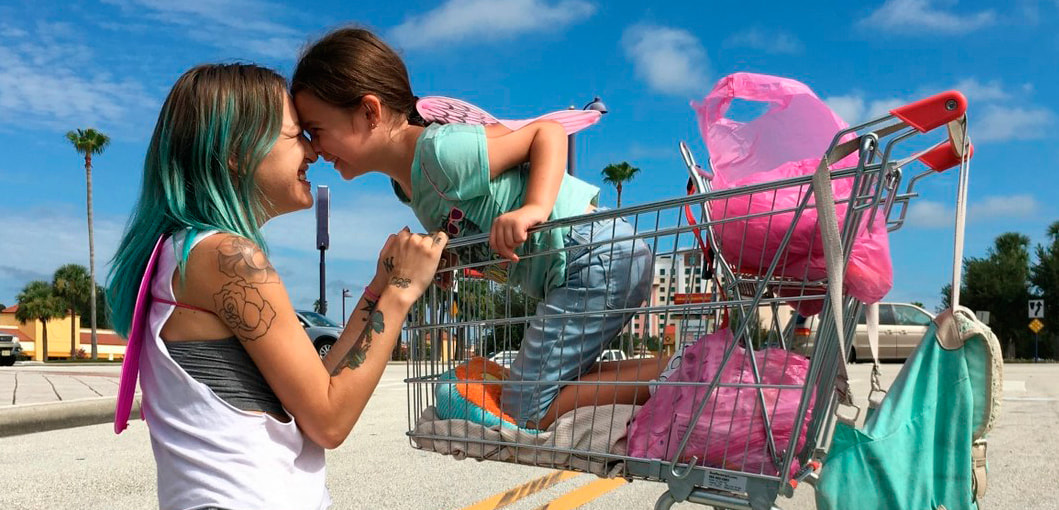
Why did you use open endings in The Florida Project, Tangerine and Starlet? Is this to make the audience imagine what happens next? (Jane and Sadie driving away and Alexandra giving Sin-Dee her wig). Also, you leave your films on quite a hopeful note. For example, the end of The Florida Project switches its cinema verité style to an escapist one with Moonee running to Disneyland. Why did you choose to not show Moonee’s upsetting fate on screen? This draws away from this social realist genre and draws it to that of escapism which isn’t something you usually see on screen.
“My endings are very deliberate; they’re usually written first and it’s to leave the audience thinking, asking questions and hopefully motivating them to do homework after they leave the theatre. If I gave them all the answers there wouldn’t be anything to discuss afterwards right? Don’t you want to go to dinner afterwards with the person you just saw the movie with and discuss it? If it’s all wrapped up with a nice little bow then there’s nothing to talk about. So, it’s to spark discussion and it’s supposed to mirror life in a way. Life is not tied up with a nice little bow. Who knows what is going to happen when Jane gets into that car with Sadie? What is that conversation? You know there’s going to be a conversation right there and whether or not they are going to get to Paris or not, it doesn’t matter as long as they’re actually talking and mending their relationship. “
Your films often show an outsider’s perception of the communities and that tends to be a negative one. For example, when the couple arrive in the wrong “Magic Kingdom” in The Florida Project the woman describes it as being a “Gypsy Project”. Or in Tangerine nearing the end when Sin-Dee is mistreated by a passing car. Was it important to you to show how outsiders perceive the subculture communities you showcase in your films and if so, why do you think this?
“It’s because of those negative perceptions AKA the stigma that is why I have to show that in the film and I try to show it without beating the audience over the head with it, in a little instance or two just to show the other point of view. I think it’s important to show what we’re battling against. I think that hopefully by the point that that came in the film they’re already feeling for the children and when they hear them speak to the children, that way saying that they’re gypsy children living in slums, the audience sees that as an unfair perception of the children. I do that with every one of my films, I think, to a certain degree.”
I concluded my interview with Baker and felt extremely excited that someone who inspired me so much, as a young film student, had taken the time to talk to me about his oeuvre. I am absolutely overjoyed for Baker’s more recent success with Anora and how he is bringing these hidden communities to the mainstream.
Megan Hilborne (Instagram: meghillbilly) is a freelance writer and film critic based in Portsmouth. She graduated with a degree in Film in 2020 and has continued her study of the medium in her day-to-day life. She takes particular interest in indie, horror, feminist and queer cinema.


Leave a comment